
0
1667
Last reviewed: 13 November 2026
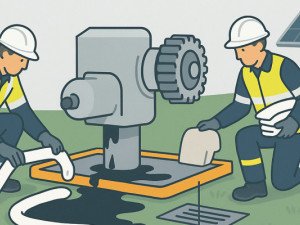
Renewable energy sites can be far from a maintenance store and close to land where even a small oil release matters. Wind turbine gearboxes, hydraulic systems, maintenance vehicles, solar-farm equipment and battery storage all need sensible plans, but their hazards should not be treated as interchangeable.
Consider l..
0
1725
Last reviewed: 13 November 2026
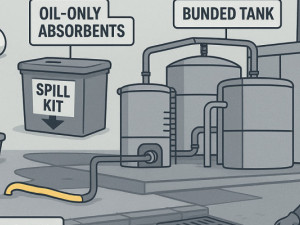
Power stations and combined heat and power (CHP) sites operate pumps, turbine systems, cooling circuits, fuel supplies and hydraulic equipment. Leaks may begin with an ordinary failed seal, but their consequences depend on the surrounding heat, electrical systems, drainage and chemical processes.
Prioritise isolation..
0
2324
Last reviewed: 13 November 2026
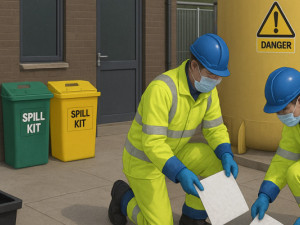
Treatment works and pumping stations handle chemicals that are essential to the process but potentially troublesome when released. Sodium hypochlorite, polymers, acids, alkalis and fuels differ substantially in their handling requirements. A plan should reflect the actual substances, their concentration and the conse..
0
1863
Last reviewed: 13 November 2026
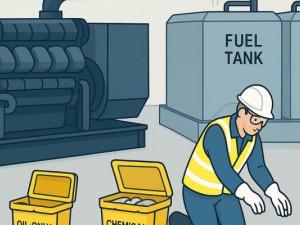
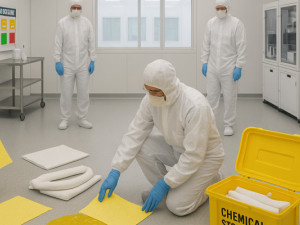
A data-centre liquid incident can affect both environmental protection and critical service availability. Diesel generators, lubricating oils, chilled-water systems and battery rooms need separate response plans. The first priority is always life safety, not protecting equipment at the expense of staff.
Diesel and co..
0
1994
Last reviewed: 13 November 2026
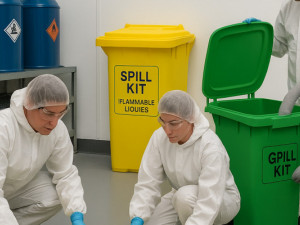
A few millilitres of the wrong liquid can disrupt electronics production. Solvents, flux removers, etchants, adhesives, plating solutions and cooling fluids introduce different risks, while sensitive components may also be vulnerable to contamination from the clean-up materials themselves.
Distinguish production chem..
0
1586
Last reviewed: 13 November 2026
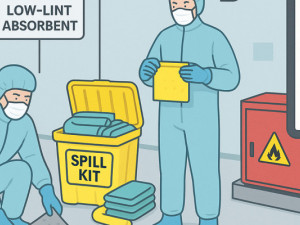
Cosmetics production involves liquids that behave very differently on the floor. A thick emollient oil can leave a persistent slippery film, a fragrance blend may contain flammable solvents, and pigment dispersions can stain equipment and migrate into drains. Controlling these releases protects staff and helps limit ..
0
2287
Last reviewed: 13 November 2026
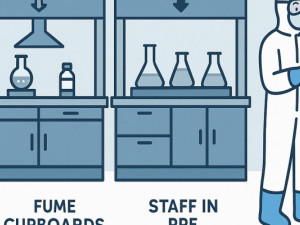
In pharmaceutical manufacturing, a liquid spill may threaten operator safety, equipment, product integrity or the classified status of a production area. Cleanroom incidents call for more than simply placing pads on the floor: the site must also consider particles, residues, validation and the quality implications of..
0
1896
Last reviewed: 13 November 2026
A dropped bottle in a laboratory can involve anything from harmless buffer solution to a flammable solvent, concentrated corrosive or biological material. The correct first response depends on the substance, amount, location and people who may have been exposed. A labelled spill kit is helpful only when it forms part..
0
1649
Last reviewed: 13 November 2026
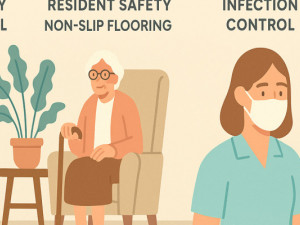
A spill in a care home is as much a matter of resident dignity as it is of housekeeping. Residents may have reduced mobility or be more vulnerable to falls, while shared bathrooms, dining rooms and laundry areas have frequent changes in floor condition. A simple, discreet procedure makes it easier to keep people safe..
0
2687
Last reviewed: 13 November 2026
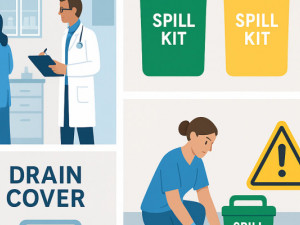
A hospital spill might be a knocked-over drink in reception, a laboratory reagent in a controlled area or a leak beside a standby generator. These incidents should not be managed as though they present the same hazard. An effective plan separates routine housekeeping from clinical, biological, pharmaceutical and chem..
