
Published: 10 November 2026
Last updated: 25 August 2026
Why is Spill Planning Essential in Motorcycle Racing Paddocks?
Spill planning is essential in motorcycle racing paddocks because these are compact, high-activity support areas where race bikes are prepared, repaired, refuelled and cleaned, often on temporary surfaces and under time pressure. In this setting, common liquids include engine oil, fork oil, chain lubricant, fuel and brake cleaner, all of which can create slip risks, fire concerns, equipment contamination and pollution if not controlled quickly. Practical planning usually means keeping absorbent pads, drip trays and clearly labelled spill kits close to likely leak points, while also separating used absorbents and liquid waste for proper disposal in line with UK health, safety and environmental guidance.
Motorcycle racing paddocks present unique challenges because teams work in small shared spaces, bikes are moved frequently, and maintenance tasks can happen back-to-back throughout the day. A minor weep from an engine case, a fork service, overspray from chain lubricant, a splash during refuelling or runoff from brake cleaner can spread quickly across floors, mats and access routes. That is why preparedness matters: it helps teams respond fast, protect people, keep work areas usable and reduce the chance of spills reaching drains or surrounding ground, consistent with HSE advice on incident planning at events, slips and trips, and GOV.UK guidance on pollution prevention for businesses.
What kinds of spills need to be expected?
In most paddocks, the likely spill profile is varied rather than limited to one product. Engine oil and fork oil can leak during servicing or from damaged components. Chain lubricant may drip or be overapplied in busy pit setups. Fuel presents an obvious hazard during storage, transfer and refilling, and brake cleaner can splash during parts cleaning or brake work. Each liquid behaves differently, so teams need the right response materials nearby rather than relying on improvised rags or cardboard.
Good spill planning also supports safer waste management. Used pads, socks, disposable gloves and other contaminated materials should be collected in suitable waste bags, kept separate where needed, and handled as part of a clear housekeeping routine. This approach supports cleaner paddocks, quicker turnaround between jobs and better control of environmental risks, alongside HSE guidance on the safe use of petrol and broader site emergency arrangements.
What Types of Liquids are Commonly Spilled in Paddocks?
In motorcycle racing paddocks, the liquids most commonly spilled are engine oil, fork oil, chain lubricant, fuel and brake cleaner. Each behaves differently once it reaches the ground, but all can create practical safety risks in compact team spaces: slips, fire hazards, vapour exposure, contamination of tools and tyres, and pollution if liquid reaches surface water drains. Knowing what is likely to leak or be knocked over helps teams choose the right response materials, from oil absorbents for hydrocarbons to chemical absorbents where more aggressive solvents are involved.
Engine oil is one of the most frequent paddock spills because it is handled during top-ups, changes and emergency repairs. Fresh oil can spread quickly across sealed surfaces, while used oil may also carry combustion by-products and metal contamination. The main risks are slips, staining, pollution and cross-contamination of work areas, especially where mechanics are moving quickly around stands and tyre warmers.
Fork oil is often less visible in small quantities but can still leave a very slick film. Spills may happen during suspension servicing, seal failure or component removal. Its low-viscosity nature means it can travel further than expected across smooth paddock flooring, increasing slip risk and making it easier to transfer onto gloves, tools or other machine parts.
Chain lubricant tends to be thicker and stickier than oil, but that does not make it harmless. Overspray, drips and fling-off can build up around rear stands and work mats. The hazard is less about rapid spreading and more about persistent slippery residue, dirt build-up and difficult housekeeping in tight garage or awning spaces.
Fuel, especially petrol, presents the most immediate danger because it combines slip risk with flammability and vapour release. Spills can occur during refuelling, line disconnection or tank draining. In the UK, the HSE’s petrol guidance highlights the need to control ignition sources and handle petrol safely. Even a small spill in a crowded paddock can escalate if vapours collect near hot equipment.
Brake cleaner is commonly used for fast degreasing, but it is a solvent rather than a simple oil product. It can evaporate quickly, release strong vapours and affect some surfaces if overused. That makes exposure, ventilation and correct absorbent choice important, particularly when spray runoff mixes with grease or oil on the floor.
Where Do Spills Usually Occur in Racing Paddocks?
Spills in motorcycle racing paddocks usually start in three places: refuelling zones, maintenance areas, and storage points for oils, fuels, aerosols and cleaning products. These are the parts of the paddock where liquids are handled most often, containers are opened and closed repeatedly, and teams are working quickly in compact spaces. Because even small drips can create slip risks, fire concerns or pollution issues, these locations need the closest attention and the fastest response.
In practice, the best approach is to monitor these areas proactively rather than waiting for a visible spill to spread. Regular checks, sensible housekeeping and clearly positioned absorbents can help teams contain minor leaks before they reach walkways, neighbouring pit spaces or surface drains. This is why spill prevention in paddocks should focus on likely spill points as much as on clean-up equipment.
Refuelling zones
Refuelling is one of the most obvious starting points for spills. Fuel can splash during transfer, drip from nozzles, escape from overfilled containers or be knocked over in busy pit conditions. Portable absorbent mats, pads or socks placed around the refuelling area can help catch small releases quickly, especially where foot traffic is high and turnaround times are tight.
Maintenance areas
Maintenance spaces are another common source. Engine oil, fork oil, chain lubricant and brake cleaner may be used in short bursts throughout the day, often over hardstanding or temporary flooring. Drips from removed parts, open containers and used cloths can build up gradually, making these areas easy to overlook unless they are checked routinely. Monitoring benches, bike stands and the ground beneath working bikes is a simple but important prevention step.
Storage and staging points
Storage areas for spare fluids, waste containers and service items can also become spill hotspots. Leaks may start from damaged caps, poorly sealed bottles or waste bags left unsecured after use. Keeping stored liquids upright, separated and inspected helps reduce the chance of a slow leak becoming a wider housekeeping problem.
Across all three areas, early spotting matters. Short inspection rounds, clear responsibility for response, and attention to surfaces near drains or access routes can reduce disruption and support safer paddock working.
What Absorbents Should Be Kept Nearby?
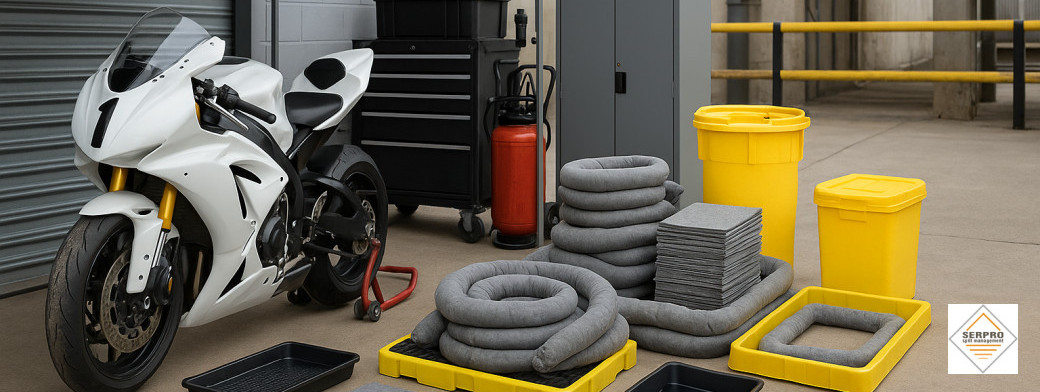
Motorcycle racing paddocks should keep a small but well-chosen range of absorbents within easy reach of each working area. At minimum, that means absorbent pads for drips and wipe-ups, absorbent rolls for larger floor areas and walkways, socks to contain spills before they spread, and compact spill kits so teams can respond quickly without searching for supplies. The right mix helps deal with common paddock liquids such as engine oil, fork oil, chain lubricant, petrol and brake cleaner while also supporting tidier housekeeping and safer footing.
Selection should be based on the liquid involved, the size of the likely spill and where it may travel. In tight awning spaces or beside bikes on stands, fast access matters more than keeping large stocks in one place. A clearly labelled spill point with gloves, disposal bags and simple instructions is usually more useful than storing everything in one distant service vehicle.
Essential absorbents to keep close at hand
Pads are the everyday choice for catching drips under engines, forks and fuel connections, and for wiping up small releases before they become slip hazards. Rolls are useful where teams need broader floor protection under workbenches, refuelling points or parked machines. Socks should be placed around the edge of a spill, along awning seams or near trailer thresholds to stop liquid spreading into walkways or towards drains. Spill kits bring these items together in one portable pack and are especially practical for mobile teams working in compact paddock spaces.
How to choose the right absorbent
Use oil-only absorbents for hydrocarbons such as engine oil, fork oil and fuel where repelling water may be helpful outdoors. Choose general purpose absorbents for mixed maintenance areas where water-based grime and oils may both be present. For brake cleaner and other more aggressive liquids, use a chemical absorbent suited to that substance and check the product safety information before use. As a rule, pads suit small controlled spills, rolls suit repeated drips or wider coverage, socks suit containment, and spill kits suit first response.
Keep quantities realistic but sufficient: enough for immediate control, followed by safe bagging and segregation of used absorbents for proper disposal rather than leaving saturated fibres loose in the paddock.
Who Should Respond to Spills in the Paddock?
Spill response in a motorcycle racing paddock should be handled by clearly identified team members, not left to whoever happens to be nearest. In practice, the first person on the scene may need to make the area safe, but the main responsibility should sit with nominated personnel who understand the liquids involved, know where the absorbents and waste bags are kept, and can decide whether the spill is a minor housekeeping issue or something that needs escalation. Clear roles help teams deal with oil, fuel and brake cleaner quickly while reducing slip risks, fire concerns and the chance of contaminated waste being mishandled.
At a minimum, each team should identify a lead responder, a back-up responder and a person responsible for waste segregation and disposal. In smaller paddock setups, one person may cover more than one role, but the duties still need to be defined in advance. This matters because compact work areas, frequent refuelling, bike maintenance and shared access routes can turn a small leak into a wider paddock problem if nobody takes ownership.
Key personnel to nominate
The lead responder is usually the crew chief, team manager or a senior mechanic with enough authority to stop work, isolate the source and direct others. A second trained team member should be able to fetch the correct spill kit, deploy pads, socks or a portable mat, and protect nearby drains or walkways if needed. Another person should oversee bagging used absorbents, separating oily waste from chemical-contaminated materials, and checking that temporary storage is secure.
Why training and communication matter
Even simple spills are easier to control when everyone knows the plan. Brief paddock staff on who leads, where equipment is stored, how incidents are reported and when outside help is needed. Practical spill response training can help teams build confidence in product selection, safe handling and waste management. This role clarity also supports the wider emergency planning principles set out by the HSE for events and incident response, while good housekeeping reduces the slip hazards highlighted in HSE guidance on slips and trips.
How Should Waste Be Separated and Managed?
Waste in a motorcycle racing paddock should be separated at the point of use, with oily rags, used absorbents and other hazardous materials kept in clearly labelled containers so they do not get mixed with general rubbish. This reduces handling risks, makes disposal more straightforward and helps teams manage oils, fuels and brake cleaner residues responsibly in busy, space-limited work areas.
In practice, the simplest approach is to set up a small, clearly marked waste station beside the work area and spill response kit. Used pads, rolls, socks and portable mat offcuts contaminated with engine oil or fuel should go into designated disposal bags or lidded bins, while heavily contaminated items linked to solvents such as brake cleaner may need to be kept separate from oil-only waste. Clean packaging, uncontaminated cardboard and other recyclable materials should be removed from the hazardous waste stream wherever possible.
Separate waste by contamination type
Different waste streams should not be bundled together just for convenience. Oily rags can present different handling and disposal issues from used absorbents, and both should be kept apart from containers, aerosols, empty chemical bottles, gloves and any sharp workshop waste. If a spill involved mixed liquids, such as oil and brake cleaner, label the bag or container so the waste contractor understands what it contains. Clear segregation also supports safer housekeeping and helps prevent secondary leaks in crowded paddock bays.
Best practice for disposal and recycling
Best practice is to bag contaminated absorbents promptly, seal them, and store them upright in a secure area until collection. Waste should then be passed to an appropriate specialist contractor rather than placed in skips or drains. Teams should also check venue rules and align their arrangements with wider UK guidance on pollution prevention for businesses. For broader support on segregation, storage and collection, see SERPRO’s waste management guidance.
Recycling should focus on materials that are genuinely uncontaminated. Once fibres, wipes or packaging are soaked with oil, fuel or solvent, they should be treated as contaminated waste, not mixed recycling. A short end-of-day check of bins, bags and drip tray contents helps confirm that waste has been separated properly and that nothing hazardous has been left loose in the paddock.
How Can Routine Inspections Help Prevent Spills?
Routine inspections help prevent spills in motorcycle racing paddocks by spotting small problems before they turn into incidents. Regular checks make it easier to confirm that absorbent supplies are stocked, spill kits are complete, portable mats and drip trays are in the right place, and work areas are being kept tidy. In a compact paddock space where oils, fuels and brake cleaner may all be handled close to bikes, tools and walkways, these simple inspections support faster response, safer footing and better day-to-day control.
They also strengthen compliance and preparedness. A brief inspection at the start of the day, between sessions or before refuelling can highlight leaking containers, saturated absorbents, damaged waste bags or poor housekeeping around drains and access routes. That practical routine supports the wider expectations set out in UK guidance on incident planning for events, slips and trips prevention and pollution prevention for businesses.
What should be included in a routine inspection?
- Absorbent supplies: check that pads, rolls and socks suitable for the liquids on site are available, dry, easy to reach and not already overloaded with oil or fuel.
- Spill kits: confirm that small spill kits contain the expected contents, such as absorbents, gloves, disposal bags and clear instructions, and that they are clearly labelled and unobstructed.
- Portable mats and drip trays: inspect for damage, poor positioning or overflow beneath bikes, fuel containers and maintenance points.
- Drain protection: make sure any drain covers or temporary protection measures are accessible where there is a realistic risk of run-off.
- General housekeeping: remove used wipes, empty containers and loose packaging; keep walkways clear; and separate used absorbents from general rubbish for proper disposal.
A consistent inspection routine also helps teams assign responsibility. If everyone knows who checks the spill station, who replaces used absorbents and who removes waste, response is quicker and less improvised. This is especially useful in busy paddocks where turnaround times are short and minor drips can be missed.
For a practical framework, teams can build inspections into a simple documented process, such as a routine inspection checklist. Regular checks will not eliminate every spill, but they do improve safety, reduce avoidable contamination and demonstrate a more organised approach to housekeeping and environmental care.
Conclusion: The Importance of Spill Preparedness in Motorcycle Racing
In a motorcycle racing paddock, spill preparedness is a practical part of safe, efficient team operations. Across compact work areas, common liquids such as engine oil, fork oil, fuel, chain lubricant and brake cleaner can quickly create slip risks, fire concerns, equipment contamination and unnecessary disruption if they are not managed promptly. That is why having the right absorbents close to the point of use, alongside a clear waste handling plan, is so important.
As discussed throughout this article, effective spill control is rarely about one product alone. Portable mats can help protect the ground beneath bikes and service areas, while absorbent pads, rolls and socks can deal with drips, splashes and small leaks before they spread. Oil-only, general purpose and chemical absorbents each have their place depending on the liquid involved, and extras such as drip trays, drain protection, gloves, disposal bags and clearly labelled spill stations make response faster and more organised. Good housekeeping also supports wider responsibilities around slips, fire safety and pollution prevention, as reflected in HSE guidance on slips and trips and GOV.UK pollution prevention guidance.
Just as important is what happens after the spill is contained. Used absorbents, contaminated mats and waste liquids should be separated, bagged and handled appropriately rather than left mixed with general rubbish. A simple routine of checking stock levels, confirming who responds and reviewing waste arrangements can make a noticeable difference over a race weekend.
For teams, organisers and support crews, the message is straightforward: prioritise spill preparedness before the first leak happens. Keeping a compact, well-planned response setup on hand is one of the simplest ways to protect people, surfaces and the wider environment. For a broader overview, see spill preparedness guidance.