
Guidance on controlling and cleaning spills of oils, fuels, coolants, electrolytes, degreasers, dyes, and other industrial liquids across marine, construction, and primary industry operations.
0
1417
Last reviewed: 13 November 2026
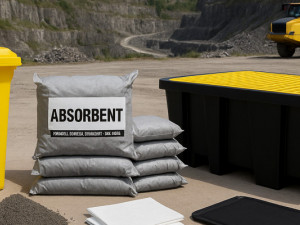
Quarries and aggregate sites may have fuel bowsers, crushers, excavators, loading shovels and mobile plant working over a large area. A hydraulic hose failure away from the workshop is quite different from a small drip beneath a parked vehicle. Good spill planning accounts for both, especially where surface water or ..

0
1378
Last reviewed: 13 November 2026
Temporary construction compounds may only be in place for a few months, but they can still store diesel, hydraulic oil, paints and cleaning chemicals close to unprotected ground. Because the layout changes as work progresses, a spill plan that was suitable at the start of the project may quickly become outdated.
Make..
0
1247
Last reviewed: 13 November 2026
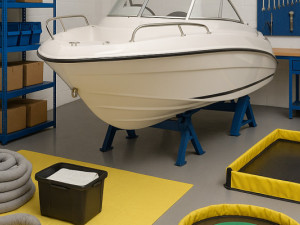
Marine engineering workshops deal with engines, propulsion systems, hydraulic lines and cooling circuits, often close to a slipway or open water. A leak that would remain on a factory floor can become a pollution incident if it reaches a dock drain or the harbour.
Separate hydrocarbon leaks from coolant and cleaning ..
0
2664
Last reviewed: 13 November 2026
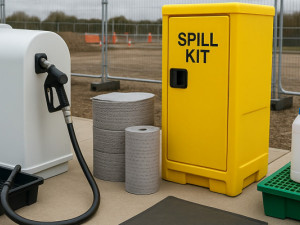
Construction sites are constantly changing. A diesel tank may be moved, plant may be refuelled beside a new drain, or concrete washout may shift to another part of the project. Spill prevention has to follow those changes instead of relying on the location of last month’s spill kit.
Focus on three different risks
Fue..
0
1443
Last reviewed: 13 November 2026
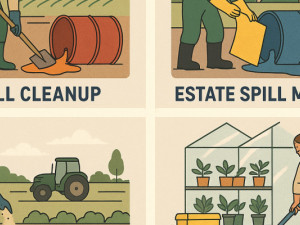
Farms, estates, nurseries and glasshouses often store fuel, lubricants, fertilisers and plant protection products in the same general area. The materials may all be liquids, but they do not share the same storage, handling or clean-up requirements.
Separate the main types of spill
Diesel and hydraulic oil can leak du..
0
1500
Last reviewed: 13 November 2026
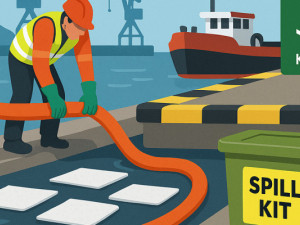
A drip of hydraulic oil on a quayside and a fuel sheen spreading across a harbour require different responses. Both can threaten the marine environment, but not every incident is suitable for ordinary workshop absorbents or a local clean-up team.
Understand the common sources of pollution
Look closely at refuelling p..
0
1396
Last reviewed: 13 November 2026
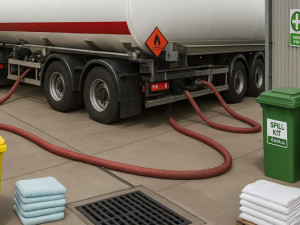
A fuel delivery hose that leaks while a tanker is unloading can put a depot under pressure in seconds. The most effective response starts before delivery: sound connections, controlled transfer points, accessible shut-off arrangements and a clear understanding of where the liquid could flow.
Identify the places most ..
Showing 1 to 7 of 7 (1 Pages)
