
Last reviewed: 13 November 2026
Construction sites are constantly changing. A diesel tank may be moved, plant may be refuelled beside a new drain, or concrete washout may shift to another part of the project. Spill prevention has to follow those changes instead of relying on the location of last month’s spill kit.
Focus on three different risks
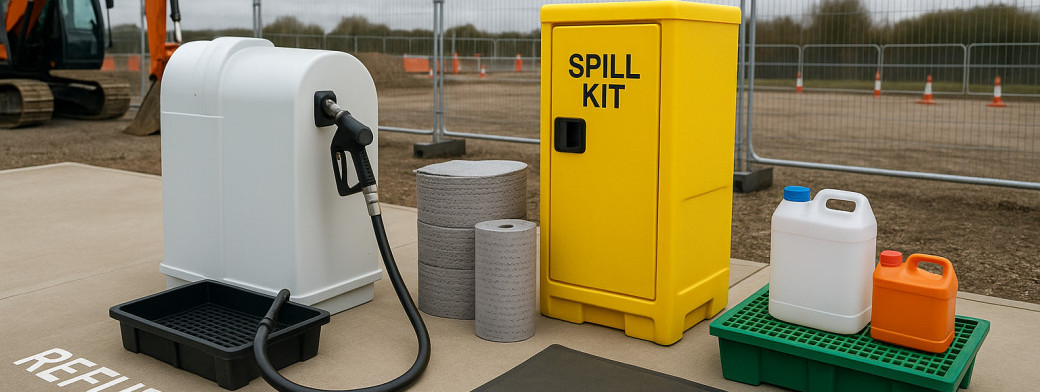
Fuels and hydraulic oils: Inspect bowsers, generators, excavators and hose connections. Place drip trays under predictable leaks and provide suitable secondary containment around storage. Keep ignition and vehicle-impact risks in mind.
Concrete washout: Wet concrete and cement-contaminated water are strongly alkaline and can cause serious pollution. A normal oil spill kit cannot make this run-off safe. Use dedicated, contained washout arrangements and an approved recovery or disposal route.
Excavation and surface run-off: Rainwater can collect silt, fuels and other pollutants before moving towards a drainage system or watercourse. Identify drain routes and make arrangements for contaminated water to be collected or treated appropriately.
Prevent escape before it happens
- Keep refuelling and concrete washout areas in designated locations away from drains where possible.
- Check bunds, hoses and delivery couplings before use.
- Have oil absorbents and spill kits within reach of trained people handling hydrocarbons.
- Use drain covers only where the site’s drainage and incident plan support them.
- Review storage and containment after layout changes or heavy rain.
Plan for safe response
Stop the release if safe, isolate the area, identify the substance and escalate if it is hazardous, unidentified or beyond local capability. Do not wash cement slurry, fuel or oily residues into gullies. Spent materials and excavated contaminated soil require assessment for their correct waste route.
For projects in England, GOV.UK pollution prevention guidance specifically addresses construction, contaminated run-off and work near water. Requirements vary elsewhere in the UK, and permits or site-specific conditions may also apply.
Make inspections useful
Check high-risk points during daily site walks and after deliveries. Record repeat leaks, missing drain protection and overflowing washout areas as actions for correction, not merely as housekeeping observations. A working site spill plan changes with the site.
