
Guidance on controlling and cleaning up spills of oils, fuels, coolants, electrolytes, degreasers, dyes, and other industrial liquids in specialist industry environments.
0
2132
Last reviewed: 13 November 2026
Medical-device cleanrooms combine two priorities that ordinary workshop guides rarely address together: employee safety and controlled product quality. Isopropyl alcohol (IPA), disinfectants, adhesives and process solvents may be used in areas where particles, residues and microbial contamination must also be control..

0
1728
Last reviewed: 13 November 2026
Bioenergy plants and anaerobic digestion facilities handle liquids that do not behave like ordinary workshop oil. Digestate, feedstock liquor, liquid fertiliser, fuels and chemical additives may all be present, while the site can also have biogas and confined-space hazards. A spill plan therefore needs to begin with ..
0
2380
Last reviewed: 13 November 2026
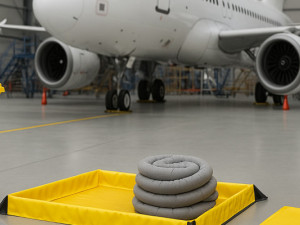
Aerospace maintenance, repair and overhaul stores may hold greases, lubricants, hydraulic fluids, adhesives, paints, cleaning solvents and other specialist materials. A spill can affect worker safety, inventory traceability and the suitability of materials for aircraft maintenance. Response arrangements should theref..
0
1605
Last reviewed: 13 November 2026
Photographic processing and specialist imaging laboratories may handle developer, fixer, bleach and cleaning solutions. Some waste fixer contains recoverable silver; other solutions can be corrosive or harmful depending on formulation. Spills therefore have both workplace and waste-management implications that need p..
0
961
Last reviewed: 13 November 2026
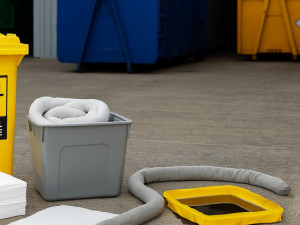
Animal feed manufacturing combines ingredients that must remain suitable for feed with non-feed materials such as machinery lubricants and cleaning chemicals. Molasses and vegetable oil can create persistent slip hazards, while a maintenance leak may introduce a contamination risk to raw ingredients or finished feed...
0
1396
Last reviewed: 13 November 2026
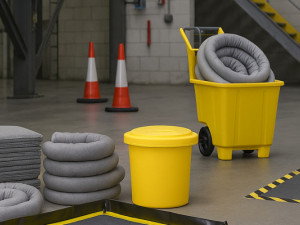
Waste transfer stations receive material of uncertain composition, sometimes in damaged containers or mixed loads. Liquid escaping from a waste bay could be harmless wash water, fuel, leachate or an unidentified chemical. That uncertainty is the first reason to plan the response carefully.
Identify the likely release..
0
1697
Last reviewed: 13 November 2026
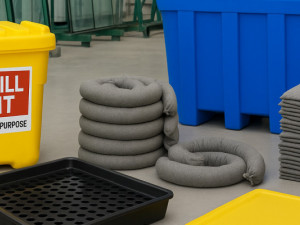
Paper and pulp manufacture involves large volumes of process water alongside potentially aggressive chemicals, lubricants and specialist process liquors. A spill that seems manageable in one area may present a serious burn or environmental hazard in another, especially where caustic process liquids are involved.
Unde..
0
1897
Last reviewed: 13 November 2026
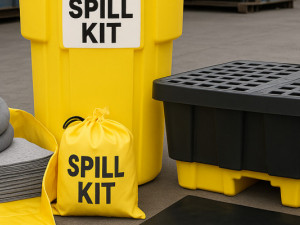
Glass production combines hot processes with maintenance and cooling systems. A spill beside a furnace is therefore different from an oil drip in a cold workshop or a cleaning-chemical release at a finishing line. Spill planning should address heat, equipment access and liquid compatibility, not just how quickly a pa..
0
1653
Last reviewed: 13 November 2026
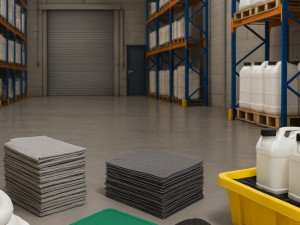
A leaking drum arriving in a mixed-waste load is a very different problem from a small oil drip beneath a sorting machine. Waste and recycling facilities frequently receive containers with incomplete or incorrect labels, so the greatest mistake is assuming that an unfamiliar liquid can be dealt with using the nearest..
0
1423
Last reviewed: 13 November 2026
A damaged IBC valve or split hose during a transfer can release more liquid than a conventional portable kit can manage. Chemical distribution warehouses therefore need containment and emergency arrangements designed around the materials actually stored, their compatibility and the maximum credible loss.
Identify wha..
