
Last reviewed: 13 November 2026
Paper and pulp manufacture involves large volumes of process water alongside potentially aggressive chemicals, lubricants and specialist process liquors. A spill that seems manageable in one area may present a serious burn or environmental hazard in another, especially where caustic process liquids are involved.
Understand the actual process liquids
Depending on the mill, operations may involve black liquor, sodium hydroxide solutions, bleaching chemicals, coating ingredients, inks, biocides and lubricating oils. Black liquor associated with chemical pulping can be strongly alkaline and requires a process-specific response. It should not be treated like ordinary dirty water.
Check chemical inventories, process documentation and safety data sheets. Uncontrolled contact between incompatible chemicals or attempts to neutralise a substantial caustic release can cause heat, splashing or dangerous reactions.
Prioritise process containment and isolation
Inspect tanks, pumps, pipelines, chemical deliveries, bunds and valves. Understand how floor channels connect to effluent treatment and where liquids could escape to surface water. Large process releases need engineered containment and plant-specific isolation arrangements; portable absorbents are not a replacement.
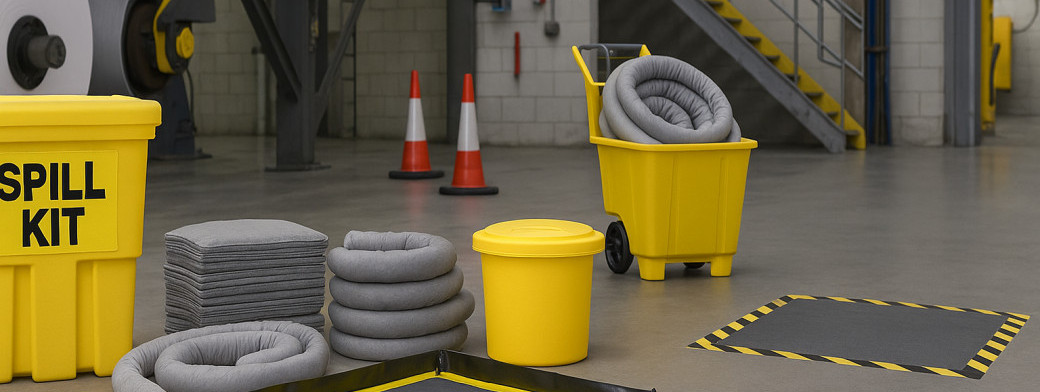
For appropriate small hydraulic or lubricant drips, oil-only absorbents and drip trays may be useful. Chemical absorbents must be checked for compatibility with any identified process substance before use.
Make the response substance-specific
- Protect people first and stop or isolate the process only where safe.
- Escalate corrosive, reactive, unknown or large-volume releases under the mill emergency plan.
- Use trained responders with the appropriate PPE, equipment and access controls.
- Prevent escape into unsuitable drains and avoid mixing incompatible waste streams.
- Classify recovered liquid, used absorbents and contaminated debris for lawful disposal.
Inspect for repeated failure
Track minor seal leaks, bund condition, pump failures and unwanted cross-connections. A pattern of small leaks may indicate a larger maintenance problem. Spill kits should be accessible, appropriately stocked and reviewed whenever process chemistry changes.
HSE COSHH guidance and hazardous waste guidance for England support wider risk and disposal assessments. The mill’s permits, process safety arrangements and chemical procedures remain the primary controls.
The most effective spill programme in a paper mill is built around keeping process liquids inside their designed systems and escalating dangerous releases without delay.