
Published: 26 August 2026
Last updated: 24 August 2026
Why is Spill Preparedness Essential in Petrol Forecourt Back-of-House Areas?
Spill preparedness is essential in petrol forecourt back-of-house areas because these non-customer spaces, such as storage rooms, maintenance corners, plant areas, car wash chemical stores, delivery points and shop stockrooms, routinely hold liquids that can cause slips, contamination, fire risk or environmental harm if not controlled quickly and correctly. Typical liquids include lubricants, screenwash, cleaning chemicals, detergents, food and drink syrups, waste oils and other packaged liquids used for site operations. In practice, preparedness means safe storage, clear segregation, routine inspection and having suitable first-response items nearby, such as absorbent pads, absorbent socks, drip trays, disposal bags, gloves and drain protection, while ensuring any petrol-related incident is escalated under site procedures rather than treated as a DIY clean-up. This supports day-to-day safety and helps sites meet duties under UK health, safety and pollution prevention guidance, including HSE guidance for garages and GOV.UK pollution prevention guidance.
These areas need their own spill plan because many leaks start away from the pumps: damaged containers in stockrooms, drips from maintenance materials, dosing products in car wash rooms, or liquids stored temporarily during deliveries and housekeeping. Even a small spill can spread into walkways, enter a drain or mix with other substances if the area is poorly organised. A forecourt that is prepared can isolate small non-petrol spills promptly, protect drains, reduce slip hazards and separate waste correctly, while making it clear when trained staff must stop work and escalate the incident.
What kinds of spills should be expected?
Back-of-house spill risks are varied rather than limited to fuel. Common examples include oil drips, cleaning liquids, washer fluid, packaged retail liquids, car wash chemicals and minor leaks from stored maintenance products. Because these liquids behave differently, forecourts usually benefit from keeping the right absorbents and containment methods close to where they are most likely to be needed, rather than relying on one generic response for every area.
Why does this matter for compliance?
Preparedness helps demonstrate that the site has considered workplace safety, housekeeping and pollution control in a practical way. UK guidance expects businesses to reduce the chance of spills, prevent liquids reaching drains and manage flammable or hazardous substances safely. For petrol forecourts, that means combining sensible storage and inspection routines with proportionate spill-control products for minor back-of-house incidents, while treating dangerous petrol spills as matters for immediate escalation under established emergency procedures.
What Types of Liquids Are Commonly Found in Back-of-House Areas?
Back-of-house areas at petrol forecourts commonly contain petrol, diesel residues, lubricating oils, screenwash, antifreeze, car wash chemicals, cleaning products and everyday shop stockroom liquids. Each presents different risks: petrol and similar flammable liquids require especially careful storage and prompt escalation if there is a significant leak, while oils can create slip hazards and pollution risks, and chemical products may be corrosive, irritating or harmful if mixed. In practice, spill planning needs to match the liquid involved, the storage location and the likely route to drains, walkways or stock.
UK sites should treat these liquids according to their hazard profile, with storage, segregation and response arrangements informed by HSE guidance on flammable liquids. For lower-volume operational spills, suitable control materials may include clearly identified chemical absorbents, alongside other absorbents selected for oil or general-purpose use. However, where petrol is involved, the priority is safe storage, isolation of the area and escalation under site procedures rather than improvised clean-up of a dangerous spill.
Common liquids and their main risks
- Petrol and fuel residues: highly flammable, fast-spreading and capable of producing dangerous vapours. Any leak in storage or decanting areas should be treated as a serious incident requiring escalation.
- Engine oils and lubricants: common in maintenance spaces; they make floors slippery, contaminate surfaces and can pollute drains if not contained quickly.
- Diesel traces and hydraulic fluids: less volatile than petrol but still hazardous, messy underfoot and potentially harmful to the environment.
- Car wash chemicals: detergents, traffic film removers and other concentrates may be corrosive or irritating, especially if splashed or mixed incorrectly.
- Screenwash and antifreeze: often stored in smaller containers but still capable of causing slips, odours and waste-handling issues.
- Shop stockroom liquids: bottled drinks, cooking oils, cleaning liquids and other packaged products can burst, leak and create slip risks or damage adjacent stock.
Because back-of-house areas often combine storage, deliveries and staff access, even a small release can spread quickly. Identifying which liquids are present is the first step in deciding what containment, housekeeping and escalation measures are needed in each zone.
Where Do Spills Typically Occur in Petrol Forecourt Areas?
Spills in petrol forecourt back-of-house areas most often occur where liquids are stored, handled, moved or topped up rather than on the pump island itself. In practice, that usually means stockrooms, maintenance corners, delivery and decanting points, waste storage spots and car wash bays. Common examples include leaking containers, overfilled bottles, split screenwash or detergents, drips from equipment, and residues tracked onto walking routes. In petrol-related settings, any suspected fuel release or other dangerous flammable spill should be treated as a safety issue requiring escalation under site procedures, not a routine DIY clean-up task.
These areas matter because even small leaks can create slip risks, contaminate drains or damage stored goods. The HSE’s guidance on slips and trips is especially relevant in back-of-house spaces where smooth floors, frequent foot traffic and mixed storage can allow minor liquid losses to become a wider housekeeping problem.
Common spill locations behind the forecourt
Storage areas are a frequent source of spills, especially where oils, screenwash, detergents, additives or cleaning liquids are kept on shelving or on the floor. Containers can be knocked, stacked badly or develop slow leaks around caps and seams. Using suitable secondary containment such as drip trays under small containers and transfer points can help catch minor drips before they spread.
Car wash bays and chemical rooms are another common hotspot. These spaces often involve detergents, waxes, traffic film removers and dosing equipment, so spills may happen during drum changes, hose disconnections, pump maintenance or from splashback on wet floors. Because these liquids can be slippery or more hazardous than general shop stock, they should be stored and handled with clear segregation and site-specific response arrangements.
Forecourt shop stockrooms can also generate spills from everyday products such as bottled drinks, milk, screenwash, packaged automotive fluids and cleaning supplies. While many of these incidents are small, they can still spread quickly in narrow aisles or near doorways used by staff carrying deliveries.
What factors usually contribute to spills?
Typical causes include poor housekeeping, damaged packaging, rushed replenishment, unsuitable storage, lack of labelled containment, and infrequent inspection of shelves, hoses, valves and wash equipment. Spills are also more likely where incompatible liquids are stored together, where floors are uneven, or where staff do not have a clearly identified small spill kit for minor non-dangerous incidents. In petrol forecourt environments, the key is to reduce day-to-day drips and leaks through storage, maintenance and prompt escalation of any dangerous flammable release.
What Spill Control Measures Should Be Implemented?
Petrol forecourt back-of-house areas should combine safe storage, clear segregation of liquids, routine maintenance checks and correctly placed spill response products. In practice, that means keeping petrol and other flammable liquids in suitable, designated storage with escalation procedures for any dangerous release, while using the right absorbents and small spill kits for minor leaks from oils, screenwash, car wash chemicals and stockroom liquids. The aim is to reduce slip, fire and pollution risks without encouraging staff to improvise around hazardous petrol spills.
For petrol specifically, the priority is prevention, secure storage and safe escalation in line with workplace controls, not DIY clean-up of significant spills. Containers should be suitable, labelled, closed when not in use and kept away from ignition sources, with quantities limited to what is operationally necessary. Other liquids, such as lubricants, detergents and cleaning products, should also be stored by type, with incompatible substances separated and vulnerable containers kept off direct traffic routes.
Storage and containment essentials
Use shelving, trays or bunded areas to catch drips before they spread across walkways or towards drains. Maintenance fluids and car wash chemicals benefit from secondary containment, while forecourt shop stockrooms should keep bottled liquids low-level and stable to reduce breakage. Where small recurring leaks are possible, absorbent rolls can be positioned along workbenches, shelf fronts or cleaning areas to manage drips and protect floors.
Recommended spill response products
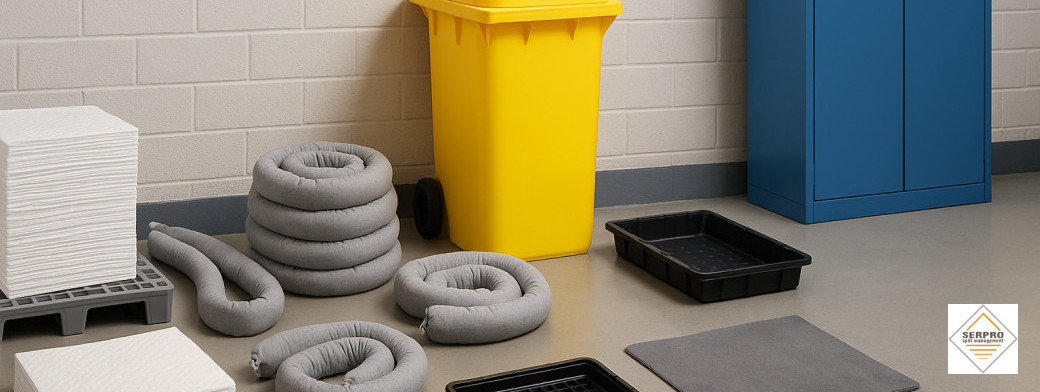
Small, clearly labelled spill points should be located near workshops, plant rooms, stockrooms and car wash chemical storage. A practical set-up may include general purpose absorbents for mixed non-aggressive liquids, chemical absorbents where detergents or treatment products are handled, disposal bags and gloves. Small spill kits are useful for minor, manageable incidents, but staff should be trained to recognise when a spill involves petrol or another flammable liquid that requires isolation of the area and escalation rather than direct clean-up.
Maintenance and inspection routines
Check containers, caps, hoses, dosing lines, pumps and floor surfaces during routine inspections. Replace damaged packaging promptly, clean up minor non-hazardous drips early and keep access to spill materials unobstructed. Good housekeeping supports both slip prevention and pollution control, especially where liquids could migrate into drainage systems or customer-facing areas.
Who Should Respond to a Spill Incident?
Only the right people should respond. In a petrol forecourt back-of-house area, staff should deal only with small, low-risk spills if they have been trained, the liquid is known, the correct spill kit is immediately available, and the task can be carried out safely under site procedures. Any spill involving petrol, strong vapours, an unknown substance, a drain risk, a fire risk or a larger loss should be escalated at once to the site manager and emergency procedures, not treated as a routine clean-up.
In practice, this means every forecourt should identify trained personnel for first response in stockrooms, maintenance areas and car wash chemical stores. These may be supervisors, shift leads or specifically briefed team members who know where kits are kept, which absorbents are suitable, how to protect drains, when to isolate access, and when to stop and escalate. Untrained staff still have an important role: raise the alarm, keep customers and colleagues away, report what they have seen clearly, and follow instructions.
What trained responders should know
Trained responders should be able to recognise the difference between a minor housekeeping spill and an incident that needs management or emergency support. For example, a small leak from packaged shop stock in a stockroom may be managed with the correct absorbent, gloves and disposal bags. By contrast, petrol or other flammable liquid releases should be treated primarily as a storage, ignition-control and escalation issue, in line with site rules and HSE guidance on the safe use and handling of flammable liquids.
Why communication and protocols matter
Clear communication is what prevents a small spill becoming a wider incident. Staff should know who to call first, what information to give, and how to describe the location, liquid type, approximate quantity and any immediate hazards such as slippery floors, fumes or nearby drains. Written protocols should match the site layout and be supported by visible signage, incident reporting steps and clear spill station labelling so responders can find the right equipment quickly.
A simple rule works well: identify, isolate, inform, then respond only if trained and authorised. That approach supports safer decisions in busy forecourt environments, especially where several different liquids are stored and where the wrong response could increase fire, slip or pollution risks.
How Should Waste from Spills Be Handled?
Waste from spills in petrol forecourt back-of-house areas should be separated by what has been absorbed, bagged clearly, and disposed of through the correct waste route for that material. In practice, that means keeping oil-contaminated absorbents, chemical spill waste, broken packaging, and general non-contaminated rubbish apart, so that hazardous waste is not mixed with ordinary waste. Any spill involving petrol, significant flammable liquids, or uncertain contamination should be escalated in line with site procedures rather than treated as routine waste handling.
Good spill waste handling is about preventing a second problem after the initial release. Used pads, socks, granules, gloves, and damaged stock can continue to leak, give off vapours, or spread contamination if they are left in open bins or mixed together. Forecourt teams should therefore use clearly labelled containers or disposal bags, store filled waste securely pending collection, and follow the site’s waste contractor guidance and duty-of-care requirements.
Waste separation protocols
Separate spill waste according to both the liquid involved and the absorbent used. For example, oil-only absorbents used on lubricants should be kept apart from chemical absorbents used on car wash products or cleaning liquids. General purpose absorbents used on mixed maintenance spills may also need their own stream if the contamination cannot be confidently identified. Non-contaminated outer packaging, dry cardboard, and ordinary shop waste should not be placed in the same bag as contaminated spill materials.
It also helps to segregate solid items from free liquid where safe to do so. Intact leaking containers may need overpacking or temporary secondary containment, while saturated absorbents should be sealed separately. If waste is heavily soaked, odorous, reacting, or from an unknown substance, staff should stop and escalate to a supervisor or specialist contractor.
Recommended disposal methods
Recommended disposal methods depend on the waste classification, but the general rule is that contaminated absorbents and residues should go via an authorised waste disposal route, not into general skips, drains, or standard stockroom bins. Waste should be sealed, labelled, and held in a secure area away from ignition sources and pedestrian traffic until collection. This approach supports wider UK pollution prevention expectations set out in GOV.UK guidance for businesses.
For forecourts, the safest approach is to have a simple written rule: identify the liquid, use the matching waste container, and arrange disposal through the approved contractor. Petrol-related waste, or waste contaminated by potentially flammable liquids, should always be handled under site-specific procedures with escalation where required, rather than informal clean-up and disposal. Keeping these rules visible near spill stations and stockrooms makes day-to-day segregation much easier.
How Can Regular Inspections Improve Spill Preparedness?
Regular inspections improve spill preparedness by helping petrol forecourt operators find small problems before they become unsafe leaks, slips or pollution incidents. In back-of-house areas, a simple routine of visual checks, housekeeping reviews and recorded maintenance helps confirm that liquids are stored correctly, spill-control items are in place, and staff know when to contain a minor non-hazardous spill and when to escalate a more serious petrol-related incident. Inspections also support day-to-day compliance by showing that storage, access routes, drainage risks and response equipment are being checked consistently.
For UK forecourts, this matters because preparedness is not just about having absorbents on site. It depends on whether drip trays are positioned properly, small spill kits are complete, chemical containers are sealed and labelled, damaged shelving is repaired, and drains remain protected from contamination. Routine inspections make these checks practical and repeatable, while also reinforcing the wider expectations in HSE guidance on the safe use of petrol in garages, slips and trips prevention guidance and pollution prevention guidance for businesses.
Build Inspection Routines Around Real Spill Risks
A useful inspection routine should match the liquids actually handled in each area. That may include car wash chemicals, screenwash, lubricants, cleaning products and other stockroom liquids. Checks can be daily for obvious leaks and trip hazards, weekly for spill kit contents and drain protection, and monthly for storage condition, signage and staff access. Petrol storage and any suspected petrol leak should be treated with particular caution: inspections should focus on spotting warning signs early and escalating concerns promptly, not encouraging improvised clean-up of dangerous spills.
Use Checklists to Keep Standards Consistent
Checklists help managers and staff inspect the same points every time. Typical items include container condition, cap security, secondary containment, shelf stability, floor condition, spill station labelling, availability of gloves and disposal bags, and whether absorbent pads, socks or rolls are suitable for the liquids nearby. A checklist also creates a record of defects, corrective action and reinspection, which is useful for training, supervision and demonstrating a consistent approach.
The Maintenance Benefit
Regular maintenance supports spill preparedness by reducing the number of incidents in the first place. Replacing worn seals, fixing minor drips, repairing cracked containers and keeping washdown or storage areas in good order lowers the chance of leaks spreading across floors or reaching drains. In practice, inspections and maintenance work best together: one identifies weaknesses, the other removes them before they lead to disruption, waste handling issues or a larger response requirement.