
Published: 22 August 2026
Last updated: 21 June 2026
Why is Spill Management Essential in University Engineering Workshops?
Spill management is essential in university engineering workshops because it is the planned process of preventing, containing, cleaning and disposing of leaked liquids safely. In this setting, common spills include oils, coolants and cutting fluids from lathes, mills, benches and storage areas. Effective control usually involves good housekeeping, clear procedures, staff supervision and practical containment tools such as absorbent pads and drip trays. In the UK, this matters not only for day-to-day safety, but also for managing slip risks, controlling exposure to hazardous substances and reducing the chance of pollution, in line with guidance from the HSE on slips and trips, COSHH and GOV.UK pollution prevention guidance.
In simple terms, spill management helps workshops stay safe, teach good engineering habits and protect the wider campus environment. A small coolant drip left under a machine can quickly become a slip hazard; a knocked container of cutting fluid can spread across walkways and benches; and poorly controlled oil leaks can contaminate waste streams or drains. Because university workshops are training environments with changing groups of students, spill preparedness needs to be visible, easy to follow and backed by routine checks.
This is especially important in engineering departments because students are learning practical discipline as well as technical skills. Good spill habits reinforce the idea that workshop work includes inspection, housekeeping and controlled response, not just machining or fabrication. Keeping suitable absorbents nearby, placing trays beneath likely leak points and making sure users know who should respond all help reduce disruption and support safer teaching sessions.
Spill preparedness also matters because universities must balance safety with supervision. Students may be unfamiliar with the behaviour of oils, coolants and mixed workshop fluids, so a minor spill can escalate if no one acts promptly or if the wrong clean-up method is used. A well-organised approach makes response faster, supports safer waste handling and helps prevent avoidable incidents, exposure and environmental harm. For that reason, spill management should be treated as a basic part of workshop operation rather than an afterthought.
What Types of Liquids are Commonly Spilled in Engineering Workshops?
In university engineering workshops, the liquids most commonly spilled are oils, coolants and cutting fluids. These are used every day around lathes, milling machines, CNC equipment, fabrication areas and maintenance benches, so even small drips, splashes and overfills can quickly create slip risks, contamination problems and extra cleaning work. Understanding what these liquids are, where they are typically found and how they behave helps staff and students choose the right response, whether that means using oil-only absorbents for hydrocarbons or general purpose absorbents for mixed workshop spills.
Oils are among the most familiar workshop spill hazards. These include lubricating oils, hydraulic oils, gearbox oils and way oils used to keep machinery running smoothly. They are often spilled during machine servicing, topping up reservoirs, changing components or moving oily parts between workstations. Common locations include beneath machine tools, around hydraulic systems, near compressor units, in plant rooms and at maintenance benches. Oil spills can make floors extremely slippery, transfer contamination onto footwear and equipment, and, if they reach drains, create wider environmental concerns.
Coolants are also frequently spilled in engineering teaching spaces. These liquids are commonly used to control heat during machining and may be water-based or mixed with additives. Students and technicians often encounter coolant spills around CNC machines, lathes, milling machines and grinding stations, especially where splash guards are opened, sumps are emptied or hoses leak. Although some coolants may look less hazardous than oil, they can still leave floors slick, create unpleasant residues and contribute to poor housekeeping if not cleaned up promptly. Under the UK’s COSHH essentials guidance, workshops should consider the health implications of substances used in practical teaching.
Cutting fluids overlap with coolants in many workshops, but they deserve separate attention because they are often applied directly during drilling, tapping, turning and metal cutting tasks. These fluids may be neat oils or emulsions, and they tend to collect on machine beds, drip from swarf trays and spread onto surrounding floors or benches during repetitive student use. The main hazards include slips, skin contact, messy residues on tools and the risk of cross-contaminating work areas. Spills are especially common in shared machine bays, tool preparation areas and near waste-fluid containers where fluids are decanted or stored temporarily.
In practice, many workshop spills are not neatly separated into one liquid type. A floor may contain a mixture of oil, coolant, water and fine debris, particularly around older machines or busy teaching sessions. That is why spill planning should be linked to the actual task and location, not just the product label. Keeping suitable absorbents close to machine areas, inspection points and service zones supports quicker response and better housekeeping, while helping workshops reduce slip hazards in line with HSE guidance on slips and trips.
Where Should Spill Control Equipment be Located?
Spill control equipment should be placed as close as practical to where spills are most likely to happen, while still remaining easy to see, reach and use without delay. In university engineering workshops, that usually means positioning spill kits, absorbent materials and containment items near machine tools, fluid storage points, maintenance benches, waste liquid collection areas and workshop exits. The aim is simple: students and supervisors should not have to search for equipment while oil, coolant or other liquids continue to spread across the floor.
Accessibility matters because even a small delay can turn a minor leak into a slip risk or allow contamination to reach drains, walkways or adjacent work areas. Equipment should therefore be stored at a sensible height, kept free from obstruction and matched to the liquids used nearby, whether that means general purpose absorbents, oil-only absorbents or chemical absorbents. Clear placement also supports good workshop discipline and aligns with wider UK expectations around safe housekeeping, spill response and pollution prevention.
Recommended workshop locations
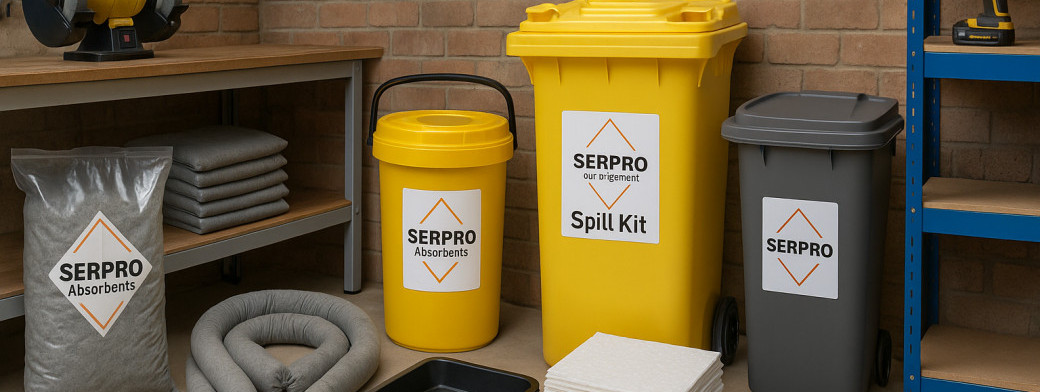
In most engineering teaching spaces, spill stations work best when distributed across the workshop rather than kept in one central cupboard. Small kits and loose absorbents should be positioned near CNC machines, lathes, mills, hydraulic equipment and cutting-fluid systems, where leaks and drips often begin. Absorbent rolls or pads can also be kept near benches used for dismantling, cleaning or fluid changes, while absorbent socks are useful around the base of equipment or along edges where liquids may travel.
Drain covers should be stored close to any internal or external drainage points that could be affected by a spill, especially near loading doors, washdown areas or service yards. Drip trays are best placed beneath stored containers, under tapping points, beside waste oil drums and below machinery known to weep fluid during use or shutdown. This approach helps contain routine drips before they become floor hazards.
Make spill stations visible and clearly labelled
Spill control equipment is only useful if people can identify it immediately. Each spill station should be clearly labelled, easy to distinguish from general cleaning supplies and marked for its intended use. Consistent signage, colour coding and simple instructions help students choose the right materials quickly during supervised response. Keeping stations visible also makes them easier to check during inspections, restocking and housekeeping rounds.
Who Should be Responsible for Spill Response?
Spill response in a university engineering workshop should be a shared responsibility, but not an equal one in every circumstance. Students should be trained to recognise a spill, make the area safe, report it promptly and, where permitted, deal with minor spills using the correct equipment. Staff, technicians and supervisors should take responsibility for risk assessment, deciding whether a spill is safe for students to manage, overseeing the response and ensuring waste is handled properly afterwards. This division helps workshops respond quickly without expecting inexperienced users to make unsafe decisions.
Training is essential for both groups. Students need clear induction on likely workshop liquids such as oils, coolants and cutting fluids, how contamination increases slip risk, where spill stations are located and when not to intervene. Staff require deeper instruction on workshop-specific hazards, COSHH controls, incident reporting and the selection of suitable absorbents, PPE and containment methods. Refresher training should be built into practical teaching so good spill habits become part of normal engineering discipline rather than a one-off safety talk.
What students should do
Students should be expected to stop work, warn others, isolate the immediate area if safe to do so and alert the supervising member of staff. For small, low-risk spills, they may be authorised to use clearly labelled small spill kits under local workshop rules. They should also know how to separate used absorbents and place contaminated materials into suitable disposal bags for onward handling.
What staff should do
Staff and technicians should lead any supervised response. That includes judging whether the spill involves hazardous substances, whether drains need protection, whether machinery should be shut down and whether escalation is required. They should also check that cleanup equipment is stocked, visible and appropriate to the liquids used in each area.
Why teamwork matters
Spill incidents are managed best when everyone understands their role. One person may fetch the kit, another may control access, while a supervisor directs the cleanup and confirms safe disposal. This teamwork reduces confusion, shortens response time and reinforces the professional standards students are expected to carry into industry.
How Should Waste be Separated and Disposed of?
Waste from spills in university engineering workshops should be separated by both what has been spilled and what has been used to clean it up. In practice, this means keeping hazardous spill waste such as oils, solvents, cutting fluids, contaminated absorbents and heavily soiled PPE apart from non-hazardous waste such as uncontaminated packaging or materials from minor water-based spills. Clear separation reduces disposal errors, helps protect drains and work areas, and supports safe workshop routines for students and supervisors.
The key rule is simple: once an absorbent pad, granule, sock, rag or pair of gloves has been used on a hazardous substance, it should usually be treated as hazardous waste as well. Using clearly labelled containers near spill stations, alongside suitable chemical absorbents and protective gloves, makes it easier to keep waste streams separate from the start rather than trying to sort them afterwards.
Types of waste generated from spills
Engineering workshops can generate several waste types during spill response, including:
- Liquid waste such as waste oil, coolant, cutting fluid, solvent, degreaser or chemical residues collected from trays or containers.
- Contaminated absorbents including pads, rolls, socks, granules and wipes used to contain or soak up spills.
- Contaminated PPE such as gloves, oversleeves or disposable coveralls exposed to hazardous substances.
- Non-hazardous clean-up waste from low-risk, non-contaminating spills where the material is not classed as hazardous.
- Mixed waste where different substances have combined, making identification and disposal more complex.
Proper disposal methods for hazardous and non-hazardous waste
Hazardous spill waste should be placed in suitable, sealed and labelled containers or bags and stored in a designated area for collection by an authorised waste contractor. This commonly applies to oils, solvent-contaminated materials, chemical absorbents, and any clean-up waste affected by substances covered by COSHH. Liquids should not be tipped into sinks, surface drains or general waste bins.
Non-hazardous waste may go into the workshop’s general waste or recycling stream only if it is genuinely uncontaminated and local waste rules allow it. If there is any doubt, staff should treat the waste as potentially hazardous until it has been assessed. Segregation should happen at the point of clean-up, with containers clearly marked for oil-only, chemical, general purpose and non-hazardous waste where relevant.
Legal requirements in the UK
In the UK, workshop operators must comply with waste duty of care requirements, ensure hazardous waste is described accurately, stored safely and transferred only to authorised carriers, and prevent pollution to land and water. HSE guidance on hazardous substances and GOV.UK guidance on pollution prevention for businesses are useful starting points. Universities should also maintain records such as waste transfer notes or consignment documentation where required, and train students not to dispose of spill waste informally. Good disposal practice is not just housekeeping; it is part of responsible workshop management.
How Can Routine Inspections Improve Spill Management?
Routine inspections improve spill management by making sure equipment is present, visible, usable and suited to the liquids handled in a university engineering workshop. Regular checks help staff spot missing absorbents, damaged drip trays, blocked access to spill stations and poor housekeeping before a minor leak turns into a slip risk, contamination issue or more disruptive clean-up. In teaching spaces where oils, coolants and cutting fluids are used around benches and machine areas, inspections support safer day-to-day habits as well as a more reliable supervised response.
They also provide evidence that spill controls are being maintained rather than assumed to be ready. This matters in workshops where layouts, stock levels and student activity can change quickly. A simple inspection routine can confirm that absorbent pads, rolls, socks, gloves, disposal bags and drain protection are in the right place, that signage is clear, and that any defects are reported promptly. For a practical framework, workshops can build checks into wider inspection routines and review whether spill station labelling remains easy for students and technicians to follow.
What should be checked during routine inspections?
Checks should focus on both condition and usability. Inspectors should confirm that spill kits are fully stocked, absorbents are appropriate for the liquids in that area, and containers or dispensers are not damaged by damp, dust or workshop debris. Machine bases, storage points and transfer areas should be checked for recurring drips, overfilled waste containers, saturated absorbents and trip hazards caused by poor placement. It is also sensible to review whether drip trays are positioned correctly, whether drain covers are accessible, and whether floors are being kept clear in line with HSE guidance on slips and trips.
How often should inspections take place?
Frequency should reflect risk. A busy workshop with frequent use of oils, coolants or chemical products may need quick visual checks each day, supported by a more detailed weekly inspection. Lower-risk storage areas may be suitable for weekly or monthly checks, provided they are included in a clear schedule. Additional inspections should follow any spill incident, stock replenishment issue, room reorganisation or change in substances used, with COSHH considerations reviewed where relevant under HSE COSHH essentials.
What documentation and reporting procedures are useful?
Inspection findings should be recorded consistently, even if the check is brief. A simple log can note the date, area inspected, person responsible, items checked, defects found, actions required and completion date. Where leaks, damaged containers or repeated housekeeping failures are identified, the issue should be escalated to the relevant technician, workshop manager or estates team. Reporting should also distinguish between replenishment needs, maintenance faults and waste disposal issues, so corrective action is clear. Over time, these records help universities identify patterns, improve stock placement and support wider pollution prevention expectations set out in GOV.UK guidance for businesses.
What Training Should be Provided for Effective Spill Management?
Students, technicians and teaching staff in university engineering workshops should receive spill management training that covers prevention, safe response, correct product selection, reporting and waste handling. The aim is to make spill control a routine workshop habit rather than a last-minute reaction. Training should reflect the liquids commonly found in these spaces, such as oils, coolants, cutting fluids, cleaning chemicals and contaminated water, and it should show people how to use absorbent pads, rolls, socks, drip trays, drain protection, gloves and disposal bags safely and appropriately.
Effective training also needs to match the UK workshop context. That means linking spill response to housekeeping, slip prevention, COSHH controls and pollution prevention, with clear instruction on when a student may deal with a small supervised spill and when a technician or other competent person must take over. In practice, the best approach combines short theory sessions, visible local instructions and regular workshop-based drills so that people can respond confidently without creating extra risk.
Core topics training should cover
A sound training programme should explain how spills start, where they are most likely around machines and benches, and how to reduce the chance of leaks spreading across floors or into drains. It should include identification of different spill types, selection of suitable absorbents, isolation of the area, use of drain covers where needed, safe clean-up, segregation of used materials and reporting of incidents or near misses. Training should also reinforce wider duties around safe floors and contamination control, in line with HSE guidance on slips and trips, COSHH essentials and pollution prevention guidance for businesses.
How training can be delivered
Delivery should be layered. Induction training gives new students and staff the basics before they use workshop areas. Refresher sessions help maintain standards across the academic year, especially where cohorts change frequently. Brief toolbox talks can focus on local risks around lathes, milling machines, hydraulic rigs or fluid storage points. Many universities also benefit from structured external support, such as spill control training, to help standardise expectations and improve confidence across departments.
Why hands-on practice matters in workshops
Hands-on training is especially important in engineering workshops because spill response is practical, time-sensitive and location-specific. People need to know not only what to do, but where equipment is kept, how to deploy it quickly and how to avoid spreading contamination while working around machines, cables and pedestrian routes. Supervised practice with small spill kits, absorbent socks, pads and disposal procedures helps turn written rules into usable habits. Workshop teams can strengthen this further through hands-on training that uses realistic scenarios and reinforces calm, safe decision-making.
Conclusion: Building a Culture of Spill Preparedness
Effective spill management in university engineering workshops is not just about reacting when liquid reaches the floor. It depends on good housekeeping, clear training, suitable equipment, supervised response and safe waste handling becoming part of everyday workshop discipline. Across this article, the key message has been consistent: common workshop liquids such as oils, coolants, cutting fluids and cleaning chemicals can create slip risks, contamination issues and unnecessary disruption if they are not controlled quickly and correctly.
A strong approach starts with prevention, including tidy benches, well-maintained machines, sensible storage and regular inspections. It is strengthened by making the right resources easy to reach, such as absorbent pads, absorbent rolls, absorbent socks, drip trays, drain covers, gloves, disposal bags and clearly labelled spill stations. It also relies on staff and students understanding when to deal with a small spill themselves, when to report it immediately and how to separate waste properly. These habits support safer floors, better environmental protection and more confident practical learning, in line with UK expectations around slip prevention, COSHH controls and pollution prevention.
The next step is simple: review your workshop routines and ask whether spill preparedness is visible, understood and practised. Students should treat spill control as part of professional engineering behaviour, not as an afterthought. Staff should reinforce this through inductions, demonstrations, inspections and consistent expectations. When everyone knows where equipment is kept, how to use it and why rapid reporting matters, spill management becomes a shared responsibility rather than a last-minute response.
Ultimately, the safest workshops are the ones where preparedness is normal. By fostering a culture of attention, accountability and practical readiness, universities can help protect people, equipment and the wider environment while teaching habits that students will carry into industry.