
Published: 26 August 2026
Last updated: 24 August 2026
Why is Spill Management Crucial in Aquaculture Environments?
Spill management is crucial in aquaculture environments because these sites combine sensitive water habitats with routine handling of liquids that can quickly spread and cause harm. Aquaculture environments include fish farms, hatcheries, shellfish operations, feed stores, workboats, pontoons, maintenance areas and other support spaces where stock is raised, handled or supported. Common spills include fuels, oils, disinfectants and feed liquids, and each can threaten water quality, fish health, site safety and nearby land or drainage systems. In practice, effective spill control means planning ahead with suitable containment and clean-up measures such as drip trays, absorbent pads, absorbent rolls, absorbent socks, drain covers, gloves, disposal bags and clearly labelled spill kits, while also aligning site procedures with UK pollution prevention expectations.
For aquaculture operators, the importance is both environmental and practical. Even a small leak from a fuel bowser, workboat, generator, chemical store or feed transfer point can enter drains, channels or open water before staff have time to react. That is why a documented spill management approach matters: it helps teams identify likely spill points, place the right materials nearby and respond quickly enough to reduce spread, contamination and disruption.
Protecting water, stock and surrounding habitats
Aquaculture sites are uniquely exposed because the workplace is often directly connected to rivers, lochs, estuaries or coastal waters. Spilled diesel, hydraulic oil or chemical disinfectants can affect dissolved oxygen, damage habitats and place fish or shellfish stock under stress. Feed liquids and oily residues may also create slip risks on walkways and pontoons while increasing the chance of pollution reaching the watercourse. UK guidance on coastal and marine pollution response and pollution prevention for businesses makes clear that prevention, containment and prompt action are essential.
Supporting compliance and better site control
Spill planning also supports compliance by showing that the site has considered storage, transfer, housekeeping and emergency response around polluting substances. This does not mean products alone make a site compliant, but having the right controls in place helps operators manage risk more effectively. For fish farms and related facilities, practical preparation may include oil-only absorbents near fuel and boat areas, chemical absorbents near disinfectants, general purpose absorbents in workshops, and drain protection where run-off could escape. A structured setup, supported by routine checks and guidance such as aquaculture solutions, helps protect the environment while keeping day-to-day operations safer and more resilient.
What Liquids are Most Likely to Spill in Aquaculture?
In aquaculture, the liquids most likely to spill are fuel, lubricating oils, hydraulic oils, disinfectants, cleaning chemicals and liquid feed or feed-related residues. These substances are commonly handled around pens, pontoons, workboats, storage areas and maintenance zones, so even a small loss can quickly spread across hard surfaces or enter drains and open water. Because aquaculture sites operate close to sensitive ecosystems, identifying these liquids in advance is a practical first step in planning suitable containment, housekeeping and response measures.
Fuel is one of the most obvious risks, particularly diesel and petrol used for generators, pumps, vehicles and support craft. Spills often start during refuelling, from damaged hoses, leaking tanks, poorly sealed containers or overfilled portable cans. Oils present a similar issue: engine oil, gear oil and hydraulic fluid may escape from workboats, lifting equipment, feed systems or maintenance activities. Where hydrocarbons are handled regularly, keeping suitable liquid absorbents and clearly positioned spill kits nearby can help staff respond quickly before contamination spreads.
Disinfectants, chemicals and feed liquids
Disinfectants and cleaning agents are also common on aquaculture sites, especially in washdown areas, stores and biosecurity points. These may include concentrated sanitisers or other substances that require careful handling under COSHH. Spills can happen during decanting, mixing, transport or routine cleaning. Liquid feed, feed oils and silage-type residues may be less hazardous to handle than some chemicals, but they can still create pollution, unpleasant odours and oxygen demand in water if released in quantity.
Why these spills matter
The impact of a spill depends on the liquid, location and speed of response. Fuel and oils can form surface films that affect oxygen exchange and harm fish, invertebrates and bird life. Disinfectants and other chemicals may be directly toxic to aquatic organisms. Feed liquids and residues can increase nutrient loading, encourage algal growth and degrade local water quality. Spills also create slip hazards for workers on wet decks, walkways and concrete surfaces, making good housekeeping essential alongside pollution prevention, as highlighted by HSE guidance on slips and trips.
Where Do Spills Typically Occur in Aquaculture Operations?
Spills in aquaculture operations most often occur where liquids are handled, transferred, stored or used during routine work. In practice, that usually means pontoons and workboats, storage areas for fuel, oils, feed liquids or disinfectants, and maintenance zones where equipment is serviced. These locations combine frequent movement, wet surfaces, exposed weather and manual handling, all of which increase the chance of leaks, drips, splashes and overfills.
The highest-risk areas are not always the largest ones. A small hydraulic leak on a pontoon, a damaged container in a store, or a drip beneath a generator in a maintenance bay can quickly spread into drains or open water if not contained early. Good housekeeping, sensible storage and having the right containment products close to the task are practical ways to reduce that risk.
Pontoons, jetties and workboat access points
Pontoons are a common spill location because fuel cans, lubricants, nets, hoses and tools are often moved across narrow, wet and sometimes uneven surfaces. Refuelling workboats, topping up hydraulic systems and transferring chemicals create obvious opportunities for drips and splashes. Rain, wind and tidal movement can make minor losses harder to spot and easier to wash into the water. Using spill socks around transfer points and keeping suitable absorbents nearby can help contain small releases before they spread.
Storage areas for fuel, feed liquids and disinfectants
Storage areas present risks from poor stacking, damaged packaging, uncapped containers and overfilling during deliveries. Aquaculture sites may hold oils, cleaning agents, treatment products and liquid feed components, each with different handling needs under COSHH. Preventive measures include clear segregation, routine checks for leaks, secondary containment, and placing containers on appropriate drip trays rather than directly on the floor.
Maintenance zones and plant areas
Maintenance areas around pumps, generators, vehicles and handling equipment are another frequent source of spills. Common causes include worn seals, hose failures, draining fluids during servicing and contaminated tools left on the ground. These zones also create slip hazards, which the HSE highlights as a key housekeeping issue. To reduce risk, inspect equipment regularly, label spill response points clearly, separate waste correctly and protect nearby drains or water routes in line with UK pollution prevention guidance.
What Spill Control Products Should Be Available on Site?
Aquaculture sites should keep a small but well-chosen range of spill control products close to the places where leaks and drips are most likely. In practice, that means having absorbent pads, drip trays and small spill kits readily available around fuel stores, feed handling areas, chemical stores, workboats, pontoons and maintenance spaces. The right products help staff contain spills quickly, protect nearby drains and watercourses, and deal with routine housekeeping before a minor leak becomes a wider pollution incident.
Products should be matched to the liquids on site and positioned where they can be reached without delay. This supports practical pollution prevention in line with UK guidance on pollution prevention for businesses, while also helping teams manage slip risks and chemical exposure more effectively during day-to-day operations.
Essential products and where to use them
Absorbent pads are one of the most useful first-response items for aquaculture environments. They are suitable for wiping up drips, catching small leaks beneath pumps or containers, and dealing with minor oil, fuel or liquid feed contamination on hard surfaces. Pads are especially useful on workboats, in workshops and beside transfer points where staff need a quick, portable absorbent.
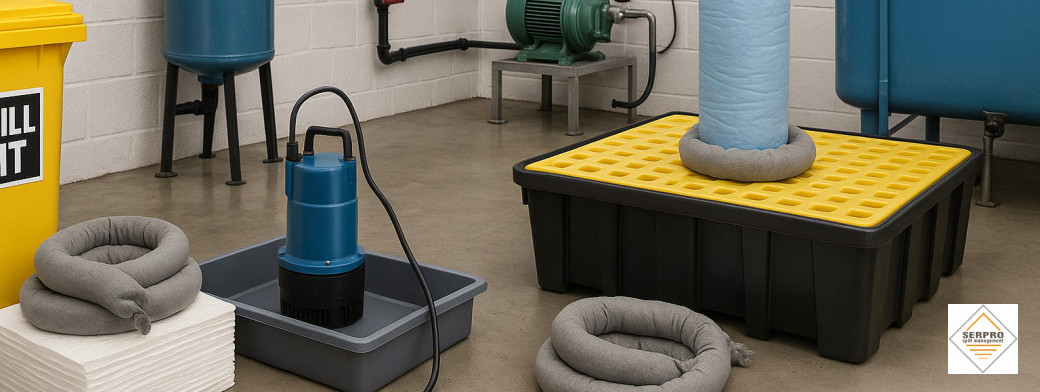
Drip trays should be placed under drums, IBC taps, generators, hydraulic equipment and refuelling points. Their role is preventative: they catch routine seepage, overfills and connection drips before liquids spread across walkways or reach the water. This is particularly important on pontoons and in stores where space is limited and contamination can travel quickly.
Small spill kits should be positioned in clearly marked spill stations near higher-risk areas. A compact kit can support an immediate response to fuel splashes, oil leaks or disinfectant spills, typically with absorbents, disposal bags and gloves. Keeping kits close to the hazard reduces response time and makes it easier for trained staff to act safely.
Why availability matters
Having the right products on hand is as important as choosing the products themselves. If absorbents and trays are not nearby, staff may improvise, delay action or allow a spill to spread. A simple, visible setup helps routine inspections, reinforces housekeeping standards and makes spill response more consistent across the site.
Who Should Be Responsible for Spill Response in Aquaculture?
Spill response in aquaculture should be a shared responsibility, but it needs clear leadership. In practice, the site manager should oversee planning, equipment checks, reporting and escalation, while workers, contractors and boat crews should be responsible for spotting spills early, taking safe first actions and following the site procedure. This matters because aquaculture sites often handle fuel, oils, disinfectants and liquid feed close to sensitive water environments, where delays or confusion can quickly increase the impact.
The most effective approach is to assign named roles before an incident happens. A site manager or supervisor should normally act as the spill lead, making sure suitable controls are in place, such as labelled spill stations, drain protection, drip trays and the right absorbents for likely liquids. Workers should know where to find kits, how to use them safely and when to stop work and raise the alarm. Where workboats, stores and maintenance areas are involved, responsibility should also extend to those operating in these higher-risk zones.
Key personnel and their roles
Site managers should be responsible for risk assessment, stocking appropriate materials, maintaining incident records and deciding when outside support is needed. They should also make sure procedures reflect UK guidance on pollution prevention for businesses.
Workers and operatives should be responsible for immediate containment where safe to do so, such as using absorbent pads, socks, drain covers or small spill kits, and for reporting the incident straight away. If chemicals are involved, duties should align with COSHH controls and site-specific instructions.
Training and communication
Training is essential. Everyone likely to encounter fuel, oil or chemical spills should receive practical instruction on identifying hazards, selecting the correct response materials and separating waste for disposal. Refresher training should be built into routine inspections and inductions, with extra attention for new starters and contractors. Useful support can be found through training resources and practical guidance on spill response.
Clear communication is just as important as equipment. Staff should know who leads, who reports, who contains the spill and who contacts external help if pollution threatens drains, ground or watercourses. Simple role allocation reduces hesitation and helps the site respond quickly and consistently.
How Should Waste Be Handled and Separated After a Spill?
After a spill at an aquaculture site, waste should be separated by material type and hazard level as soon as it is safe to do so. In practice, that means keeping oil-contaminated absorbents, chemical-contaminated absorbents, general non-hazardous waste, damaged packaging and any recovered liquid in clearly labelled containers or bags. This helps prevent cross-contamination, supports safer handling, and makes it easier to choose the correct disposal route.
Good separation matters because aquaculture spills may involve fuels, oils, disinfectants, cleaning agents or feed-related liquids, each of which can require different handling controls. Used pads, socks, rolls, gloves and debris should not simply be mixed together and discarded. Teams should follow the site spill plan, check product safety data where relevant, and make sure temporary storage areas are secure, covered where needed, and positioned away from drains and watercourses.
Best Practices for Waste Separation
Use a simple, consistent system: one container for oil-only waste, one for chemical-contaminated waste, one for general waste that is not contaminated, and separate containers for any free liquid recovered during clean-up. If chemical absorbents have been used on disinfectants or other hazardous liquids, keep them apart from oil-only absorbents and general purpose materials. Label bags and bins clearly, use suitable PPE, and avoid overfilling disposal bags so they can be sealed safely.
Disposal Methods for Different Waste Types
Free liquids may need collection by a licensed waste contractor, while contaminated absorbents, PPE and clean-up debris may need disposal as hazardous or special waste, depending on the substance involved. Uncontaminated packaging and general site waste can usually follow normal waste streams, but only if it has not been exposed to the spill. For practical guidance on arranging compliant removal, see waste disposal.
Why Compliance Matters
Correct disposal is not just housekeeping; it is part of pollution prevention and legal compliance. UK operators should align procedures with pollution prevention guidance for businesses and, where hazardous substances are involved, review controls under HSE COSHH essentials. Keeping waste streams separate, labelled and documented helps demonstrate due diligence and reduces the risk of further contamination.
How Can Routine Inspections Enhance Spill Preparedness?
Routine inspections strengthen spill preparedness by showing whether equipment is in the right place, in usable condition and matched to the liquids handled on site. At aquaculture locations, where fuel, oils, disinfectants and feed-related liquids may be stored or used near water, regular checks help teams spot gaps before a minor leak becomes a pollution incident. They also support good housekeeping, safer walkways and a quicker, more confident response.
In practice, inspections turn a spill plan into something workable day to day. They confirm that absorbents, drain protection, drip trays, disposal bags and gloves are available where spills are most likely to start, such as fuel stores, workboats, maintenance areas, chemical stores and transfer points. This aligns with wider UK pollution prevention guidance from GOV.UK and site controls for hazardous substances under HSE COSHH.
Components of an Effective Inspection Routine
An effective routine should cover both spill risks and response readiness. Inspectors should review storage areas, containers, hoses, valves, bunds, drains, walkways and loading points, while also checking that spill kits are clearly labelled and easy to reach. It is also useful to confirm that the correct materials are stocked, such as oil-only absorbents near fuel, general purpose absorbents for mixed maintenance areas, chemical absorbents for disinfectants, and socks or drain covers where liquid could reach surface water. Using standardised inspection tools can help keep checks consistent across pontoons, sheds and support vehicles.
Checklist for Spill Preparedness
- Spill kits positioned near higher-risk areas and access routes kept clear
- Absorbent pads, rolls and socks stocked and suitable for the liquids present
- Drip trays placed under containers, pumps or transfer points where needed
- Drain covers available and undamaged
- Disposal bags, gloves and waste segregation arrangements in place
- Containers, pipework and storage areas free from visible leaks or corrosion
- Spill station signage legible and easy to identify in an emergency
- Staff aware of reporting and response steps in the site’s spill preparedness arrangements
Frequency of Inspections and Documentation
Inspection frequency should reflect risk: high-use fuel and chemical areas may need daily or weekly checks, while wider site reviews can be completed monthly. Records should note findings, corrective actions, stock replenishment and sign-off, creating a clear audit trail and helping managers identify repeat issues before they escalate.
Conclusion: Best Practices for Spill Management in Aquaculture
Effective spill management in aquaculture depends on preparation, clear procedures and consistent housekeeping. Across fish farms, pontoons, feed stores, fuel areas and workboat maintenance zones, the strongest approach is to identify likely spill risks early, keep suitable containment materials close to the point of use, train staff to respond quickly and separate waste for safe disposal. In practice, that means combining routine inspections with practical controls such as drip trays, absorbent pads, absorbent rolls, absorbent socks, drain covers, labelled spill stations, gloves and disposal bags.
The key strategies covered in this guide work best when they are treated as part of day-to-day site management rather than a one-off purchase. Fuel and oil spills may call for oil-only absorbents, while disinfectants and other chemicals may need chemical absorbents and handling procedures aligned with COSHH guidance from HSE. Good housekeeping, rapid clean-up of leaks, protection of drains and nearby watercourses, and sensible storage arrangements all help reduce both environmental risk and slip hazards. Wider planning should also reflect UK pollution prevention expectations, including the advice set out in GOV.UK pollution prevention guidance.
Put Best Practice into Action
For aquaculture operators, the next step is to review current arrangements and close any gaps. Check whether spill kits are easy to reach, whether staff know who should respond, and whether absorbents match the liquids actually used on site. If you are refining your approach, practical support on spill management and sector-focused aquaculture solutions can help you build a more reliable setup.
Ultimately, strong spill control is part of responsible aquaculture. It protects water, wildlife, infrastructure and staff, while showing that environmental responsibility is being taken seriously in everyday operations. A well-prepared site cannot remove every risk, but it can respond faster, limit harm and support better long-term stewardship of the marine and freshwater environments on which aquaculture depends.