
Published: 25 August 2026
Last updated: 21 June 2026
Why is Spill Management Essential in Printing Shops?
Spill management in printing shops is the planned control, containment, clean-up and safe disposal of liquids used during print production and maintenance. In printing environments such as litho, screen and digital print rooms, the most common spill risks come from inks, solvents, wash-up fluids and cleaning products. Effective spill control means having the right measures ready at the point of use, such as absorbents, socks, rolls, drip trays, drain protection and clearly labelled response points, while also working in line with UK duties under COSHH and relevant HSE guidance. It matters because even a small spill can create slip hazards, harmful vapours, fire risk, product contamination and pollution if it reaches drains or the ground.
In practical terms, spill management is essential because printing shops handle liquids that can spread quickly across walkways, benches and machine areas. Ink spills can make floors slippery and difficult to clean thoroughly, while solvent and wash-up fluid spills may present additional health, flammability and environmental concerns. A sensible response plan reduces downtime, protects staff, limits waste and helps prevent an avoidable incident from becoming a reportable safety or pollution problem.
What liquids are usually involved?
Most print sites use a mix of substances with different spill behaviours. These typically include solvent-based and water-based inks, fountain solutions, press washes, blanket washes, screen cleaning fluids, adhesive residues and general wash-up chemicals. Because these liquids vary in compatibility and hazard level, shops often need different control materials nearby, including suitable spill kits, absorbent pads or rolls for routine drips, and containment items for leaks from containers, pumps or transfer points.
Why does compliance matter?
UK printing businesses must consider spill risks as part of day-to-day health, safety and environmental management. Under COSHH, employers need to assess hazardous substances, control exposure and put suitable procedures in place for storage, handling and emergencies. Spill planning also supports HSE expectations around housekeeping and safer floors, and it helps businesses follow government guidance on preventing pollution, especially where solvents could enter drains, groundwater or outside surfaces; see this GOV.UK guidance on preventing groundwater pollution from solvents. In short, good spill management is not just about tidiness: it is a core control for worker safety, operational continuity and environmental protection.
What Types of Liquids Are Commonly Spilled in Printing Shops?
Printing shops commonly spill three main groups of liquids: inks, solvents, and wash-up or cleaning fluids. In litho, screen and digital print environments, these materials are handled every day during set-up, colour changes, equipment cleaning and routine maintenance, so even small drips can quickly create slip hazards, contamination risks and waste-handling issues. Because some of these liquids are chemically aggressive, shops often need suitable chemical absorbents rather than a one-size-fits-all absorbent.
The exact spill risk depends on the print process and the products in use, but the most common liquids are easy to recognise. They usually include inks in different formulations, solvent products used for thinning or cleaning, and wash-up fluids applied to presses, rollers, screens, trays and surrounding work areas. Identifying which liquids are present is the first step in choosing the right containment, storage and clean-up approach under COSHH guidance.
Inks
Printing inks are an obvious source of spills, but they vary significantly. Water-based inks are common in some screen and digital applications and may appear lower risk, yet they can still leave slippery residues and spread across walkways. Solvent-based inks are widely used where durability and fast drying are needed, and these can bring added concerns around vapours, flammability and contaminated waste. UV inks, used in many modern print systems, can also spill during cartridge changes, line purging or maintenance and may need more careful handling because of their chemical composition.
Solvents
Solvents are another frequent spill category. These include cleaning agents used on presses, rollers, blankets, screens and tools, as well as thinners used to adjust viscosity or support production. Solvent spills can travel quickly, produce strong fumes and increase the risk of floor contamination reaching drains, which is why UK guidance on preventing groundwater pollution from solvents is relevant.
Wash-up fluids and cleaning products
Wash-up fluids and cleaning products are spilled routinely during end-of-run clean-downs and maintenance tasks. These may include press wash, screen wash, blanket wash, detergents and mixed cleaning solutions. Although they are used for housekeeping, they can themselves become a spill problem, especially when transferred between containers or left near busy work areas. In practice, these products are often the liquids most likely to cause repeated small spills and slippery floors.
Where Do Spills Typically Occur in Printing Shops?
Spills in printing shops usually happen at the points where liquids are handled most often: printing presses, cleaning stations, and storage areas for inks and solvents. These locations combine frequent movement, open containers, hose or pump transfers, wipe-down tasks, and busy walkways, so even small drips can quickly become slip hazards or spread towards drains. In practice, the highest-risk areas are not always the largest leaks, but the repeated minor releases that build up during normal production and wash-up work.
Across litho, screen and digital print environments, common spill causes include overfilling, splashes during decanting, leaking containers, saturated rags, and residue left on floors or machine frames. This matters not only for housekeeping, but also for exposure control and pollution prevention under COSHH guidance from HSE and wider UK advice on preventing contamination from solvents and chemicals.
Printing presses
Presses are a common starting point because inks, fountain solutions, coatings and wash-up fluids are used repeatedly throughout a shift. Drips can form beneath ink feed points, trays, rollers, hoses and containers during changeovers or maintenance. Operators may also carry partly used tins or bottles between stations, increasing the chance of splashes onto floors and access routes.
Cleaning stations
Cleaning stations often see concentrated spill risk because solvents and wash-up liquids are actively poured, sprayed or wiped onto equipment. Used wipes, open buckets and wet benches can all lead to contamination spreading beyond the immediate task area. According to HSE guidance on slips and trips, even thin surface contamination can make floors unsafe very quickly.
Storage areas for inks and solvents
Storage areas for inks and solvents are another frequent problem spot, especially where containers are stacked, moved infrequently, or opened without secondary containment. Small leaks may go unnoticed until they reach pallet bases, shelving, or nearby drains. UK guidance on preventing groundwater pollution from solvents and broader pollution prevention for businesses supports keeping these areas organised, inspected and ready for quick containment.
What Spill Control Measures Should Be in Place?
Printing shops should have simple, visible spill control measures that match the liquids they use and the places spills are most likely to happen. In practice, that means keeping the right absorbent products close to presses, wash-up areas and chemical stores; using containment such as drip trays under containers and transfer points; and making sure hazardous materials are stored, segregated and disposed of properly. The aim is to deal with small leaks quickly, stop liquids spreading into walkways or drains, and reduce slip risks in line with HSE guidance on slips and trips.
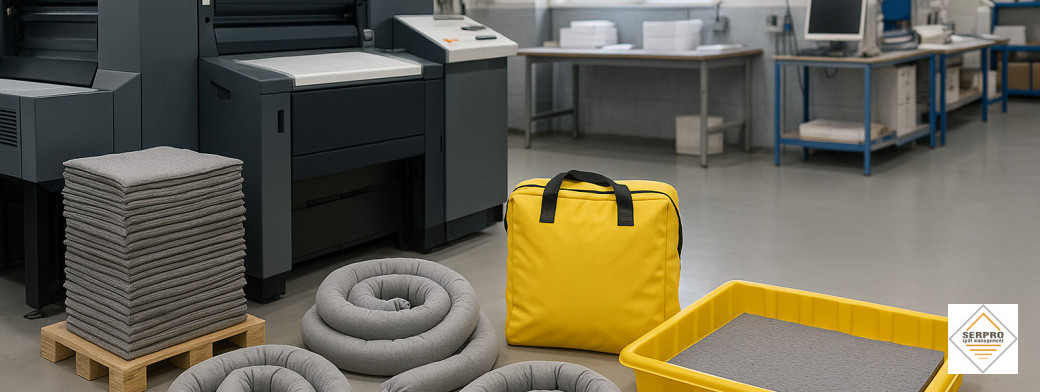
For most print environments, the essentials are absorbent pads for wiping up small releases, rolls for covering larger floor areas, and absorbent socks for surrounding spills or protecting doorways and drains. These should be backed up by clearly labelled small spill kits placed where inks, solvents, wash-up fluids and cleaning chemicals are handled, so staff can respond without searching for equipment.
Containment and first-response equipment
Drips and minor leaks often start during decanting, drum handling, cartridge changes or machine cleaning. Putting drip trays beneath containers, taps, pumps and temporary storage points helps catch routine dribbles before they reach the floor. This is especially useful around wash-up stations and storage shelves where repeated small losses can build into a housekeeping problem.
Small spill kits should include suitable absorbents, disposal bags and gloves, with contents chosen for the liquids on site. General purpose absorbents may suit mixed housekeeping tasks, but chemical-compatible products may be needed where stronger solvents or hazardous cleaning agents are used. Spill stations should be easy to identify, kept stocked and checked as part of routine inspections.
Storage, segregation and waste handling
Spill control also depends on how materials are stored. Hazardous inks, solvents and wash-up products should be kept in appropriate, labelled containers, protected from knocks, and separated where necessary under your COSHH arrangements. Lids should be secured, damaged packaging removed from use, and waste liquids or used absorbents placed into suitable containers for disposal.
Used pads, rolls, socks and other contaminated materials should not simply go into general waste if they contain hazardous substances. Disposal should follow the product safety data and your waste procedure, with hazardous waste segregated, labelled and collected correctly. Good spill control is not just about cleaning up quickly; it is about containing, storing and disposing of materials in a way that keeps floors safer and reduces the chance of environmental release.
Who Should Be Responsible for Spill Response?
Spill response in a printing shop should never be left to guesswork. Responsibility should sit with a designated spill response team, supported by supervisors and backed up by basic awareness training for all staff. In practice, everyone should know how to spot a spill, raise the alarm, protect nearby drains and keep people away, but only trained responders should assess, contain and manage larger or higher-risk releases of ink, solvent or wash-up fluids.
This division of responsibility helps avoid delays, confusion and unsafe clean-up attempts. Print environments often involve slippery floors, mixed chemicals and fast-moving production areas, so clear roles matter. A simple written procedure should state who takes charge, who fetches the spill kit, who isolates the area and who decides whether outside support is needed.
Set clear roles before a spill happens
Your spill response team should be named in advance and visible on shift rotas or noticeboards. Team members should know where absorbents, drain covers, disposal bags, gloves and signage are stored, and they should understand the limits of what they are expected to handle. Line managers should also check that spill stations remain stocked and clearly labelled.
All other staff still need basic instruction. That includes recognising the type of spill, reporting it quickly, avoiding contact, and preventing people from walking through contaminated areas. For many sites, formal spill response training is the most reliable way to build confidence and consistency.
Communication and signage reduce confusion
Clear communication is essential during any incident. Staff should know which radio channel, phone number or reporting route to use, and temporary signage should be placed immediately to warn about slip risks and restricted access. This supports wider duties under COSHH and good housekeeping expectations linked to slips and trips prevention. When roles, training and signage are all in place, spill response becomes faster, safer and easier to manage.
How Should Waste from Spills Be Managed?
Waste from ink, solvent and wash-up spills should be separated, contained and disposed of according to what has been absorbed and whether it is hazardous. In printing shops, used pads, rolls, socks, gloves and cleaning materials can quickly become contaminated with solvents or other substances covered by COSHH, so they should not be mixed with ordinary rubbish. The safest approach is to identify the spilled liquid, keep hazardous and non-hazardous waste apart, and place each waste stream into suitable disposal bags or lidded containers as soon as the clean-up is complete.
In practice, this means treating absorbents used on solvent-based inks, wash-up fluids or strong cleaning chemicals more cautiously than materials used on minor non-hazardous spills such as water-based residues. Staff should follow the product safety data sheet and site procedures, and make sure waste handling supports wider duties under COSHH and pollution prevention guidance from GOV.UK.
Separate waste by contamination type
Hazardous spill waste should be kept in clearly identified containers, separate from general waste and recyclables. For example, absorbents saturated with solvent, contaminated PPE, and debris from a chemical spill should go into designated hazardous waste bags or sealed containers. By contrast, non-hazardous waste from low-risk housekeeping tasks may be managed through a different stream if your assessment confirms it is suitable. Mixing the two creates avoidable disposal problems and can increase cost.
Use suitable bags and containers
Keep disposal bags, ties and compatible containers near spill stations so waste can be secured promptly. Lidded containers help reduce leaks, odours and accidental contact, while labels make it easier for staff and waste contractors to identify contents. If liquid remains free-standing, use a suitable container for recovered waste rather than overloading absorbents.
Follow local disposal rules
Printing shops should use a licensed waste route and check that storage, labelling and collection arrangements meet local waste disposal regulations. If you need a broader overview of business waste handling, see waste disposal guidance. Records, segregation and contractor instructions should all match the materials handled on site.
How Can Spill Management Arrangements Be Inspected?
Spill management arrangements in printing shops should be inspected routinely, not just after an incident. Regular checks help confirm that spill kits are complete, absorbents are suitable for the inks, solvents and wash-up fluids on site, chemicals are stored correctly, and staff can respond quickly without making a spill or slip risk worse. In practice, inspections are a simple way to test whether the arrangements you rely on in an emergency are actually ready to use.
A useful inspection routine combines housekeeping, stock checks and response readiness. This supports safer handling of hazardous substances under COSHH and helps reduce the risk of pollution, as outlined in GOV.UK guidance on pollution prevention for businesses. For printing environments, that means checking both the physical equipment and the way it is positioned, labelled and maintained.
What should be checked during routine inspections?
Start with spill kits and loose absorbents. Check that pads, rolls, socks, drain covers, disposal bags and gloves are present, dry, accessible and clearly labelled for the area they serve. Absorbents should match the likely liquids nearby: general purpose absorbents may suit mixed housekeeping spills, while chemical absorbents may be more appropriate where stronger cleaning fluids or solvent-based products are used. Replenish used items promptly and remove damaged or contaminated stock from service.
Next, inspect chemical storage. Containers should be closed, legible and kept in the correct storage area, ideally with secondary containment such as drip trays where small leaks could occur. Look for poor decanting practices, incompatible materials stored together, and containers left near walkways or drains. Floors around ink mixing, press-side cleaning and wash-up points should also be checked for staining, residue and signs of repeated minor leakage.
How do you monitor spill response readiness?
Readiness is about more than having a kit on site. Inspect whether staff know where equipment is kept, whether access routes are clear, and whether simple instructions are displayed at the spill station. Short refresher checks can confirm who reports a spill, who isolates the area, and how used absorbents are segregated for safe disposal. Recording these inspections helps identify recurring issues before they become larger housekeeping, safety or pollution problems.
What Are the Best Practices for Preventing Slips and Trips?
The best way to prevent slips and trips in printing environments is to keep floors clean and dry at all times, deal with spills immediately using the right absorbents, and make sure staff know exactly how to respond. In print shops, even small releases of ink, solvent, wash-up fluid or cleaning product can create a fast-forming slip risk around presses, wash-up stations, storage areas and walkways. Good housekeeping, clear spill-response routines and regular staff awareness are the most reliable controls.
Practical prevention starts with identifying where contamination is most likely to reach the floor and putting controls in place before an incident happens. This means inspecting routes used for moving containers, keeping spill materials close to likely leak points, and using floor-safe cleaning methods that do not spread contamination. HSE guidance on slips and trips supports a simple approach: stop contamination reaching walking surfaces, remove it quickly when it does, and maintain safe conditions throughout the shift.
Keep floors clean, dry and free from spread
Cleaning should be routine rather than reactive. Floors around presses, ink mixing benches and wash-up areas should be checked regularly for drips, overspray, tracked residues and used wipes. Any wet patch should be isolated and cleaned straight away, with attention to edges where liquids can spread under equipment or pallets. Where recurring drips occur, it may help to review slip prevention measures alongside containment such as trays or absorbent protection at the source.
Use the appropriate absorbents for the liquid involved
Not every spill should be treated with the same material. General purpose absorbents may suit many housekeeping spills, while chemical absorbents may be more appropriate for certain solvents or cleaning fluids. Absorbent pads, rolls or socks should be positioned where they can be reached quickly, so staff can contain and lift liquid rather than push it across the floor. Used absorbents should then be bagged and handled in line with site procedures and the product’s hazard profile.
Train staff regularly
Regular training and awareness for staff are essential. Everyone working near inks, solvents and wash-up chemicals should know how to spot early leak signs, protect walkways, choose the right absorbent, report hazards and dispose of waste safely. Brief refresher sessions, visible signage and simple spill-response instructions help keep standards consistent, especially in busy production periods or when temporary staff are on site.