
Published: 17 August 2026
Last updated: 21 June 2026
Why is Spill Management Crucial in Formula 1 Garages?
Spill management in a Formula 1 garage means planning for, containing, cleaning and disposing of leaked or splashed liquids quickly so the workspace stays safe, fast and controlled. In this environment, common spill risks include engine oils, hydraulic fluids, coolant, brake fluid, fuel residues, cleaning chemicals and tyre-treatment-related liquids. Effective housekeeping usually combines clearly placed absorbents, drip trays, absorbent socks, rolls, drain protection and compact spill kits, supported by staff training and waste segregation. In the UK, these measures sit within wider duties to manage slip, fire, health and environmental risks under HSE guidance, including advice on petrol handling and flammable liquids.
That matters because F1 garages operate at high speed, with tight working areas, hot components, electrical equipment and constant vehicle movement. Even a small leak can create a slip hazard, contaminate tools and tyres, increase fire risk or spread into drains if it is not controlled immediately. Good spill readiness is therefore not just about tidiness; it protects people, equipment, turnaround time and the professional running of the garage.
Which fluids make spill control so important?
Although each team setup differs, motorsport garages typically handle several fluid types with different risk profiles. Oils and lubricants can leave persistent slippery films. Coolants may spread quickly across smooth floors. Brake and hydraulic fluids can affect surfaces and components if left in place. Fuel handling areas need especially careful controls because petrol and similar flammable liquids require strict precautions around ignition sources, ventilation and emergency response, as outlined in HSE guidance on the safe use of petrol in garages and the safe use and handling of flammable liquids.
Tyre preparation and cleaning zones can also introduce residues that make floors unsafe if housekeeping slips. For that reason, spill management in F1 garages should match the liquid involved: oil-only absorbents for hydrocarbons, general purpose products for mixed workshop spills, and chemical absorbents where more aggressive fluids are present. The aim is fast containment, safe cleanup and compliant disposal, not a one-size-fits-all response.
What Types of Fluids Are Commonly Handled in F1 Garages?
F1 garages routinely handle several high-risk fluids, and each creates a different spill challenge. The most common are lubricants, coolants, brake fluids and fuel, alongside products used in tyre preparation and cleaning. In a fast-moving garage, even a small leak can create slip hazards, contaminate work areas, affect grip underfoot or introduce fire and chemical risks, so housekeeping needs to match the type of liquid involved.
Lubricants such as engine oil, gearbox oil and greases are among the most frequent contaminants. They spread quickly across smooth floors, leave a persistent slippery film and can be tracked into walkways. Coolants may appear less obvious, but they can travel further than expected and often leave wet patches that increase slip risk. Brake fluids need extra care because they are chemically aggressive and can damage painted surfaces and some materials, making chemical absorbents a sensible option nearby.
Fuel presents the most serious immediate hazard because it combines rapid spread with flammability. UK guidance from the HSE on petrol handling and broader flammable liquids guidance highlights the need for controlled handling, ignition awareness and quick containment. In practice, garages should keep absorbents positioned close enough for fast response but away from obvious ignition sources.
Tyre service areas can also involve specialist compounds and tyre treatment products, which may leave slick residues if over-applied or knocked over. Because garages often handle several liquids at once, staff should choose absorbents and disposal methods that suit the fluid rather than treating every spill the same way.
Where Do Spills Typically Occur in F1 Garages?
Spills in an F1 garage usually occur where speed, repeated handling and fluid changes happen closest together: pit lane areas, tyre treatment zones and fluid storage locations. The most common scenarios involve drips from lubricants and coolant during servicing, splashes around brake or hydraulic fluids, residue from tyre preparation, and small leaks from containers, transfer points or wheeled equipment. In practice, the highest-risk spots are not always the biggest jobs, but the busiest touchpoints where contamination can spread quickly underfoot.
Pit lane areas are especially vulnerable because crews move rapidly between the car, tools and support trolleys. Even a minor drip can create slip hazards or track across the working zone, so housekeeping needs to be immediate and visible. Positioning clearly marked spill stations near exits and work bays helps teams respond without delaying operations, while floor-level containment such as absorbent socks can stop liquids travelling into pedestrian routes or service channels.
Tyre treatment zones are another common source of spills, particularly where tyre warming, cleaning or preparation leaves residues on floors, benches or transport equipment. These areas benefit from routine wipe-downs, segregated waste handling and localised containment beneath products or tools likely to drip. Where containers are stored temporarily, drip trays can help catch small leaks before they spread into high-traffic areas.
Fluid storage locations also deserve close attention, especially around decanting points, shelving, refuelling support equipment and waste-liquid holding areas. Small losses often begin during opening, pouring or reconnecting lines rather than from major failures. Regular inspections, tidy storage layouts and prompt clean-up support safer floors and better control of flammable or hazardous liquids, in line with HSE guidance on slips and trips and the safe handling of flammable liquids.
What Spill Management Tools Should Be Nearby?
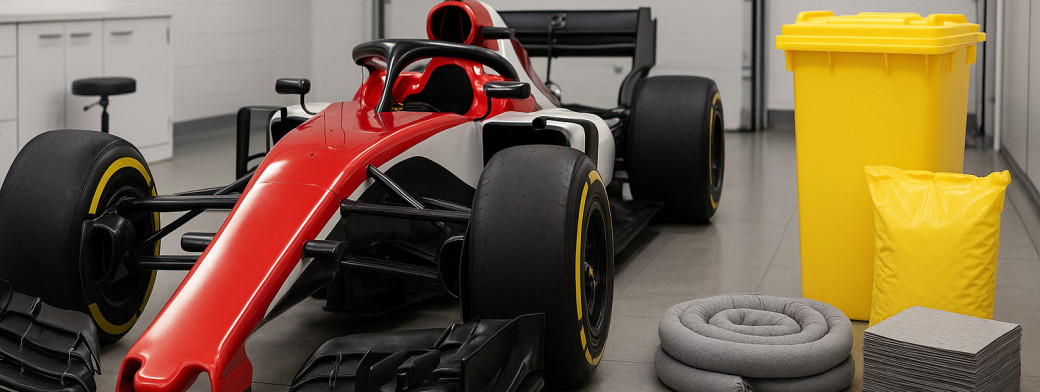
In an F1-style garage, the most useful spill tools are the ones that can be reached in seconds and matched to the fluid involved. At minimum, keep absorbent pads and rolls for fast wipe-downs and floor coverage, drip trays under leak points and service areas, and clearly labelled spill kits for larger or less predictable releases. The aim is simple: contain the liquid quickly, protect walking routes, and stop contamination spreading into work zones or drains.
A good setup should reflect the range of fluids found around a high-pressure garage environment, from oils and coolants to brake fluid and tyre-treatment residues. Tools should be positioned near likely spill sources, but not where they create clutter or sit too close to ignition risks. This supports faster housekeeping and helps teams maintain cleaner, safer floors in line with general UK expectations on slips, trips and liquid handling.
Core tools to keep close at hand
- Absorbent pads and rolls for catching drips, lining benches, wiping small spills and covering narrow floor areas quickly.
- Drip trays beneath couplings, containers, pumps, wheel guns, fluid transfer points and parked components that may continue to weep after servicing.
- Spill kits stocked with absorbents, disposal bags and gloves, so staff can respond without searching for separate items.
- Absorbent socks to contain spreading liquid around equipment legs, tyre stations or garage thresholds; see absorbent socks.
- Drain protection where there is any risk of fluid reaching surface water or drainage channels.
It also helps to separate oil-only, general purpose and chemical absorbents where appropriate, with simple labels so the right material is used first time. A compact spill station near each active work area is usually more effective than relying on one central store.
Who Should Be Responsible for Spill Response?
Spill response in an F1 garage should never sit with one person alone. Responsibility needs to be shared across the team, with clear lead roles, trained first responders and a simple reporting chain so oil, coolant, brake fluid, fuel residues or tyre-treatment liquids are dealt with quickly and safely. In practice, that means assigning ownership before track activity starts, rather than deciding during an incident.
The most effective approach is to nominate a spill lead for each garage or work zone, backed by mechanics, tyre crew and support staff who know how to contain small releases, protect drains and escalate anything involving fire risk, chemicals or larger volumes. This mirrors the need for defined roles and emergency arrangements set out in HSE guidance on incidents and emergencies.
Team members’ roles
Garage managers or chief mechanics should set the plan, check spill stations and confirm who has authority to stop work. Mechanics and technicians should handle immediate containment using the correct absorbents, drip trays or socks for the fluid involved. Tyre-area staff should manage housekeeping around treatment zones and transport routes, while a designated supervisor should oversee waste segregation, disposal bags and replenishment of used items. Where needed, teams can align procedures with a formal spill response process.
Training requirements
Anyone expected to respond should receive practical instruction, not just a briefing. Training should cover fluid identification, safe use of PPE, when to use oil-only or general-purpose absorbents, drain protection, isolation of ignition sources and when to escalate beyond a minor spill. Refresher sessions and drills are best supported by structured training.
Communication protocols
Communication must be short, consistent and immediate. Teams should use a standard callout phrase, identify the location, name the fluid if known and confirm whether the area is safe to approach. Radio, headset or hand-signal procedures should be agreed in advance so spill response does not conflict with live garage operations.
How Should Waste Be Separated and Disposed Of?
Waste in an F1 garage should be separated by what it is contaminated with, how hazardous it is and how it will be removed. In practice, that means keeping oily absorbents, fuel-contaminated materials, chemical residues, general workshop waste and used tyre-treatment items apart from one another. Clear segregation reduces handling risks, helps prevent cross-contamination and supports safer onward collection through a structured waste management process.
Typical waste streams include used absorbent pads and rolls, contaminated granules, oily rags, disposable gloves, empty fluid containers, brake and coolant residues, drain-protection debris, and packaging from tyre or maintenance products. Even in a fast-paced garage, waste should never be swept into one mixed bin if it contains oil, fuel or chemical traces.
Separate Waste by Type and Contamination
Use labelled containers or stations for each stream. Oil-only absorbents used on lubricants should be kept separate from general-purpose absorbents that have picked up mixed workshop liquids. Chemical absorbents used on brake fluid, coolant or cleaning agents should go into their own clearly marked waste route. Clean cardboard, plastics and other non-contaminated packaging can usually be removed as general recycling or general waste, provided no hazardous residue is present.
Use Practical Containment for Collection
Small, sealed sacks or purpose-made disposal bags help contain used absorbents, wipes and PPE before transfer to larger bins. Keep lids closed, avoid overfilling, and store filled bags away from ignition sources and traffic routes. If liquids are still dripping, place waste first in trays or other secondary containment.
Choose the Right Disposal Route
Disposal should match the waste classification and be handled by the site’s approved contractor. Hazardous waste, including fuel- or oil-contaminated absorbents and chemical residues, needs separate collection from ordinary refuse. Keep records, maintain labels and brief staff so that housekeeping remains quick, consistent and safe during busy race operations.
How Can Routine Inspections Enhance Spill Preparedness?
Routine inspections strengthen spill preparedness by finding small housekeeping failures before they become race-day problems. In an F1-style garage, where oils, coolant, brake fluid, fuel residues and tyre-treatment by-products can all create slip or contamination risks, regular checks help teams confirm that absorbents, drip trays, drain protection and waste containers are in the right place, in good condition and ready for immediate use. They also support safer floors and faster response, which aligns with UK guidance on preventing slips and trips from contamination.
Inspection frequency should match the pace of the workspace. A sensible approach is a brief visual check at the start of each shift, a more detailed inspection before live vehicle activity, and a final review after pack-down or fluid-handling tasks. High-risk zones such as refuelling control points, wheel-gun areas, tyre-prep benches and storage shelves may need additional spot checks during busy periods.
What should an inspection checklist include?
A practical checklist should cover floor condition, signs of leaks under cars and trolleys, the placement of absorbent pads, rolls and socks, the condition of drip trays, access to drain covers, clear spill-station labelling, PPE availability and whether waste bags or bins are correctly separated for used absorbents. It should also confirm that walkways remain clear and dry in line with HSE slips and trips guidance. Using standardised checklists and suitable inspection tools makes these checks more consistent.
Why does documentation matter?
Documenting findings turns inspections into a repeatable control measure rather than a box-ticking exercise. Record what was checked, what defects were found, what action was taken and who completed it. This creates a clear trail for replenishing spill kits, replacing damaged containment items and spotting recurring leak points, helping housekeeping improve over time.