
Last reviewed: 13 November 2026
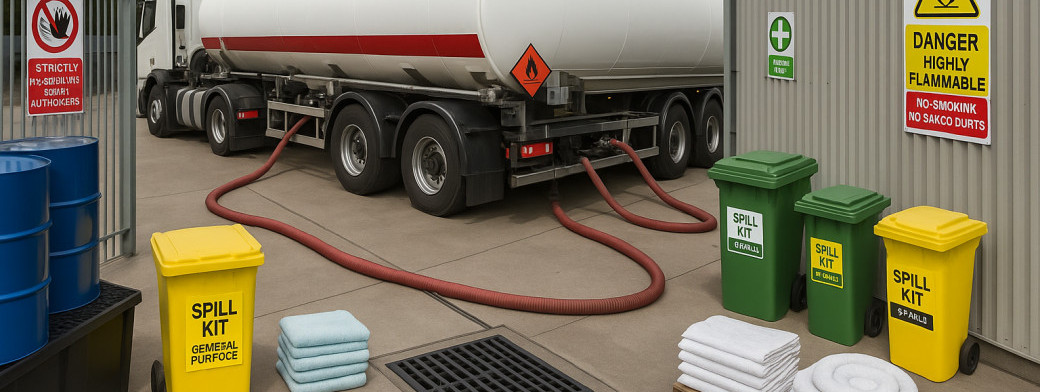
A fuel delivery hose that leaks while a tanker is unloading can put a depot under pressure in seconds. The most effective response starts before delivery: sound connections, controlled transfer points, accessible shut-off arrangements and a clear understanding of where the liquid could flow.
Identify the places most likely to leak
Start with tanker unloading bays, pumps, filters, pipe joints, valves, fuel dispensing points and vehicle movement routes. Small, persistent leaks deserve attention as well as obvious incidents. Check pavement joints and slopes: a relatively small quantity of diesel can travel towards an unprotected surface water gully.
Keep compatible oil-only absorbents for manageable hydrocarbon residues, but do not expect pads to control a significant pressurised release. Bulk storage and tanker transfer require engineered containment, shut-off and emergency arrangements appropriate to the installation.
Secondary containment and drainage
Assess tank bunds, pipework protection, impact risk and drainage isolation together. Bunds must remain effective and should not be treated as ordinary rainwater collection areas. Check that the depot has a safe, authorised method for dealing with accumulated water and contaminated drainage.
The oil storage rules depend on the country, facility and exemptions. In England, certain installations intended for onward distribution have different treatment under the business oil-storage rules; do not assume that every depot is covered by one threshold. Refer to GOV.UK business oil-storage guidance and the site’s permits and fire risk assessments.
Prepare the response before deliveries begin
- Keep unloading procedures, emergency stop controls and contact details visible to the operators who need them.
- Locate spill kits and drain covers where trained responders can reach them safely.
- Keep ignition hazards and vehicle movements under control; an untrained worker should not approach a substantial fuel release.
- Record leaks and near misses, investigate causes and inspect repaired connections before returning them to use.
Handling recovered fuel and materials
Recover free liquid using suitable equipment where safe. Store contaminated absorbents and debris in compatible, labelled containers and use the assessed waste route. HSE guidance on fire and explosion risks is an essential companion to ordinary spill-response procedures.
An effective depot plan is built around preventing uncontrolled releases, not just placing absorbent materials beside a tank.
