
Published: 28 August 2026
Last updated: 26 August 2026
Why is Spill Management Critical in Laboratory Store Rooms?
Spill management is critical in laboratory store rooms because even small containers can release hazardous liquids that spread quickly, react with surfaces or other chemicals, and create risks for people, property and the environment. In this setting, spill management means the planned system for preventing, containing, cleaning and disposing of leaks from stored substances such as acids, solvents and reagents. That usually involves good segregation, clear labelling, secondary containment such as drip trays, and suitable response materials including absorbents, absorbent socks, pads or rolls, plus appropriately stocked spill kits. In the UK, these arrangements support duties under COSHH and wider pollution-prevention expectations, including guidance on preventing solvent releases to ground and drains.
Laboratory store rooms often hold concentrated liquids in relatively small bottles, but the consequences of a spill can be disproportionate. Acids may corrode shelving or packaging, solvents can produce vapours and increase fire or exposure risks, and mixed reagents may create unknown reactions if incompatible substances meet. A minor leak can also spread across smooth floors, damage labels, contaminate adjacent stock and create slip hazards, making a fast, organised response essential.
What makes small-container spills such a serious issue?
Small chemical containers are frequently handled, moved and unpacked, so spills often start with dropped bottles, loose caps, damaged seals or overfilled storage areas. Because store rooms are enclosed and may contain many different products close together, one leak can escalate into a wider clean-up problem. Spill management reduces that risk by ensuring the right control measures are in place before an incident happens, rather than relying on improvised clean-up.
It is also important for compliance. Employers and duty holders should assess hazardous substances, provide suitable controls and emergency arrangements, and prevent liquids from entering drains or the ground where relevant. UK guidance on preventing groundwater pollution from solvents highlights the need for absorbent materials, drain protection and clear emergency procedures. In practice, effective spill management helps laboratory store rooms protect staff, avoid cross-contamination, reduce downtime and demonstrate a more robust approach to safe chemical storage.
What Types of Liquids are Commonly Found in Laboratory Store Rooms?
Laboratory store rooms commonly hold a mixed range of liquids, including acids, alkalis, solvents, oils, water-based reagents, disinfectants and specialist chemicals. Even when these are kept in small containers, each type presents different spill risks, from corrosive burns and toxic vapours to fire hazards and environmental contamination. That is why proper storage, clear labelling and suitable secondary containment such as drip trays are essential.
In practice, the main concern is not just the volume of liquid, but its behaviour when released. A small bottle of solvent may spread quickly and ignite, while a minor acid leak can damage shelving, packaging or neighbouring containers. Store rooms should therefore separate incompatible substances and keep suitable response materials, including chemical absorbents, close to likely spill points.
Common liquids and their hazards
- Acids such as hydrochloric, sulphuric or nitric acid: corrosive to skin, eyes, metals and some surfaces; can react dangerously with other chemicals.
- Alkalis such as sodium hydroxide or ammonia solutions: highly corrosive, capable of causing severe burns and harmful fumes.
- Solvents such as acetone, ethanol, methanol or xylene: often flammable, fast-spreading and capable of producing harmful vapours.
- Water-based reagents and buffers: may appear low risk but can still be irritant, toxic or slippery if spilled.
- Oils and lubricants used with equipment: create slip hazards and may pollute drains if not contained.
- Disinfectants and cleaning liquids: can be irritant, oxidising or reactive depending on formulation.
As outlined in UK guidance on COSHH, every stored liquid should be identified, labelled and assessed for safe handling. Good housekeeping, segregation and visible hazard information help staff respond quickly and reduce the consequences of a small-container spill.
Where Do Spills Usually Start and How Can They Be Prevented?
Spills in laboratory store rooms usually start at predictable points: small leaks from bottle caps or taps, damaged containers, overfilled shelves, awkward manual handling, and accidents during decanting or stock checks. Although the container may be small, even a minor release of solvent, acid or reagent can spread quickly across smooth floors, contaminate adjacent stock and increase slip risk. The most effective response is prevention: store chemicals correctly, separate incompatible liquids, use secondary containment such as drip trays, and keep housekeeping standards high so problems are found before they become incidents.
One common cause is poor storage layout. Bottles placed too close to shelf edges, stacked in unstable ways, or stored above eye level are more likely to be knocked over. Containers with worn closures or residue around the neck can also develop slow leaks that go unnoticed until liquid reaches the floor. A practical spill prevention approach includes clear labelling, sensible shelf loading, segregation of incompatible substances and the use of trays or bunded shelves to catch drips before they spread.
Spills also start during routine tasks rather than emergencies. Receiving deliveries, moving part-used bottles, transferring liquids between containers and cleaning storage areas all create opportunities for accidental release. Secondary containment is especially useful here, as are absorbent pads or socks positioned where drips are most likely. For liquids that could reach doorways or drains, drain protection and a clearly marked small spill kit should be close by, with suitable gloves and disposal bags available for safe clean-up.
Housekeeping plays a central role in prevention. A tidy store room makes leaks easier to spot, reduces trip hazards and helps staff respond quickly. Floors should be kept dry, residues cleaned promptly and empty or damaged containers removed without delay. This aligns with HSE guidance on slips and trips, which highlights contamination and poor cleaning as frequent causes of workplace incidents. Regular inspection routines help confirm that containers remain sound, containment is in place and spill materials are easy to find when needed.
What Should Be Kept Nearby for Effective Spill Response?
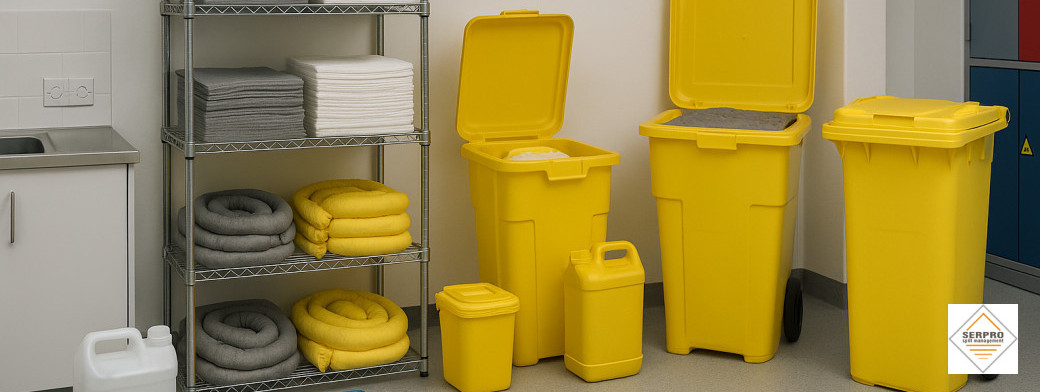
Laboratory store rooms should keep a clearly marked, easy-to-reach spill response station close to likely risk areas, not hidden in another part of the building. For small containers of acids, solvents, oils or mixed reagents, the essentials are a suitable spill kit, compatible absorbents, protective gloves, disposal bags and simple instructions so staff can act quickly without searching for equipment. Fast access helps limit spread, reduces slip risks and supports the emergency arrangements expected under UK health, safety and pollution-control guidance.
At minimum, the nearby equipment should match the liquids stored in the room and be visible at a glance. A response point that is well labelled, unobstructed and checked routinely is far more useful than a larger stock of absorbents kept in a locked cupboard or distant maintenance area.
Essential spill response items
- Small spill kits suited to laboratory incidents, with clear labelling for the intended use.
- Absorbents, including absorbent pads, rolls or socks chosen for chemical compatibility.
- Protective gloves and other appropriate PPE for the substances handled.
- Disposal bags or containers for contaminated absorbents and debris.
- Drain protection where there is a risk of liquids reaching sinks, gullies or external drainage.
- Simple instructions covering isolation, containment, reporting and waste segregation.
Why accessibility and visibility matter
Spill equipment should be positioned near storage shelves, decanting points and receipt areas where leaks are most likely to start. Clear signage, open access and routine inspections help ensure items are present, dry, in date where relevant and ready for use.
Training staff to respond safely
Staff should be trained to recognise what they can clean up safely, which absorbent to use, when to protect drains and when to escalate. This approach aligns with COSHH planning and wider UK guidance on spill response and pollution prevention.
Who Should Respond to Spills and What Are Their Responsibilities?
Spill response in laboratory store rooms should be limited to people who have been identified in advance, trained for the materials present, and equipped to act safely. In practice, that usually means designated laboratory staff, supervisors, facilities or estates personnel, and appointed emergency responders rather than whoever happens to be nearest. The key responsibility is to assess the risk first: if the substance is unknown, highly hazardous, giving off fumes, or threatening drains, the area should be isolated and escalated immediately rather than cleaned up informally.
For small, contained spills, trained responders are typically responsible for making the area safe, using the correct PPE, selecting compatible absorbents, protecting drains, containing the spread, and arranging waste segregation and disposal. Untrained staff should not attempt clean-up beyond raising the alarm, warning others, and following local emergency instructions. This approach supports the risk-control principles set out in HSE COSHH guidance.
Who should be designated?
Each laboratory or store area should clearly name who can respond to minor spills and who has authority to stop work, cordon off access, or call for external help. This often includes a laboratory manager, a trained spill lead on each shift, and a responsible person for waste handling. Where solvents or polluting liquids are stored, roles should also reflect the need to prevent environmental release, in line with GOV.UK guidance on solvent spill prevention.
What training and preparedness are needed?
Responders should receive practical instruction on hazard recognition, reading labels and SDS information, choosing suitable spill materials, using drain covers, and bagging contaminated absorbents safely. Refresher sessions and scenario drills help ensure the response is quick and proportionate. Formal spill response training can help teams prepare for the specific risks found in laboratory storage areas.
What emergency procedures should be followed?
Procedures should set out who to notify, when to evacuate, how to report the substance involved, and how to communicate if drains, walkways, or ventilation are affected. Contact numbers, spill kit locations, and step-by-step instructions should be displayed clearly at the spill station so responders and bystanders can act without delay.
How Should Waste Be Separated and Managed in the Laboratory?
Laboratory waste should be separated at the point it is produced, clearly labelled, and stored in suitable containers until collection or disposal. This matters because even small volumes of mixed waste can increase the risk of fire, fumes, reactions, leaks and difficult clean-ups. In laboratory store rooms, waste streams often include solvents, acids, alkalis, oils, contaminated absorbents, broken glass, sharps and general packaging, so segregation is a basic safety control rather than an administrative extra.
Good waste management also supports safer spill response. If a leak is contained with pads, rolls or socks, the used material must be treated according to what it has absorbed, not simply thrown into general waste. The waste handling guidance should sit alongside local procedures, COSHH assessments and container labelling so staff know what can be stored together, what must be kept apart, and when specialist disposal is needed.
Types of waste generated in laboratories
Typical laboratory waste includes hazardous chemical liquids, aqueous solutions, solvent residues, acidic and alkaline waste, oils, contaminated PPE, absorbent materials, sample containers, glassware, sharps and non-hazardous office or transit packaging. Some sites may also generate waste that is flammable, corrosive, toxic or environmentally hazardous, which means the storage route and disposal method must match the substance.
Why segregation and labelling matter
Segregation prevents incompatible materials from being mixed and helps responders identify risks quickly during a spill. Every waste container should be labelled with its contents, hazards and accumulation status, and should remain closed when not in use. Clear labelling also reduces errors during internal handling and collection.
Best practices for waste disposal
Use compatible, sealed containers; keep chemical wastes separated by type; store them within secondary containment such as drip trays; and never overfill. Keep disposal bags and spill materials near likely risk points, protect drains where needed, and arrange routine checks so containers, labels and storage areas remain in good order. Disposal should always follow site procedures and current UK guidance, including COSHH.
How Can the Arrangement of Laboratory Store Rooms Be Checked During Inspections?
Laboratory store rooms should be checked through routine, documented inspections that focus on spill readiness, safe layout and the condition of containment measures. In practice, this means confirming that small containers are stored by compatibility, labels remain legible, secondary containment is in place, access routes are clear and suitable spill-control materials are close at hand. The aim is to spot minor weaknesses before a dropped bottle, leaking cap or damaged shelf turns into a larger clean-up, exposure or pollution incident.
A good inspection looks at both housekeeping and response capability. Store rooms holding acids, solvents, oils or mixed reagents should have the right absorbents, drip trays, disposal bags, gloves and, where relevant, drain protection available nearby rather than elsewhere on site. Inspection findings should then be recorded, assigned to a responsible person and reviewed as part of wider inspection routines and COSHH controls.
Checklist for inspecting spill management measures
- Containers are upright, sealed and clearly labelled.
- Incompatible chemicals are segregated and not stored together.
- Shelves are stable, not overloaded and have suitable lips or edging where needed.
- Secondary containment such as drip trays is clean, intact and correctly sized.
- Absorbent pads, rolls or socks are suitable for the liquids stored.
- Small spill kits are visible, stocked and clearly signed.
- Floors, corners and access routes are dry and free from obstructions.
- Drain points are identified and protection is available if required.
- Waste containers for used absorbents are present and labelled.
Frequency of inspections
High-use or higher-risk store rooms may need weekly checks, while lower-risk areas may be inspected monthly, with a fuller formal review each quarter. Inspection frequency should reflect the substances stored, container turnover and any previous incidents or near misses.
Documentation and reporting procedures
Use a simple checklist, date each inspection and note defects, corrective actions, deadlines and named owners. Escalate urgent issues immediately, especially damaged containment, missing spill supplies or poor segregation. Records should support COSHH management and align with UK guidance from the HSE and pollution prevention guidance.
What Are the Best Practices for Spill Management in Laboratory Store Rooms?
The best spill management practices in laboratory store rooms combine preparation, fast containment, correct material selection and regular review. Small containers of acids, solvents, oils or mixed reagents can still create significant hazards, so store rooms should have clear procedures, compatible absorbents, secondary containment, drain protection, labelled waste routes and trained responders ready before an incident happens.
In practical terms, that means keeping the right equipment close to likely spill points, such as spill management supplies, absorbent pads, rolls, socks, drip trays, disposal bags and gloves. Teams should match the response to the substance involved, isolate the area, protect drains where necessary and follow site-specific COSHH controls in line with HSE COSHH guidance.
Core Spill Management Best Practices
- Store chemicals with suitable segregation, secure lids and secondary containment to reduce the chance of leaks spreading.
- Place clearly labelled small spill kits near shelving, decanting areas and waste storage points.
- Use compatible absorbents: chemical absorbents for aggressive liquids, general purpose absorbents for mixed housekeeping spills, and specialist products where required.
- Protect drains quickly using covers or barriers, especially where solvents or polluting liquids are involved, reflecting GOV.UK solvent pollution guidance.
- Separate contaminated waste, label it clearly and arrange disposal through the correct hazardous waste route.
Just as importantly, effective spill control depends on ongoing training and awareness. Staff should know who responds, when to escalate, how to use absorbents safely and when a spill is beyond in-house capability. Refresher training, simple signage and routine drills help keep procedures practical rather than theoretical.
Overall, the key points are straightforward: plan for small-container failures, keep suitable equipment nearby, respond with compatible materials, protect people and drains, and dispose of waste correctly. Laboratory managers should also review and improve spill management protocols regularly, using inspections, incident lessons and housekeeping checks to keep arrangements effective as stock, layouts and risks change.