
0
1188
Introduction
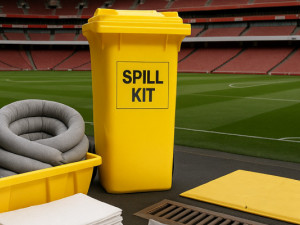
Spill management refers to the processes and strategies employed to prevent, respond to, and clean up liquid spills in various environments, particularly those with high footfall, such as sports stadiums and events venues. Effective spill management is crucial in these settings, as the presence of large crowds increases the likelihood ..
0
2347
Construction & Civil Engineering Sites
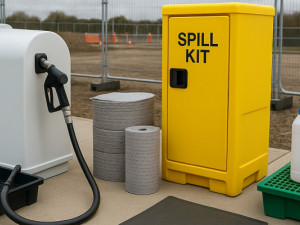
Spill management on construction and civil engineering sites is rarely about one “big incident”. It’s usually a chain of small, predictable losses: a diesel splash during mobile refuelling, a weeping hydraulic fitting on a telehandler, a tote of admixture stored without secondary containment, or cement fine..
0
1223
Introduction
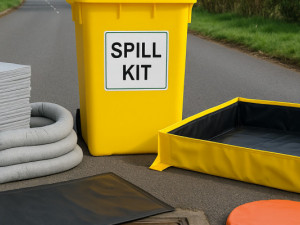
Spill management refers to the systematic approach taken by local authorities and highways to prevent, respond to, and mitigate the impacts of hazardous material spills. Effective spill management is crucial for local authorities, as it not only safeguards public health and the environment but also protects valuable infrastructure and ..

0
1441
Overview of Spill Management in Education
Spill management refers to the processes and protocols implemented to prevent, respond to, and mitigate spills of hazardous substances in educational settings. This includes not only chemical spills in science laboratories but also leaks of cleaning materials in workshops and sports facilities. Effective sp..
0
1368
Effective Spill Management for Rail Depots, Sidings & Trackside Operations
Context: why spill management is different on the railway
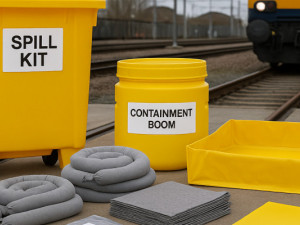
Rail depots, sidings and trackside work sites bring together fuels, lubricants, coolants, cleaning chemicals, battery electrolytes, paints, herbicides and waste oils in environments that are hard to control: open dra..
0
1417
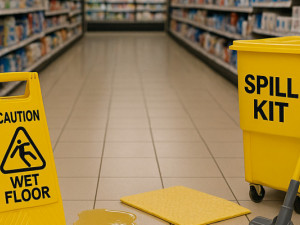
Effective Spill Management in Supermarkets and Cold Stores: Practical Strategies for Safer, Cleaner Retail
Introduction
Spills in food retail are unavoidable: refrigeration systems sweat and occasionally leak, customers drop products, trolley wheels track rainwater, and back-of-house (BOH) tasks create routine wet work. In su..
0
1227
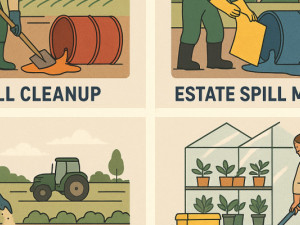
Introduction
Spill management on farms, estates, nurseries and glasshouses is not just an environmental “nice to have”. It is a day-to-day operational requirement that protects watercourses, soil health, livestock, staff and neighbours—while also helping you stay compliant with UK rules and reduce costly downtime. Typical spill risks in agriculture..
0
1442
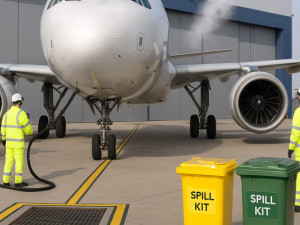
Spill Control in Aviation Facilities: Fuel, De-icer & Hangar Fluids
Effective spill control in airports and MRO hangars is critical. With the heavy use of jet fuel, de-icer fluids, hydraulic oils, and the bustling activity on high-traffic aprons and hangars, the potential for spills is significant. Ensuring public safety, preserving brand reputati..
0
1254
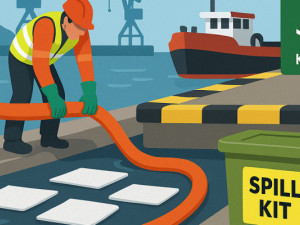
Spill Control for Marine Facilities: Managing Oil, Fuel & Marine-Related Liquids
Spill Control for Marine Facilities: Managing Oil, Fuel & Marine-Related Liquids
Context: Why Spill Control Matters in Marine Operations
Managing spills effectively is crucial in marine operations due to the potential for significant environmental damage and regu..
0
1167
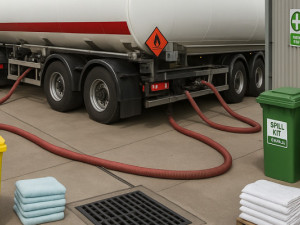
Spill Control for Oil & Gas Depots: Preventing Fuel and Oil Leaks in Forecourts and Storage Yards
Context: The Importance of Spill Control
Effective spill control is critical in oil and gas depots and forecourts due to the significant volumes of hydrocarbons handled daily. The risk of watercourse pollution poses a serious threat to the environment..