
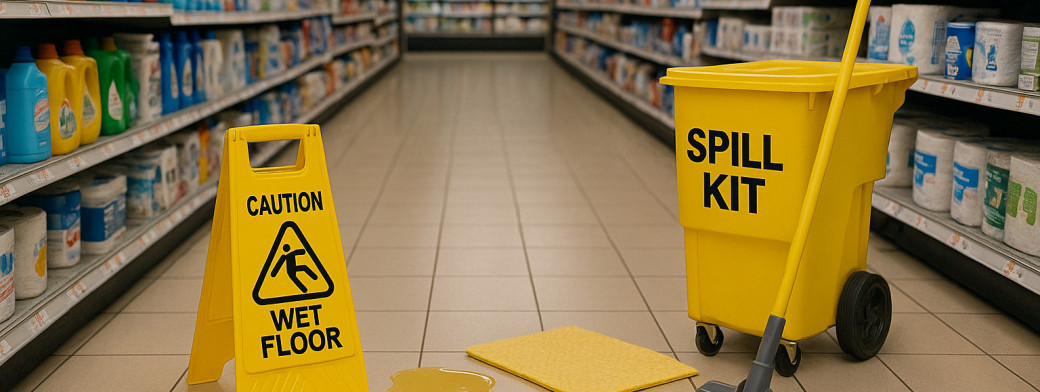
Effective Spill Management in Supermarkets and Cold Stores: Practical Strategies for Safer, Cleaner Retail
Introduction
Spills in food retail are unavoidable: refrigeration systems sweat and occasionally leak, customers drop products, trolley wheels track rainwater, and back-of-house (BOH) tasks create routine wet work. In supermarkets and cold stores, the risk profile is intensified by temperature changes, condensation, high footfall, and time-critical replenishment. Effective spill management is therefore not just a “clean-up” activity—it’s a safety system that protects customers and colleagues, safeguards food hygiene, and reduces environmental risk from improper disposal or drains contamination.
UK guidance highlights slips and trips as a major workplace hazard, and food retail is a known high-risk environment where wet floors, contamination, and rushed movement intersect. A robust approach combines prevention, rapid response, correct equipment, and disciplined waste handling. This article focuses on the practical realities of supermarket aisles, chilled cabinets, and cold rooms, with strategies that support safer customer areas, more efficient night-shift routines, and better compliance with recognised UK guidance on slips, food hygiene, and pollution prevention (HSE; Food Standards Agency; NetRegs/Environment Agency guidance).
Throughout, we’ll reference practical equipment and services you can deploy immediately. For example, consider standardising your spill response with spill kits tailored to retail, adding oil spill kits for cooking oils and plant-room incidents, and improving hygiene control with cleaning supplies and waste management solutions.
Managing Refrigerated Display Leaks
Refrigerated display leaks are one of the most common—and deceptively hazardous—spill sources in supermarkets and cold stores. They can be intermittent, clear (hard to see), and persistent. Typical causes include blocked condensate drains, damaged drain pans, poorly seated cabinet panels, door seal failures, defrost cycle issues, and accidental impacts from cages or pallet trucks. In cold rooms, ice build-up and thaw cycles can create sudden water release, while in open-fronted chilled displays, condensation can form and drip during peak humidity.
Why refrigerated leaks demand a dedicated process
- Slip risk: Clear water on smooth retail flooring is a high-risk slip hazard, particularly near end caps and high-traffic chilled aisles. The HSE emphasises that preventing slips requires controlling contamination (like water, food, and grease) and ensuring effective cleaning and maintenance regimes (HSE).
- Food hygiene: Standing water can spread contamination via footwear and trolley wheels, and can contribute to poor hygiene conditions. Retailers must maintain hygienic premises and prevent contamination risks as part of food safety management (FSA).
- Asset protection: Persistent leaks can damage floor finishes, create mould risk in concealed areas, and indicate refrigeration inefficiency.
Controls that work in practice
1) Routine cabinet checks and “leak mapping”. Build a simple inspection routine into daily opening checks and night replenishment: look for pooled water, damp kick plates, and drip lines. Track recurring locations on a “leak map” so maintenance can prioritise root causes rather than repeating clean-ups.
2) Fast containment at source. Use absorbents designed for water-based spills and place them where drips occur. In front-of-house (FOH), containment must be tidy and low-profile to avoid creating a trip hazard. Consider pre-positioned, compact solutions from our spill kits range for quick deployment.
3) Maintenance escalation triggers. Define clear triggers for engineering call-outs (e.g., repeat leak within 24 hours, visible ice build-up, water appearing beyond cabinet footprint). This aligns with the HSE’s emphasis on maintenance and good housekeeping to reduce slip risks (HSE).
4) Floor-safe drying and verification. After absorption and cleaning, verify dryness with a quick visual check under strong lighting and (where appropriate) a clean, dry paper test. In chilled aisles, remember that condensation can re-form quickly—so re-check after 10–15 minutes if humidity is high or doors are frequently opened.
Don’t overlook plant rooms and loading bays
Cold store plant rooms may involve lubricants, compressor oils, and coolant-related residues. These are not “water spills” and require different absorbents and disposal routes. Keep an oil spill kit accessible for plant areas, and ensure colleagues understand when to use oil-only absorbents versus general-purpose materials.
Preventing Customer Slips
Customer slips are high consequence: injuries, reputational damage, and potential claims. The most effective supermarkets treat slip prevention as a system—combining design, behaviour, cleaning standards, and rapid response. The HSE’s slips and trips guidance highlights the importance of controlling floor contamination and using effective cleaning methods, alongside proper maintenance and supervision (HSE).
Key risk zones in supermarkets and cold stores
- Chilled and frozen aisles: condensation, cabinet leaks, and dropped items.
- Produce sections: misting systems, wet leaves, and frequent handling.
- Bakery and deli counters: flour dust (can become slippery when wet), oils, and food residues.
- Entrance areas: rainwater tracked in, especially during UK wet weather.
- Loading bays and BOH corridors: mixed contamination from deliveries, broken packaging, and pallet debris.
Practical methods to reduce slip likelihood
1) “See it, sort it” response culture. A spill left for even a few minutes in a high-footfall aisle can cause an incident. Train colleagues that the first action is to make the area safe (stand guard if needed), then contain and clean. This aligns with HSE principles of prompt housekeeping and controlling contamination (HSE).
2) Correct cleaning tools and chemistry. Water alone may spread greasy residues. Use appropriate degreasers for oils and fats, and ensure mop heads are clean and changed frequently to avoid smearing contamination. Stock consistent, approved products via our cleaning supplies section, and standardise what “good” looks like across sites.
3) Use of temporary barriers and signage—without over-reliance. Wet floor signs help, but they don’t remove the hazard. Use them to protect the area while cleaning is underway, then remove promptly once safe. Overuse can lead to sign fatigue and clutter.
4) Floor condition and matting. Worn flooring, poor transitions, and inadequate entrance matting increase risk. While this article focuses on spill management, include periodic floor inspections and replace damaged mats. Ensure mats lie flat and don’t create a trip edge.
5) Documented checks that are meaningful. Instead of “tick-box” logs, use short, timed checks focused on known risk zones (chilled aisles, entrances, produce). This supports defensible due diligence and helps identify patterns (e.g., the same cabinet leaking each afternoon).
Oil spills: the hidden slip accelerator
Cooking oils (from deli, rotisserie, bakery, or customer breakages) create a high-slip surface even in small quantities. Oil can spread quickly under shoes and wheels, so response must be immediate and specific: isolate, apply oil-appropriate absorbents, remove residues with a degreasing cleaner, and verify the floor is no longer slick. Keep dedicated oil spill kits in departments where oils are handled to avoid delays and cross-contamination.
Importance of Discrete Spill Kits
FOH spill response has a unique challenge: you need speed and effectiveness, but also discretion. Customers may be anxious around visible hazards, and cluttered equipment can obstruct aisles. Discrete spill kits—compact, clearly labelled, and easy to deploy—help teams respond quickly without turning the clean-up into an operational disruption.
What “discrete” should mean in a supermarket
- Compact footprint: Fits under counters, at service desks, or inside end-cap cupboards.
- Clear identification: Staff can find it instantly; customers are not invited to tamper with it.
- Department-appropriate contents: Water-absorbents for chilled aisles; oil-absorbents for deli/bakery; general-purpose for mixed areas.
- Easy disposal pathway: Bags, ties, and instructions that match your waste segregation rules.
Placement strategy: seconds matter
Place kits where spills actually happen, not just where it’s convenient to store them. Typical FOH locations include:
- Near chilled and frozen aisles (especially ends and high-traffic cross-aisles).
- Adjacent to produce misting zones.
- Behind deli/bakery counters where oils and food residues are handled.
- At entrances for wet-weather response (paired with matting and quick-dry tools).
For BOH and plant rooms, use larger capacity kits and ensure they are accessible during deliveries and night operations. Explore our full range of spill kits to match FOH and BOH needs, and add oil spill kits where fats and lubricants are present.
Training: make the kit self-explanatory
Even well-stocked kits fail if colleagues hesitate. Include simple, laminated instructions inside the lid: isolate area, choose correct absorbent, clean, dispose, and report. Reinforce that the goal is to remove the hazard quickly—HSE guidance consistently points to controlling contamination and effective cleaning as central to slip prevention (HSE).
Waste Segregation Practices
Spill management doesn’t end when the floor looks clean. Absorbents, contaminated packaging, and cleaning materials become waste that must be handled correctly to protect hygiene, reduce costs, and prevent pollution. UK environmental guidance for businesses stresses the importance of preventing pollution—particularly keeping contaminants out of drains and managing waste responsibly (NetRegs/Environment Agency guidance).
Why segregation matters in food retail
- Hygiene control: Contaminated absorbents and cloths can harbour bacteria and odours if stored incorrectly, undermining food hygiene expectations (FSA).
- Environmental protection: Oils, chemicals, and contaminated liquids should not enter surface water drains. Good practice includes preventing spill run-off and using appropriate containment (NetRegs).
- Cost and compliance: Mixing waste streams can increase disposal costs and complicate contractor collection.
Set clear categories for spill-related waste
Define practical, site-specific categories and label bins clearly. A common approach includes:
- General contaminated absorbents: e.g., water/soft drink spills with minimal contamination.
- Oil-contaminated absorbents: from cooking oils, lubricants, or greasy residues (often requires separate handling).
- Chemical-contaminated waste: if cleaning chemicals or other substances are involved—follow product safety data guidance.
- Broken glass and sharps: separate rigid containers for safety.
- Food waste and packaging: keep separate to maintain recycling and food waste processes.
Drain protection and “never wash it away” rules
A common failure point is washing spills into floor drains—particularly in loading bays, plant areas, or external yards. This can transfer oils and contaminants into drainage systems and potentially the environment. Environmental guidance emphasises preventing pollution and managing substances so they do not enter watercourses (NetRegs). Build a simple rule into training: contain, absorb, and dispose—don’t hose into drains. Where needed, keep drain covers or drain blockers with BOH kits.
To support consistent segregation and compliant disposal routines, review our waste management options and consider aligning spill kit consumables with your waste streams (correct bag types, labels, and collection points).
Night-Shift Response Strategies
Night shifts in supermarkets and cold stores are where spill management either becomes highly controlled—or quietly deteriorates. Replenishment teams work quickly, aisles may be partially obstructed by cages, and cleaning is often scheduled alongside restocking. Cold rooms add PPE considerations and reduced dexterity, increasing the chance of dropped items and slower response if equipment isn’t nearby.
Best-practice routines for safer nights
1) Start-of-shift “readiness check”. Before restocking begins, confirm spill kits are stocked, absorbents are dry and usable, bags and ties are present, and cleaning tools are in their designated locations. A five-minute check can prevent 30 minutes of searching later.
2) Zone-based ownership. Assign each colleague (or pair) a zone with responsibility for immediate spill response during replenishment. This reduces the “someone else will get it” delay and supports rapid containment.
3) Restocking with spill prevention in mind. Many night spills are predictable: torn shrink wrap, leaking chilled products, and damaged packaging. Use careful handling, avoid over-stacking cages, and quarantine damaged stock in a designated tray or tub rather than carrying it through the store. This supports better hygiene control and reduces contamination spread (FSA).
Cold store specifics: condensation, ice, and visibility
- Condensation control: Temperature transitions (e.g., moving from ambient to chilled) can create moisture on floors. Schedule “dry checks” after high-traffic periods and keep absorbents accessible inside or just outside cold rooms.
- Ice management: If ice forms, treat it as a maintenance issue as well as a housekeeping one. Remove safely, investigate causes (door left open, damaged seals), and escalate recurring problems.
- Lighting and inspection: Ensure adequate lighting for identifying clear leaks. Clear water on smooth flooring can be almost invisible.
Night cleaning: avoid spreading contamination
Large-area mopping can inadvertently spread oils or sugary residues if the wrong method is used. Use a two-stage approach for oily spills: absorb first (oil-appropriate materials), then degrease and rinse with controlled water use, ensuring floors are left dry. For water-based spills, absorb and dry rather than repeatedly mopping a widening area. This aligns with the HSE focus on effective cleaning and controlling contamination to prevent slips (HSE).
Incident reporting and learning loops
Night shifts are an opportunity to capture patterns without customer pressure. Encourage teams to log:
- Exact spill location and time.
- Likely source (cabinet leak, damaged stock, oil handling, weather tracking).
- Response time and materials used.
- Whether maintenance follow-up is required.
Over time, this data helps you fix root causes—like a recurring refrigeration drain blockage—rather than repeatedly absorbing the same leak.
To streamline night operations, consider standardising replenishment and response equipment through our spill kits and department-specific oil spill kits, supported by consistent cleaning supplies and clear waste management processes.
Conclusion
Effective spill management in supermarkets and cold stores is built on predictable routines: prevent where you can, respond immediately when spills occur, and dispose responsibly. Refrigerated display leaks need dedicated checks and escalation to maintenance; oil spills demand specialist absorbents and degreasing; and customer slip prevention relies on rapid containment, correct cleaning, and disciplined housekeeping in known risk zones. Discrete spill kits in FOH areas reduce response time without disrupting the shopping environment, while waste segregation and drain protection help protect hygiene and the environment in line with UK guidance (HSE; FSA; NetRegs/Environment Agency guidance).
If you want to tighten your spill readiness across FOH and BOH, review your current coverage and standardise equipment by department. Start with appropriately sized spill kits, add targeted oil spill kits where fats and lubricants are present, and support teams with reliable cleaning supplies and clear waste management routes. The result is a safer store, stronger compliance, and fewer disruptions—day or night.