
Published: 30 September 2026
Last updated: 24 August 2026
Why is Spill Management Crucial for Airport Ground Support Equipment?
Spill management is crucial for airport ground support equipment because these vehicles and units operate constantly around aircraft, passengers and service areas where even small leaks can create immediate safety, housekeeping and environmental risks. Airport ground support equipment includes the tugs, belt loaders, ground power units, refuelling support vehicles, baggage tractors, de-icers and maintenance assets used to service aircraft on the ground. Common spills in these settings include oils, hydraulic fluid, diesel and coolant, all of which can spread quickly across hardstanding, maintenance bays and airside routes. In practice, effective control means keeping the right absorbent solutions close to the point of use, such as pads, rolls, socks, drip trays and drain protection, supported by clearly positioned spill kits and routine response procedures. In the UK, this matters not only for operational safety but also for pollution prevention and workplace risk control, as reflected in guidance from GOV.UK and the HSE.
Put simply, unmanaged leaks from ground support equipment can lead to slips, contamination, service disruption and avoidable clean-up costs. Oil and diesel can migrate across aprons and towards drainage points, hydraulic fluid can leave highly slippery surface films, and coolant leaks can build up around parked equipment or maintenance areas. That is why spill planning for airport operations should focus on fast containment, suitable absorbents for the liquid involved, and good housekeeping that stops spills becoming larger incidents.
Why these spills need fast control
Airport ground operations depend on clear, safe surfaces and predictable equipment performance. A small leak beneath a tug or GPU may seem minor at first, but on busy airside surfaces it can be spread by tyres, foot traffic or rainfall within minutes. This increases slip risk for staff, affects cleanliness standards in operational zones and raises the chance of liquids reaching drains or sensitive ground areas. For that reason, spill management is not just about cleaning up after an incident; it is about containing leaks early with practical measures such as drip trays under parked equipment, absorbent socks around known problem points, and absorbent rolls or pads for routine drips in workshops and bays.
Typical liquids and absorbent needs
The main spill types around airport ground support equipment are oils, hydraulic fluid, diesel and coolant, and each may call for a slightly different response. Oil-only absorbents are useful where hydrocarbons are the main concern, while general purpose absorbents can help with mixed maintenance leaks in controlled areas. Small spill kits, gloves, disposal bags and clear spill station labelling help teams respond quickly without searching for supplies. Where there is a risk of liquid moving towards drainage channels, drain covers and perimeter absorbent socks can be important first-response tools. The key point is that the right absorbent materials should be available where leaks are most likely to start, not stored too far away to be useful.
Overall, spill management is crucial because it supports safer walking and working conditions, stronger housekeeping and better alignment with UK expectations on pollution prevention and workplace control. For airport ground support equipment, the combination of routine inspection, suitable absorbents and prompt containment helps reduce both day-to-day hazards and the wider impact of leaks on the airside environment.
What Types of Liquids are Commonly Spilled?
The liquids most often spilled from airport ground support equipment are oils, hydraulic fluids, diesel and coolant. These are found across tugs, belt loaders, GPUs, service vehicles and maintenance bays, and each creates a slightly different risk profile. Some mainly increase slip hazards and surface contamination, while others can spread quickly across concrete, enter drainage systems or pollute soil and water if not contained promptly.
In practice, the right response starts with identifying the liquid involved. Oil leaks are usually best managed with oil absorbents, while hydraulic system leaks may call for products selected for that specific fluid, such as hydraulic fluid absorbents. HSE guidance also highlights the need to control flammable and polluting liquids carefully in vehicle-related workplaces: see INDG331.
Common spill liquids and why they matter
Oils include engine oil, gearbox oil and lubricants used during servicing. These spills can leave persistent residues on aprons and workshop floors, increasing slip risks and creating dark staining. If oil reaches drains or unsealed ground, it can cause significant environmental harm by contaminating watercourses and affecting wildlife.
Hydraulic fluid is common in lifting, steering and braking systems on ground support equipment. Even a small leak can spread into a thin, slippery film, making it a housekeeping issue as well as a maintenance warning sign. Environmentally, hydraulic fluids can pollute surface water and soil, particularly where leaks go unnoticed near drainage channels.
Diesel is typically spilled during refuelling, from hose connections or from vehicle defects. It can travel quickly over hardstanding, creates a clear slip hazard and may present fire concerns in some settings. If it enters drains, it can pollute water and trigger costly clean-up action.
Coolant often escapes from radiators, hoses or maintenance work. Although it may appear less serious than oil or diesel, coolant still creates slippery surfaces and can be harmful to the environment if allowed to run into drainage systems or surrounding ground.
Where Do Spills Typically Occur in Airport Operations?
Spills in airport operations most often occur where ground support equipment is parked, refuelled, serviced or left idling between tasks. In practice, that means airside areas around tugs, baggage tractors, belt loaders, ground power units (GPUs), fuel bowsers and service vehicles, as well as workshop and maintenance bay environments. The most common liquids are oils, hydraulic fluid, diesel and coolant, and even small drips can create slip hazards, stain operational surfaces or travel towards drainage points if they are not contained quickly.
These incidents do not always begin as major failures. Many start as slow leaks from hoses, couplings, rams, engine bays, filters or overfilled reservoirs. Because airport activity is continuous and space is shared by vehicles, staff and aircraft support operations, routine housekeeping matters: identifying repeat leak locations, placing absorbents and drip trays where equipment stands, and preventing contamination from spreading across aprons, bays and access routes.
Airside stands, aprons and equipment parking areas
Airside locations are a frequent source of minor but persistent spills. Tugs and tow tractors may leave hydraulic drips after heavy use, while GPUs can leak oil or coolant during operation or when parked up between turnarounds. Belt loaders, passenger steps and other mobile units can also shed fluids onto concrete, especially at connection points, under engine compartments or beneath ageing seals. In these areas, leaks are more likely to be noticed after equipment has moved off, leaving contamination on active surfaces where slips, tyre spread and drain migration become more likely.
Refuelling, loading and waiting points
Spill risks also increase at refuelling points, queueing areas and equipment holding zones, where vehicles spend enough time for drips to collect. Repeated low-volume leaks in the same spot can build up into a housekeeping problem if not addressed with prompt clean-up and suitable containment nearby.
Maintenance bays and workshop areas
Maintenance bays carry a different risk profile because fluids are often intentionally handled there. During inspection, servicing and parts replacement, hoses may be disconnected, filters removed and reservoirs drained or topped up. That raises the likelihood of splashes, run-off and accidental overfills involving several liquid types at once. Bays also tend to have tools, foot traffic and floor channels that can spread contamination. Keeping absorbents, drain protection and clearly organised response materials close to the work area is a sensible part of wider maintenance spill management.
What Absorbent Solutions Should Be Available?
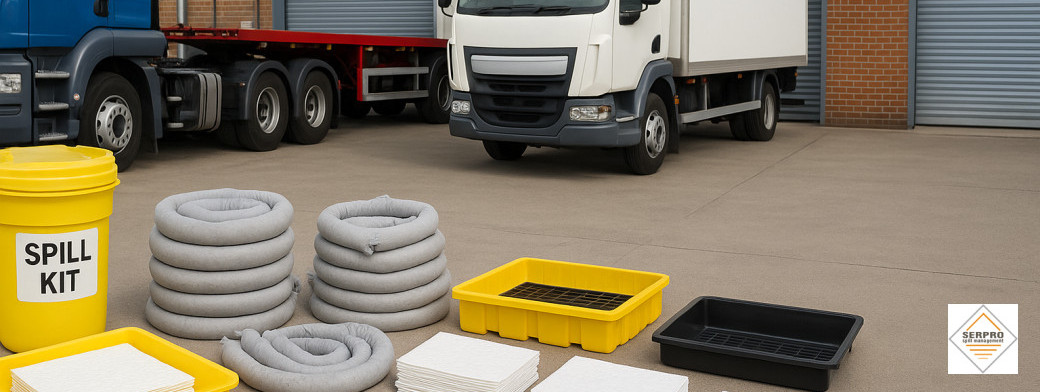
Airport ground support teams should keep a small but well-matched range of absorbents close to tugs, GPUs, belt loaders, refuelling points and maintenance bays. In practice, that means having absorbent pads, rolls, socks and spill kits ready for the liquids most likely to leak: oil, hydraulic fluid, diesel and coolant. The aim is simple: stop a minor leak becoming a slip risk, prevent liquids spreading across operational surfaces, and reduce the chance of contamination reaching drains.
The best setup is not one product for every situation, but a combination of absorbents chosen for how spills actually occur around ground support equipment. Pads deal with drips and wipe-ups, rolls protect larger floor areas, socks contain and guide spills, and spill kits bring together the core response items needed for a fast first action.
Absorbent pads
Pads are the most useful day-to-day option for small leaks and routine housekeeping. They can be placed under parked equipment, used to catch drips during maintenance, or pressed onto small pools of oil, hydraulic fluid or coolant. Oil-only pads are useful where water may also be present, while general purpose pads suit mixed workshop leaks.
Absorbent rolls
Rolls are better for wider coverage in maintenance areas, walkways and under equipment with a history of persistent seepage. They can be cut to length and laid along workbenches, service bays or parking positions to protect the floor and make contamination easier to spot and remove quickly.
Absorbent socks
Socks are designed for containment rather than wipe-up. They should be used to surround a spill, block its path towards drains, or run along the edge of equipment and bay thresholds. Around diesel or hydraulic leaks, socks help stop spread while pads or loose absorbent are used inside the contained area.
Spill kits
Spill kits give staff a clear, immediate response point. A good kit for airport ground support areas should include suitable absorbents, disposal bags and gloves, with contents matched to the likely liquids nearby. Small kits are practical on mobile equipment or in service vehicles, while larger kits suit workshops and fixed operating zones. Clear storage and labelling also support good housekeeping, in line with pollution prevention guidance and HSE advice on slips and trips.
How Can We Prevent Liquids from Migrating to Drains?
The most effective way to stop oils, hydraulic fluid, diesel and coolant from reaching drains is to contain leaks at source, block nearby drainage points quickly, and keep contaminated areas small enough to manage safely. Around airport ground support equipment, that usually means positioning drip trays beneath parked or serviced equipment, keeping drain covers and absorbents close to likely leak points, and using clear inspection routines so small drips are dealt with before they spread across airside or workshop surfaces.
Prevention is mainly about layout and housekeeping rather than emergency response alone. If a tug, GPU or other unit is known to weep fluid, place a drip tray underneath during parking or maintenance. In bays where leaks are more likely, absorbent socks can be used to guide or contain liquid, while pads or rolls help lift residues from the surface before they travel further. Where there is any risk of fluid entering surface water or foul drainage, teams should have suitable drain protection ready for immediate use.
Practical controls that reduce spread
Drip trays should be treated as a routine control, not just something brought out after a spill. They are particularly useful beneath hydraulic connections, engine bays and refuelling or top-up points. Drain covers should be stored where staff can reach them without delay, and their location should be clearly marked so responders do not lose time looking for them. This supports wider UK pollution prevention good practice set out by GOV.UK.
Regular inspection routines matter just as much. Walk-round checks can pick up damp patches, stained concrete, overfilled trays, damaged hoses and saturated absorbents before liquids migrate into traffic routes or drainage channels. Inspections should also confirm that spill kits are stocked, drain covers are clean and usable, and waste bags and gloves are available. Keeping surfaces dry also helps reduce slip risk, which aligns with HSE guidance on slips and trips.
In practice, the best results come from combining simple containment tools with consistent checks: catch drips early, protect drains immediately, and replace used absorbents before the next shift begins.
Who Should Be Responsible for Spill Response?
Spill response at an airport should never sit with one person alone. Responsibility needs to be shared across the teams most likely to spot, report, contain and escalate leaks from ground support equipment, with clear ownership from management. In practice, that means operators, ramp staff, maintenance technicians, cleaning teams, supervisors and environmental or health and safety leads all have a role. The key is to define who does what before a spill happens, especially where oils, hydraulic fluid, diesel or coolant could spread across airside surfaces or enter drainage systems.
Front-line staff should usually be responsible for the immediate first actions: making the area safe, stopping work if needed, alerting the right people and using the nearest spill kit if they have been trained to do so. Supervisors should then confirm the level of response, arrange isolation of equipment, record the incident and decide whether specialist support is needed. Larger spills, unknown liquids, or any release threatening drains or operational areas should trigger escalation under the airport’s emergency arrangements rather than relying on ad hoc judgement.
Training requirements for staff
Anyone working around tugs, GPUs, belt loaders, refuelling interfaces or maintenance bays should receive spill-response training relevant to their task. That training should cover how to identify common liquids, select suitable absorbents, protect drains, use PPE, segregate waste and report incidents correctly. Refresher sessions matter too, particularly where contractors, seasonal staff or shift changes affect consistency. Where extra support is needed, airports can formalise competence through spill response training solutions.
Emergency response protocols
Emergency response protocols should set out clear thresholds for self-managed clean-up versus escalation. Staff need a simple process: raise the alarm, secure the area, stop the source if safe, deploy absorbent pads, socks or drain protection where appropriate, and notify the designated supervisor or control point. Protocols should also align with wider pollution prevention expectations from GOV.UK guidance for businesses and with slip-risk controls highlighted by the HSE. In short, everyone may help, but accountability should be structured, trained and documented.
How Should Spill Waste Be Separated and Handled?
Spill waste should be separated by the liquid involved, the absorbent used and the level of contamination, then bagged, labelled and moved to the correct waste stream for collection. For airport ground support equipment, that usually means keeping oil and fuel-contaminated pads, socks and granules apart from coolant-related waste, mixed liquids and general rubbish. Good separation reduces handling risks, helps prevent secondary leaks and supports safer, more efficient waste management.
Disposal bags are important because used absorbents can continue to drip, spread contamination or create slip hazards if left loose in workshops, maintenance bays or airside support areas. Strong, clearly identified bags help contain saturated fibres and small debris, make temporary storage tidier and give teams a simple way to isolate waste until it can be assessed and removed.
Guidelines for separating spill waste
- Keep waste streams separate: do not mix oil-only absorbents used on diesel or hydraulic fluid with general purpose absorbents used on coolant, wash water or mixed spills.
- Bag and label promptly: place used pads, rolls, socks, gloves and contaminated debris into suitable disposal bags as soon as clean-up is complete.
- Identify the source liquid: note whether the waste came from engine oil, hydraulic fluid, diesel, coolant or an unknown leak, as this affects onward handling.
- Separate clean packaging from contaminated waste: outer wrap, unused materials and uncontaminated cardboard should not go into the same bags as saturated absorbents.
- Store securely before collection: keep sealed bags and any heavier waste in a designated area away from drains and traffic routes, in line with wider pollution prevention guidance from GOV.UK.
Teams should also avoid overfilling bags, use appropriate PPE when handling used absorbents and treat unknown substances cautiously. If a spill has reached walking routes, final cleaning should leave the surface safe and dry to reduce slip risk, reflecting HSE guidance on slips and trips.
How Can We Ensure Compliance During Routine Inspections?
Compliance during routine inspections is best maintained by using a simple, repeatable spill-management check that covers equipment condition, housekeeping, stock levels, drain protection and record-keeping. For airport ground support equipment, inspections should confirm that leaks from oils, hydraulic fluid, diesel and coolant are identified early, that absorbents and containment items are positioned where they are actually needed, and that any waste arising from clean-up is handled and recorded correctly. Regular checks help reduce slip risks, limit pollution incidents and show that spill controls are being managed in practice rather than left to chance.
In day-to-day terms, inspections should look at both the source of leaks and the response arrangements around it. That means checking tugs, GPUs, bowsers, maintenance bays and parked equipment for drips, stained surfaces, overfilled drip trays, damaged containers, blocked access to spill kits and unprotected drains. A structured approach, supported by clear inspection solutions, makes it easier to spot recurring issues, assign actions and demonstrate that spill risks are being reviewed routinely.
Checklist for Spill Management Inspections
- Inspect ground support equipment for active leaks, seepage, loose fittings and damaged hoses.
- Check that drip trays are present, correctly positioned and emptied before they overflow.
- Confirm absorbent pads, rolls, socks and small spill kits are available, visible and suitable for the likely liquid.
- Ensure drain covers or other drain-protection measures are accessible near vulnerable points.
- Look for contaminated walking surfaces that could contribute to slips, in line with HSE slips and trips guidance.
- Verify that spill stations are clearly labelled and not obstructed by tools, pallets or stored parts.
- Check disposal bags, gloves and waste containers are available and being used correctly.
- Review whether used absorbents and recovered liquids are being segregated appropriately.
Documentation and Reporting Procedures
Inspection findings should be recorded consistently, even where no defects are found. A short form or digital checklist should note the date, location, inspector, assets checked, deficiencies identified, immediate actions taken and any follow-up required. Where a spill or leak is discovered, record the substance involved, estimated quantity, whether drains were at risk, what absorbents were used and how waste was contained for disposal. Repeated defects, such as recurring hydraulic leaks or persistently low spill-kit stock, should be escalated to maintenance or site management rather than treated as isolated housekeeping issues.
Good reporting also supports wider UK pollution-prevention duties. The GOV.UK pollution prevention guidance is a useful reference point for reviewing storage, drainage and incident controls as part of the inspection process.