
Published: 10 October 2026
Last updated: 26 August 2026
Why Do Water Treatment Kiosks Need Spill Planning?
Water treatment kiosks are small, often remote enclosures that house chemical dosing equipment, storage containers, pumps, pipework and controls used to treat water or wastewater. They need spill planning because even minor leaks in these compact spaces can quickly create safety, housekeeping and pollution risks. Typical spill types include chemical splashes from dosing liquids, oil or fuel drips from plant or generators, and contaminated water escaping from connections, drums or transfer points. In practice, suitable planning usually means keeping compatible absorbents, socks, pads, disposal bags and drip trays close to the risk, alongside clear response steps and waste segregation. In the UK, this sits within duties to control hazardous substances under HSE COSHH guidance and to prevent pollution under GOV.UK pollution prevention guidance.
Because kiosks are compact and may be visited only periodically, a small spill can spread before anyone notices it. Spill planning helps operators contain leaks early, protect floors and bunded areas, reduce slip hazards, and stop liquids reaching drains, soil or surrounding watercourses. It also makes response more practical for lone or visiting staff who may have limited time, space and equipment on site.
Common spill risks in water treatment kiosks
The most likely incidents usually start at routine handling points: drum changes, IBC connections, dosing pump maintenance, hose disconnections, overfilling, cracked fittings or slow weeps from valves and seals. Depending on the site, liquids may include treatment chemicals, acids, alkalis, coagulants, disinfectants, oils, lubricants or fuel residues. Each needs the right response, especially where corrosive or hazardous chemicals are involved.
What spill preparedness usually includes
A sensible setup is not complicated, but it should be specific to the liquids present. That may include chemical or general purpose absorbent pads and rolls, absorbent socks to contain spread, drip trays beneath pumps or containers, drain protection where a release could migrate, gloves, labelled disposal bags and a clearly marked spill station. Oil-only absorbents may also be useful where hydrocarbons are stored separately. For larger leaks, staff should know when to escalate rather than rely on a small spill kit alone.
What Types of Liquids Are Commonly Handled in Remote Water Treatment Kiosks?
Remote water treatment kiosks commonly handle a mix of treatment chemicals, process water and maintenance fluids, so spill planning needs to cover more than one liquid type. In many sites, the main risks come from chemical dosing products such as sodium hypochlorite, ferric salts, acids, alkalis and cleaning agents, alongside smaller volumes of oils, greases or fuel associated with pumps, generators and servicing activities. Because these liquids behave differently and can react with unsuitable absorbents, spill response materials must be chosen for compatibility rather than convenience.
Typical spill points are chemical containers, dosing lines, pump heads, hose connections, IBC taps, sample points, bund drains and transfer areas where operators refill or replace stock. Even a minor leak can create slip hazards, damage kiosk surfaces or raise pollution concerns if liquid escapes to surrounding ground or drainage, so the response setup should reflect the actual liquids on site and the likelihood of mixed spills.
Common liquids found in remote kiosks
- Water treatment chemicals, including disinfectants, coagulants and pH correction products
- Acids and alkalis used for dosing, cleaning or descaling
- Process water, washdown water and contaminated rinse water
- Oils and lubricants from pumps, motors and maintenance tasks
- Diesel or petrol where backup generators or service equipment are present
- Cleaning fluids and sanitation products
Why compatibility matters for spill response
A kiosk that stores corrosive or oxidising chemicals should not rely on a one-size-fits-all kit. Chemical absorbents are often the safer choice for aggressive liquids, while oil-only products may be more suitable for hydrocarbons. General purpose absorbents may help with non-aggressive liquids, but they are not automatically appropriate for every chemical. UK operators should also align spill arrangements with wider duties under COSHH and pollution prevention guidance from GOV.UK, especially where leaks could reach drains or soil.
Where Do Spills Typically Occur in Water Treatment Kiosks?
Spills in water treatment kiosks most often occur at chemical delivery and storage points, dosing pump connections, pipe joints, sample points, and around bunded areas where small leaks can go unnoticed until routine access. In compact remote kiosks, even minor drips from ferric chloride, sodium hypochlorite, acids, alkalis or cleaning fluids can create slip hazards, damage surfaces, and increase pollution risk if liquids escape toward thresholds or drains. The practical response is to identify these high-risk areas in advance, place suitable containment nearby, and make inspections part of normal site checks.
The highest-risk locations are usually the places where liquids are transferred, handled or disturbed. That includes IBCs, drums, day tanks, hose couplings, pump heads, calibration pots and valves. Doorways and walkways also matter because a small leak can quickly become a housekeeping issue as well as a safety one. The HSE’s guidance on slips and trips is especially relevant in kiosks where floors are smooth, space is limited and contamination may spread underfoot.
Identifying high-risk areas
Start by mapping where chemicals enter, move through and leave the kiosk. Common problem spots include:
- container bases and tap points where slow drips form;
- dosing pumps and injection lines that can weep during operation or maintenance;
- bund corners and floor low points where residue collects;
- pipework joints, flanges and flexible hoses subject to vibration;
- thresholds, drains and external access points where escaped liquid could spread.
Preventative measures
Risk can often be reduced with simple controls: use drip trays beneath pumps and containers, place absorbent socks around vulnerable equipment, and keep compatible absorbent pads or rolls close to likely leak points. For many remote sites, compact spill kits with gloves, disposal bags and clear labelling are a practical first line of response. Chemical compatibility matters, so materials should match the liquids stored on site rather than relying on a one-size-fits-all approach.
Why regular inspections matter
Regular inspections help catch staining, corrosion, perished hoses, overfilled bunds and partly used response materials before a minor leak becomes a larger incident. Include spill-control checks in routine maintenance: confirm stock levels, replace used absorbents, inspect drain protection, and review whether waste is being segregated correctly after clean-up. In remote kiosks, these simple checks are often the difference between a manageable drip and an avoidable shutdown or pollution event.
What Spill Response Materials Should Be Kept Nearby?
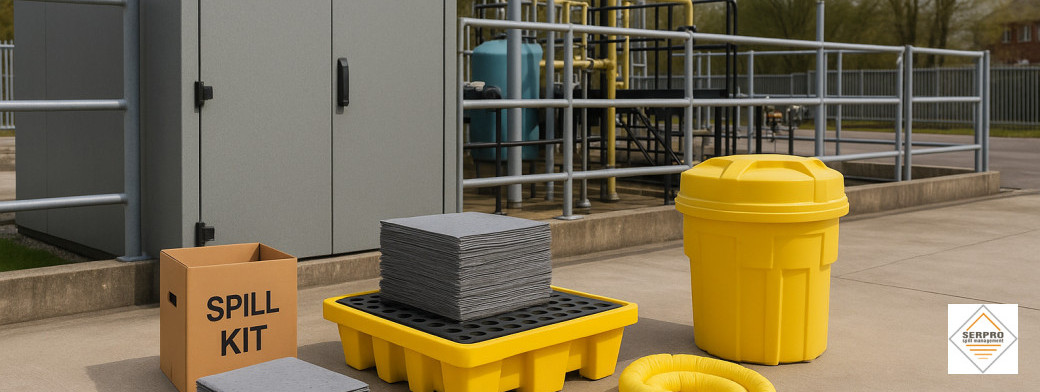
Remote water treatment kiosks should keep a compact, clearly identified spill response set close to the dosing area, not stored in a distant vehicle or compound. At minimum, that means suitable absorbents for the liquids on site, basic personal protective equipment, drain protection, waste bags and simple instructions. The aim is to let trained staff deal quickly with minor drips, splashes and container leaks while preventing slips, contamination and pollution.
Accessibility matters as much as contents. If materials are hard to find, locked away or mixed in with unrelated tools, response time slows and a small leak can spread into walkways, bunds or drains. Clear spill station labelling helps visiting engineers and contractors locate the right equipment fast.
Essential spill response materials for remote sites
- Absorbent pads: useful for wiping up small spills, catching drips during pump or hose changes, and placing under couplings or chemical containers.
- Absorbent rolls: better for covering larger floor areas or bench surfaces where splashes may spread beyond a small footprint.
- Absorbent socks: important for surrounding a leak, protecting door thresholds and stopping liquid travelling across uneven kiosk floors.
- Chemical absorbents: essential where treatment chemicals are stored or dosed, because compatibility matters more than convenience.
- Oil-only absorbents: appropriate if the kiosk also contains lubricants, fuel residues or oily maintenance fluids that should be kept separate from water.
- General purpose absorbents: useful for non-aggressive liquids and routine housekeeping where a specialist absorbent is not required.
- Gloves and basic PPE: responders need suitable hand protection before touching contaminated surfaces or used absorbents.
- Drain covers: vital where a spill could escape to surface water or foul drainage, supporting pollution prevention measures.
- Disposal bags or containers: needed to isolate used absorbents and contaminated PPE for safe waste handling and segregation.
- Drip trays: not a clean-up item, but worth keeping under small containers, pumps or transfer points to catch recurring leaks before they become spills.
- Simple instructions and contact details: staff should know what they can safely handle, when to escalate and who to call for a significant release.
Keep these materials at the point of use, check them during routine inspections and replace used or damaged items promptly. For UK sites, the exact mix should reflect the substances stored, site drainage risks and safe handling arrangements under COSHH.
Who Should Be Trained to Respond to Spills in Water Treatment Kiosks?
Anyone who routinely accesses a water treatment kiosk should know what to do if a spill is found, but not everyone should carry out the same tasks. In practice, the first responder is often the operator, maintenance engineer or site technician who opens the kiosk, spots a leaking container or dosing line, and makes the area safe. They should be trained to recognise the chemical involved, use the correct spill kit contents, protect drains where appropriate, and escalate immediately if the leak is beyond a minor, controllable release.
Supervisors and duty managers also need spill-response training, because they decide when to stop work, isolate equipment, call in specialist help and arrange waste handling. Where contractors service pumps or replace dosing containers, they should be briefed on site-specific procedures before starting work. Training should align with COSHH guidance from HSE and support wider pollution prevention duties, especially at remote sites where a small leak can go unnoticed for longer.
What should that training cover?
Training should be practical rather than box-ticking. Staff should know how to identify likely liquids, select compatible chemical absorbents, deploy absorbent socks around thresholds or bund edges, use drip trays for temporary containment, and place contaminated pads, rolls and PPE into labelled disposal bags. They should also understand when drain covers are needed and when a spill must be treated as a larger incident rather than a housekeeping issue.
Why do regular drills matter?
Regular drills turn written procedures into a reliable response. Short exercises help confirm that spill kits are easy to reach, clear spill station labelling makes sense, and staff can act quickly in a confined kiosk with limited access. Drills also reveal gaps in stock, communication or waste segregation before a real incident occurs. That matters for both worker safety and environmental protection, including control of contaminated run-off and emissions as outlined in UK guidance on emissions control and chemical waste management.
How Should Spill Waste Be Separated and Handled?
Spill waste should be separated by the liquid involved, the absorbent used and the level of contamination, then stored securely until it can be collected or disposed of through the correct waste route. At remote water treatment kiosks, that usually means keeping chemical-contaminated pads, socks, granules, PPE and any damaged containers apart from general rubbish, and never mixing incompatible wastes in one bag or drum.
The safest starting point is to identify what has been spilled and check the site’s COSHH information, SDS and local waste procedure. Chemical absorbents used on dosing liquids should be treated as contaminated waste, even if the spill itself looks minor. Clean packaging, unused absorbents and non-contaminated housekeeping waste may be separated from hazardous spill residues, but only where there is no doubt about cross-contamination.
Guidelines for waste separation
Use clearly labelled containers or disposal bags for different waste streams. As a practical rule:
- keep hazardous chemical spill waste separate from general waste;
- do not mix acids, alkalis, oxidisers or unknown liquids together;
- segregate used absorbents, contaminated gloves and wipes from recyclable packaging;
- isolate any leaking container, residue or sludge in a compatible secondary container.
Why compliance matters
Correct separation supports legal compliance, reduces risk to handlers and helps prevent secondary pollution. UK operators should align their handling and storage arrangements with site permits, duty of care requirements and wider pollution prevention measures. The GOV.UK guidance on chemical waste appropriate measures is a useful reference for controlling emissions and managing waste safely.
Best practices for disposal
Seal waste promptly, label it with the contents and hazard where known, and store it in a secure, bunded area away from drains and weather exposure until collection. Keep waste transfer or consignment paperwork accurate, and use an authorised contractor where hazardous waste is involved. For remote sites, it also helps to record the incident, restock the spill kit immediately and review whether the waste produced suggests a need for better containment, clearer labelling or more suitable absorbents.
How Can Spill Preparedness Be Checked During Routine Inspections?
Spill preparedness at remote water treatment kiosks should be checked through a simple, repeatable inspection routine that confirms the right materials are present, accessible, compatible with the chemicals on site and supported by clear records. In practice, that means checking spill kits, secondary containment, housekeeping, drain protection, PPE, signage and waste arrangements at set intervals, then recording any shortages or defects for prompt action.
Routine inspections matter because these small dosing sites often have limited supervision, restricted access and stored liquids that can quickly create slip, exposure or pollution risks if a leak goes unnoticed. A good inspection process supports wider duties under COSHH and aligns with UK guidance on pollution prevention for businesses.
Inspection checklist items
- Confirm the spill kit is present, clearly labelled and easy to reach without moving stored containers.
- Check absorbents are suitable for the liquids kept on site, such as chemical absorbents rather than oil-only products where dosing chemicals are stored.
- Inspect absorbent pads, rolls and socks for damage, dampness or missing contents.
- Verify drain covers, disposal bags and gloves are available and in usable condition.
- Check drip trays, bunds and container storage areas for cracks, standing liquid, staining or overfilling.
- Look for leaks around pumps, hoses, valves, dosing lines and connection points.
- Review housekeeping so walkways are clear and contamination is removed promptly to reduce slip risks.
- Make sure emergency contact details and escalation instructions are legible.
Frequency of inspections
Most kiosks benefit from a brief visual check during each routine site visit, with a more detailed formal inspection weekly or monthly depending on chemical volumes, access frequency and past issues. Additional checks should follow deliveries, maintenance work, severe weather or any spill incident.
Documentation and record-keeping
Each inspection should be logged with the date, location, inspector name, findings, corrective actions and completion dates. It is also useful to record stock replenishment, waste removal and any recurring leak points. These records help demonstrate that controls are being maintained, highlight trends and show when a site may need improved containment or a revised spill response arrangement.