
Last reviewed: 13 November 2026
A drip of hydraulic oil on a quayside and a fuel sheen spreading across a harbour require different responses. Both can threaten the marine environment, but not every incident is suitable for ordinary workshop absorbents or a local clean-up team.
Understand the common sources of pollution
Look closely at refuelling points, hose connections, bilge transfer areas, boat maintenance bays, hydraulic systems and oil storage. Waste oils and bilge liquids may contain mixtures that need identification before they are handled. Never pump contaminated bilge water directly into the harbour.
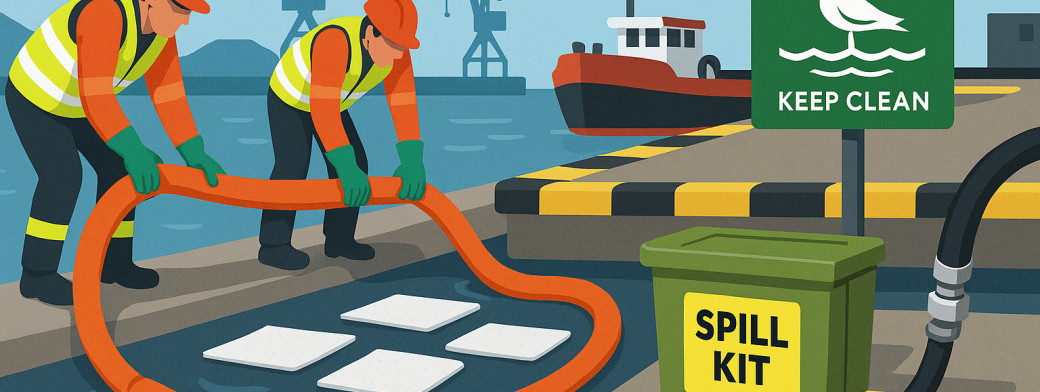
For manageable hydrocarbon drips on hardstanding, oil-only absorbents and spill kits can form part of a trained response. In wet conditions, hydrophobic products are often more suitable than general purpose pads. Their selection still depends on the substance and site procedure.
Protect the water, not merely the workshop floor
Survey the direction of surface drains, quay edges and tidal water movement. Position containment close to likely release points. Where available, properly specified floating booms may be deployed by trained personnel, but they are not a substitute for a harbour’s pollution contingency plan. Weather, currents, vessel movement and the scale of the release can make deployment unsafe or ineffective.
In England and Wales, relevant harbour authorities need suitable marine pollution arrangements. The Maritime and Coastguard Agency contingency-planning guidance explains how local plans connect with the national response.
A practical marina or port checklist
- Inspect refuelling hoses, couplings and tanks before transfer.
- Use drip trays for predictable equipment leaks where appropriate.
- Keep waste-oil, oily rags and used absorbents securely segregated.
- Make sure staff know how to stop transfer and notify the harbour authority or emergency contact.
- Arrange prompt specialist escalation for fuel reaching open water or exceeding local response capability.
After a spill
Record the approximate amount, location, product and whether water was affected. Do not apply dispersants without the necessary authorisation. Check official marine pollution reporting guidance and use the correct waste classification and disposal route for recovered material.
The best marine spill preparation connects day-to-day housekeeping with a tested, properly authorised incident response plan.
