
0
2833
Last reviewed: 13 November 2026
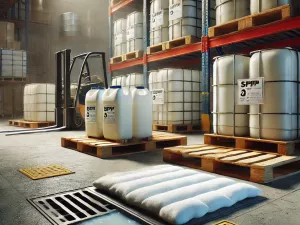
Businesses often ask which UK regulation says they must keep a spill kit or use a bunded pallet. There is no single rule that covers every spill and every workplace. The answer depends on what is stored, where the premises are located, the type of activity and the risk to people and the environment.
That distinction ..

0
2429
Last reviewed: 13 November 2026
There is more to choosing an absorbent than finding something that soaks up liquid. A pad that works well beneath a leaking gearbox may be unsuitable for an unknown chemical, while an oil-only product intended for wet outdoor use may leave a water-based coolant untouched. Understanding those differences can save time..

0
2008
Last reviewed: 13 November 2026
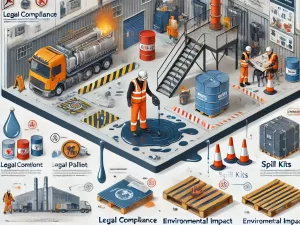
Spill kits are useful, but they cannot compensate for poor storage, unsuitable equipment or staff who do not know what to do. Many spill incidents become more serious through a series of ordinary, avoidable mistakes rather than one dramatic failure.
Here are ten common weaknesses worth checking in a workplace spill p..
0
1753
10 Common Spill Management Mistakes and How to Avoid Them | SERPRO
Spill management is a critical component of workplace safety and environmental protection. However, many businesses unknowingly make mistakes that compromise their preparedness and ability to handle spills effectively. This guide h..

0
2360
Last reviewed: 13 November 2026
Spill risks turn up in very different workplaces. A maintenance engineer changing hydraulic oil, a warehouse worker unloading a leaking drum and a technician handling laboratory reagents will not need identical equipment or procedures. What they share is the need to control liquid before it reaches people, product or..
0
1772
Last reviewed: 13 November 2026
Most workplaces would rather prevent a spill than clean one up. A leaking drum, damaged hose or overfilled machine sump can interrupt work, create a dangerous floor and, if the liquid reaches a drain, cause a pollution incident. The good news is that many of these problems can be anticipated.
Spill management is not ..
0
2080
Last reviewed: 13 November 2026
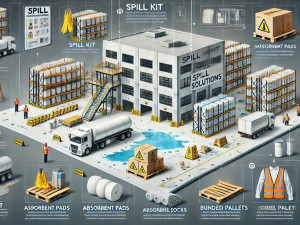
A spill kit and a bunded pallet both help control liquid spills, but they do very different jobs. One is there when something goes wrong; the other is intended to stop a leaking container from releasing liquid into the workplace in the first place. Good spill containment begins by understanding that difference.
Wheth..
0
2266
Last reviewed: 13 November 2026
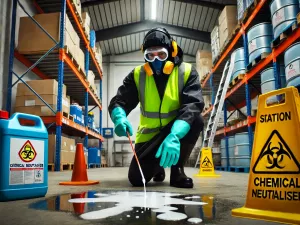
When an acid or alkali is spilled, reaching for a neutraliser can seem like the obvious answer. Sometimes it is the right approach, but neutralisation is not a universal first-aid measure for chemical spills. The substance, concentration, quantity and conditions on site all affect whether it can be done safely.
For b..
0
1739
Last reviewed: 13 November 2026
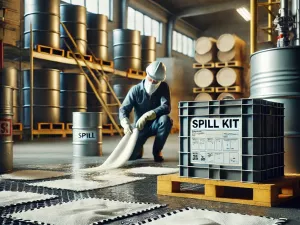
A spill response plan does not have to be lengthy to be useful. It needs to answer a few immediate questions: what might spill, who is responsible, what can be dealt with safely, and when should everyone withdraw and call for help? Without those answers, even a small leak can lead to confusion, unsafe clean-up or pol..
0
2426
Last reviewed: 13 November 2026
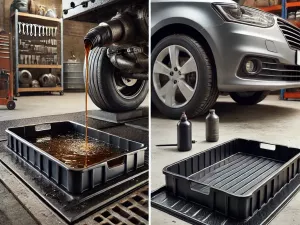
A drip tray is one of the simplest ways to stop a small leak becoming a messy floor problem. Whether it sits beneath a workshop machine, a container tap or a lawnmower in a garage, its job is to catch liquid at source so it does not spread unnoticed. Here are five practical reasons to use one.
1. Catch predictable dr..
