
Published: 8 November 2026
Last updated: 24 August 2026
Why is Spill Planning Essential in Karting Circuits?
Spill planning is essential in karting circuits because these venues routinely handle small-engine petrol, two-stroke or four-stroke lubricants, chain lube, brake and parts cleaners, and other maintenance liquids in busy paddocks, workshops and temporary pit areas. In this context, spill planning means having a clear, practical system for preventing, containing and cleaning up leaks or spills before they create slip hazards, fire risk, equipment damage or pollution. For karting operators, that usually includes keeping suitable absorbents and spill kits close to fuel storage and service points, using drip trays and absorbent socks around likely leak areas, protecting drains where needed, and setting out who responds and how waste is bagged and removed.
Karting circuits need this level of preparation because spills are rarely limited to one liquid or one location. Common incidents include petrol splashes during refuelling from cans, chain lube overspray in pit bays, oil drips from engines, and cleaning agents used on parts or bodywork. Even small quantities can make concrete, painted floors or covered paddock surfaces slippery, especially where junior drivers, mechanics, marshals and spectators move through shared spaces. UK guidance from the HSE on the safe use of petrol and its advice on incident and emergency planning at events supports the need for planned controls rather than ad hoc clean-up.
What spills should a kart circuit plan for?
The main liquids to plan for are fuel, lubricants and maintenance chemicals. Fuel spills can happen at storage points, during decanting, or beside karts being prepared for a session. Lubricant spills often involve chain lube, used oil and grease around workstands and trolleys. Cleaning agents such as brake cleaner or degreasers may need different handling depending on their composition. Because circuits can include open paddocks, garages and spectator-adjacent walkways, spill planning should cover both routine drips and sudden releases from cans, hoses or containers.
What control measures are usually needed?
A sensible setup combines prevention, containment and response. Typical measures include absorbent pads and rolls for quick wipe-up, oil-only or general purpose absorbents depending on the liquid, absorbent socks to stop spread, drip trays under fuel cans and engines, and drain covers where a spill could escape into surface water drainage. Small, clearly labelled spill stations should also include gloves and disposal bags, with staff briefed on where equipment is kept, when to isolate an area, and how to separate contaminated waste for safe handling.
What Types of Liquids are Commonly Spilled in Karting?
In karting environments, the liquids most commonly spilled are petrol, engine oil, chain lubricants, brake and parts cleaners, degreasers, coolants where applicable, and small amounts of mixed maintenance fluids from cans, bottles and tools. These spills matter because they can create immediate slip risks in paddocks, pit lanes and workshop areas, while also posing fire, health and environmental concerns if they reach drains or soak into the ground. Choosing the right absorbent depends on the liquid involved, with oil absorbents often suited to hydrocarbons and chemical absorbents more appropriate for aggressive cleaners or mixed substances.
On a busy circuit, even small drips can become a hazard when they collect around refuelling points, kart stands, trailers or temporary pit spaces. The HSE highlights how contamination underfoot contributes to slips and trips, making prompt clean-up and good housekeeping essential in areas used by drivers, mechanics, marshals and spectators alike. See the HSE’s guidance on slips and trips for the wider safety context.
Fuel, oil and oily residues
Petrol is one of the most obvious spill risks in karting because it is regularly handled in fuel cans, funnels and refuelling equipment. It spreads quickly, gives off flammable vapours and can leave a slippery film on sealed surfaces. Engine oil is another frequent contaminant, whether from topping up small engines, leaks during maintenance or residue on used parts. Two-stroke oil, premix and oily waste from rags or containers can also build up around work areas if not managed carefully.
Lubricants and cleaning agents
Chain lube is especially common in kart maintenance and often lands on floors, mats or nearby hardstanding during application. Although used in small quantities, it can create a persistent slick surface. Brake cleaners, carburettor cleaners, degreasers and other workshop chemicals are also typical in paddocks and garages. These products may evaporate quickly, but before they do they can spread contamination, affect skin contact safety and require more cautious absorbent selection than straightforward oil-only spills.
Environmental and safety hazards
The main hazards are slips, fire risk from fuels, skin or eye exposure from chemicals, and pollution if liquids enter surface water drains. Government guidance on pollution prevention for businesses makes clear that oils, fuels and chemicals should be prevented from escaping into the environment. For karting circuits, that means treating even minor spills seriously, especially near drainage channels, wash-down areas and public walkways.
Where Do Spills Usually Occur on the Track?
Spills on karting circuits usually happen in the busiest transition points rather than out on the racing line itself. In most cases, the highest-risk areas are the pits, refuelling points, temporary fuel storage spots and workshop-style maintenance bays, where fuel cans are opened, small engines are checked, and chain lube or cleaners are applied in quick succession. These locations combine frequent handling, tight working spaces and fast turnarounds, which makes minor drips, splashes and overfills more likely.
On a typical circuit, the problem is not only the liquid itself but the way activities overlap. Refuelling may take place beside tyre changes, chain adjustment, brake cleaning or engine tuning, so small losses of petrol, oil or lubricant can spread across walking routes. Good housekeeping, prompt use of drip trays and access to suitable spill cleanup materials help stop these routine incidents from becoming slip hazards or contamination issues.
Common spill hotspots around a karting circuit
The pits are one of the most obvious spill zones because karts are moved in and out constantly, often while still warm, and work is carried out quickly between sessions. Fuel stations and refuelling areas are another common source, especially where portable cans are being lifted, funnels are used, or caps are removed and replaced repeatedly. Even a careful team can end up with drips around the filler neck, on the floor beneath the kart, or on benches where containers are set down.
Maintenance areas also contribute significantly. Chain lubrication, brake cleaner use, carburettor checks and small-engine servicing can all leave residues on floors, mats and work surfaces. According to HSE guidance on slips and trips, contamination underfoot is a key cause of preventable incidents, so these routine servicing tasks need the same attention as refuelling.
Why people movement matters as well
Spill risk increases wherever participants, mechanics, marshals and spectators pass close to active work areas. Junior karting events, busy practice days and club meetings often create crowded pit lanes and shared access routes, making it easier for small spills to be walked through and spread. Spectators may not recognise a fresh patch of chain lube or fuel residue, while drivers and crew focused on track activity may step over leaks without reporting them.
That is why likely spill points should be identified not just by task, but by footfall. Areas near pit entrances, barriers, viewing points and queueing spaces deserve particular attention, especially where liquids could migrate towards drains or public walkways.
What Absorbent Products Should Be Kept Nearby?
Karting circuits should keep a small, practical range of absorbents close to refuelling points, paddock work areas, temporary pit spaces and workshop benches. The aim is simple: deal with drips, splashes and small spills from petrol, chain lube, oils and maintenance fluids before they spread into walking routes, trailer bays or drainage points. Having the right products on hand makes clean-up faster, helps reduce slip risks, and supports better day-to-day housekeeping.
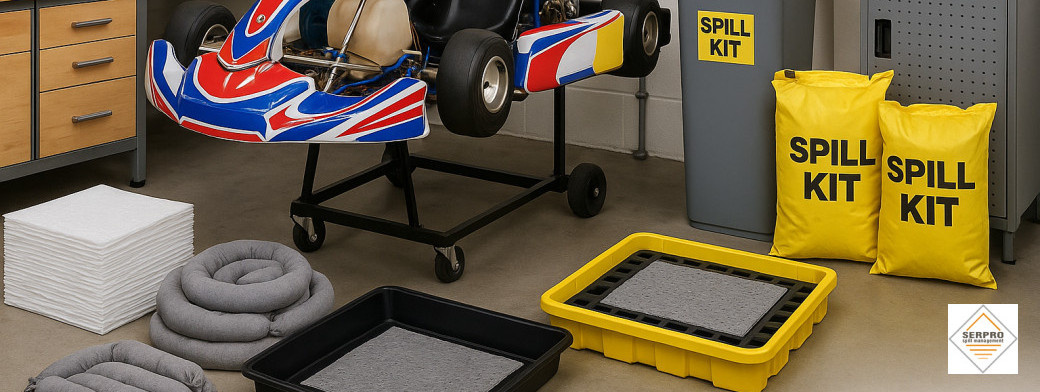
For most circuits, the essentials are absorbent pads, rolls and socks, backed up by compact spill kits. These products let staff and teams respond to different spill shapes: pads for drips and wipe-ups, rolls for wider bench or floor coverage, and socks for surrounding leaks or stopping liquids from travelling. Keeping them visible and easy to reach is just as important as having them in stock.
Core absorbent products to keep nearby
- Pads: useful for fuel-can drips, oily tools, chain lube overspray and small patches of contamination around karts and trolleys.
- Rolls: suited to longer worktops, garage floors, trailer interiors and repeated maintenance tasks where fluids may spread over a wider area.
- Socks: ideal for circling a leaking kart, protecting doorways, edging work areas or intercepting liquid before it reaches pedestrian routes.
What should be in a small spill kit?
A small spill kit is often the most practical option for trackside use. It should typically include absorbent pads, absorbent socks, disposal bags and gloves, with the absorbent type matched to the likely liquids nearby. For example, oil-only absorbents may suit hydrocarbon-based spills, while general purpose absorbents can help with mixed maintenance areas. Clear labelling helps people choose the right kit quickly.
Why the right products matter
Different tasks create different spill patterns, so one product rarely covers everything. A circuit that only keeps loose wipes or a single bag of granules may struggle to contain a spreading leak safely. A better approach is to position the right absorbents where spills are most likely to start, then check stock during routine inspections. This supports cleaner paddocks, safer walkways and more controlled maintenance areas in line with good housekeeping and slip-prevention practice.
Who Should Respond to Spills in Karting Circuits?
Spills in karting circuits should be handled first by designated personnel who have been briefed, equipped and authorised to act, rather than by whoever happens to be nearest. In practice, that usually means trained marshals, paddock supervisors, workshop staff, facilities teams or event duty managers, depending on where the spill occurs and what has been released. A clear allocation of responsibility helps small fuel spills, chain lube drips and maintenance fluids get contained quickly, while reducing the risk of slips, fire hazards and contamination reaching drains or public areas.
For most karting venues, the safest approach is to separate initial actions from escalated response. Nearby staff may make the area safe, warn others and use a small spill kit if the release is minor and they have been trained to do so. Larger spills, repeated leaks, unknown liquids or incidents near drainage points should be referred immediately to the site’s nominated response team and managed under a documented spill response procedure.
Designated personnel and defined responsibilities
Every circuit should identify who responds in each part of the site: pit lane, paddock, workshop, fuel storage point, spectator routes and junior waiting areas. That does not mean every employee needs to lead a clean-up, but it does mean everyone should know who to call and what they are expected to do before the responder arrives. Typical responsibilities include isolating the area, stopping foot traffic, protecting nearby drains, selecting suitable absorbents and arranging safe waste collection.
Training and preparedness matter
Spill response is more effective when staff have practical instruction rather than just a written note on a noticeboard. Training should cover likely liquids on site, correct use of absorbent pads, socks, drip trays and disposal bags, basic PPE, and the point at which an incident must be escalated. Refresher sessions are especially useful before busy race meetings or seasonal reopenings. Structured training can help circuits build confidence and consistency across teams.
This aligns with wider UK expectations around event emergency planning and workplace safety, including the HSE’s guidance on planning for incidents and emergencies at events and its advice on preventing slips and trips.
Communication protocols during an incident
Communication should be simple, fast and understood by all staff. Circuits should set out how spills are reported, who takes control, and how updates are passed between marshals, workshop teams and management. That may involve radios, a control room number, a paddock contact list or a clear escalation flow for out-of-hours maintenance. Good communication prevents duplicate effort, ensures the right kit reaches the scene and helps keep drivers, mechanics and visitors away from affected areas until the surface is safe again.
How Should Waste from Spills be Separated and Handled?
Waste from spills at karting circuits should be separated by what has been contaminated, bagged or contained safely, and then disposed of through the correct waste route. In practice, that means keeping fuel-soaked pads, oil-contaminated granules, used gloves, chain lube residues and any affected debris apart from general rubbish, so they can be assessed and handled as potentially hazardous waste. Good separation reduces cross-contamination, lowers slip and fire risks, and makes it easier to meet legal duties.
After the spill is stopped and absorbed, the next step is to sort the waste into sensible categories. Absorbents used on petrol, oils or mixed workshop liquids should be kept separate from clean packaging, cardboard or other non-contaminated materials. If a spill has involved different substances, such as fuel and brake cleaner, it is usually best not to mix all recovered waste together unless your waste contractor has confirmed that approach is acceptable. Using clearly marked disposal bags and dedicated containers helps teams identify what came from the incident and avoid accidental mixing.
Separate contaminated materials clearly
Typical spill waste at a karting circuit may include:
- used absorbent pads, rolls or socks contaminated with petrol, oil or lubricant
- granules, cloths or paper wipes used during clean-up
- contaminated PPE such as gloves
- small solid items affected by the spill, including packaging, rags or floor sweepings
Any free liquid recovered from drip trays or damaged fuel cans should be placed in a suitable sealed container, not left in open bins. Waste should then be stored in a secure area away from drains and traffic routes, in line with wider waste management arrangements.
Use the correct disposal route for hazardous waste
Many spill residues from fuels, oils, solvents and maintenance chemicals will need to be treated as hazardous or special waste, depending on what is involved and where the site is located in the UK. They should not be put into general skips or poured into drains. The GOV.UK pollution prevention guidance is clear that businesses must prevent oils and chemicals from entering the environment, while HSE guidance also supports safe handling and clean-up of petrol and contaminated materials.
Use a licensed waste contractor where required, keep waste transfer or consignment paperwork, and make sure staff know who authorises removal. If there is any doubt about classification, ask your waste provider before disposal.
Why compliance matters
Compliance is important not just to avoid enforcement issues, but to protect staff, drivers, visitors and the local environment. Proper segregation and disposal support safer housekeeping, reduce the chance of secondary spills, and show that the circuit has a workable response plan rather than simply clearing the visible mess.
How Can Spill Arrangements be Checked During Routine Inspections?
Spill arrangements at karting circuits should be checked through a simple, repeatable inspection that confirms the right absorbents are present, easy to reach, clearly labelled and suitable for the liquids most likely to be handled trackside. In practice, this means reviewing stocks near fuel cans, small engines, chain lube points, paddock work areas and temporary pit spaces, while also checking that used materials can be bagged, reported and replaced without delay. A good inspection routine helps reduce slip risks, supports cleaner housekeeping and improves readiness for minor fuel or lubricant leaks.
Routine checks should focus on both availability and usability. It is not enough to have spill products somewhere on site; marshals, mechanics or paddock staff need to be able to find pads, rolls, socks, drip trays, gloves and disposal bags quickly when a can tips or chain lubricant drips onto hardstanding. Inspection findings should then be recorded, assigned to a responsible person and followed up, in line with wider site safety arrangements and housekeeping expectations set out in HSE guidance on slips and trips and incident planning for events.
Checklist for Inspecting Absorbent Stocks
During inspections, use a short checklist to confirm that spill equipment matches the risks in each area. Typical points include:
- Absorbent stocks are located near fuel storage, refuelling points, workshop benches and kart maintenance bays.
- Suitable products are available, such as oil-only or general purpose absorbents, pads, rolls and socks for small leaks and drips.
- Spill stations are clearly labelled, unobstructed and visible to staff and teams.
- Drip trays, drain protection, gloves and disposal bags are present and in usable condition.
- Part-used kits have been replenished and contaminated absorbents removed for appropriate waste handling.
- Floor areas remain clean and free from lingering slippery residues around spectator or junior access routes.
How Often Should Inspections Take Place?
Inspection frequency should reflect activity levels. As a minimum, many circuits will benefit from a scheduled weekly check in workshops and storage areas, plus pre-event and post-event inspections for paddocks, pit lanes and temporary service spaces. High-use refuelling or maintenance zones may justify daily visual checks during busy meetings. Additional inspections are sensible after wet weather, heavy attendance or any reported spill incident.
Documentation and Reporting
Each inspection should be documented so shortages and recurring issues are visible. A simple form or digital log can record location, stock levels, damaged items, actions required and the person responsible for restocking. Using a standard inspection checklist helps keep checks consistent across the site. Reports should also note whether spills were cleaned promptly, whether waste was segregated correctly and whether any layout changes are needed to keep absorbents closer to likely spill points. Clear reporting turns inspections from a tick-box exercise into a practical maintenance control.
Conclusion: The Importance of Spill Preparedness in Karting
Spill preparedness is a practical part of running a safe, tidy and well-managed karting circuit. Across paddocks, temporary pit areas and small workshops, the most common risks come from petrol, mixed fuels, chain lube, engine oil, brake cleaner and routine maintenance fluids. As discussed, the best approach is to match the likely liquid to the right control measure: absorbent pads, rolls and socks for fast containment and clean-up, drip trays for refuelling and servicing points, and clearly marked stations with gloves, disposal bags and simple instructions so staff can respond quickly.
For most karting environments, that means keeping oil-only absorbents near fuel and oil handling areas, general purpose absorbents for everyday housekeeping, and chemical absorbents where stronger cleaning agents are used. It also means thinking beyond the spill itself: protecting drains, separating waste sensibly, and checking that junior areas, walkways and spectator routes stay clear of slippery contamination. Small leaks from fuel cans, over-lubricated chains and maintenance benches may seem minor, but they can still create slip hazards, fire concerns and pollution risks if left unmanaged.
Good spill planning also supports wider duties around safety and environmental protection. UK guidance from the HSE on slips and trips, the safe use of petrol and pollution prevention for businesses all point in the same direction: prevent releases where possible, respond quickly when they happen, and keep procedures proportionate to the risks on site. Absorbents and spill equipment help with that process, but they work best when supported by routine inspections, clear responsibilities and sensible storage arrangements.
If you operate a karting circuit, now is a good time to review what is kept trackside and in the workshop. Check whether your team has the right spill kits, whether absorbents are positioned where spills actually start, and whether staff know how to contain, report and dispose of waste safely. A small investment in preparedness can make day-to-day maintenance cleaner, safer and easier to manage.