
Last reviewed: 13 November 2026
Classic-car restoration often involves vehicles that stand in one position for weeks while fuel systems, transmissions, brakes and bodywork are dismantled. Old seals and corroded tanks may leak unexpectedly; paint stripping and degreasing introduce further chemical hazards. A workshop should plan for both the routine drip and the occasional unsafe release.
Expect unknown fluids in older vehicles
Identify the vehicle’s fuel, brake-fluid and hydraulic arrangements before opening a system. Historic vehicles may contain degraded fuel, contaminated fluids or components with legacy hazardous materials. Never assume a liquid is harmless because it is found on a familiar car. Provide labelled waste containers and keep old fluids segregated for appropriate disposal.
Control predictable drips
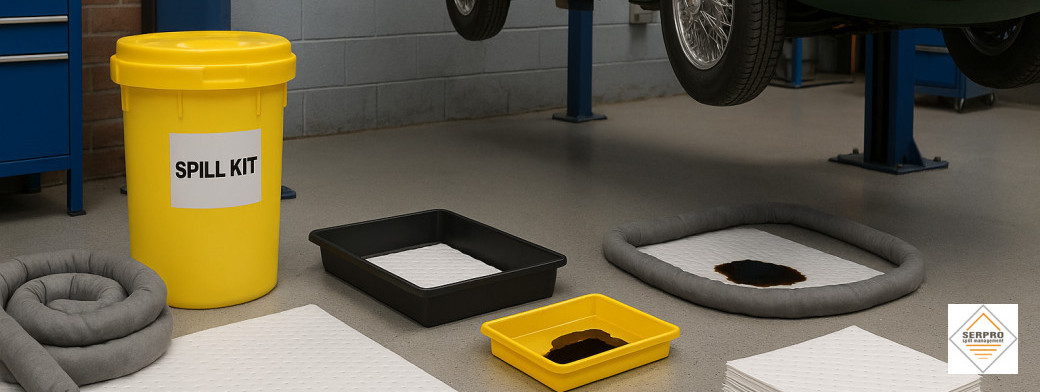
Position suitably sized drip trays under long-term projects and draining operations. Keep oil-only absorbents accessible for controlled hydrocarbon leaks; general absorbents or compatible chemical absorbents may be needed for water-based liquids and cleaning chemicals. A compact spill kits near the workshop entrance helps trained staff react without searching for supplies. Inspect drip trays and empty them into authorised waste containers before they overflow.
Old petrol and solvent vapours are serious fire risks. Do not grind, weld or use ignition-producing tools around open fuel systems. Ventilation, suitable equipment and the HSE DSEAR guidance assessment take precedence over spreading absorbents. Follow HSE COSHH guidance for paints, strippers, adhesives and degreasers.
Protect the restoration project and the premises
- Check the floor and underbody for leaks at the beginning of each shift.
- Stop a leaking transfer before starting clean-up, if safe.
- Keep absorbents clear of hot exhausts, welding and cutting operations.
- Use safe lifting arrangements before entering beneath a vehicle.
- Review the cause of leaks rather than replacing pads indefinitely.
A tidy restoration bay protects staff, valuable components and the environment, but appropriate waste handling and safe isolation remain essential.