
Last reviewed: 13 November 2026
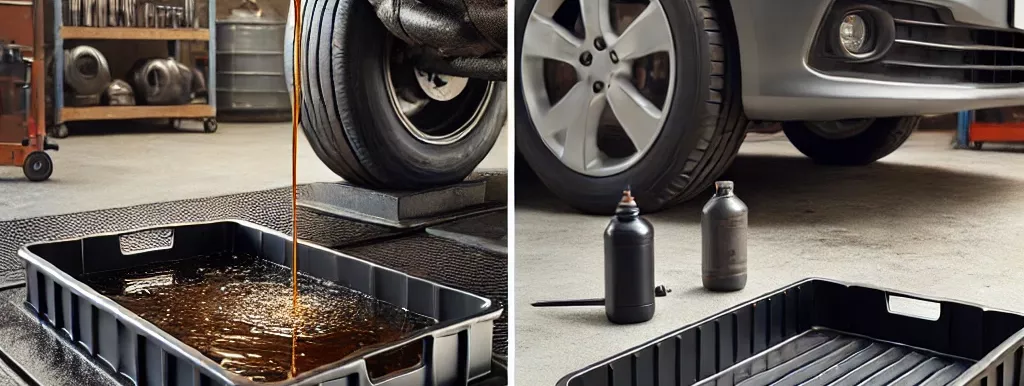
A drip tray is one of the simplest ways to stop a small leak becoming a messy floor problem. Whether it sits beneath a workshop machine, a container tap or a lawnmower in a garage, its job is to catch liquid at source so it does not spread unnoticed. Here are five practical reasons to use one.
1. Catch predictable drips before they spread
A slow oil leak can leave a large stain over several days, especially when machinery is parked in the same place. Positioning a suitable drip tray below the leak point collects the liquid in a contained space. It is particularly useful beneath pumps, gearboxes, fluid transfer connections and temporarily stored parts.
A tray is a preventive measure, not a repair: investigate and fix equipment leaks rather than treating a constantly filling tray as normal.
2. Keep floors and work surfaces cleaner
Oil, coolant and other residues can spread across smooth concrete, enter joints or be tracked through a building on boots and trolley wheels. A tray helps reduce floor contamination and repeated cleaning. In domestic sheds and garages, the same principle applies beneath garden equipment, fuel containers or parked machinery.
Empty trays safely before they overflow, and clean up any liquid spilled when moving them. A tray full of oil can create a new hazard if it is carried carelessly.
3. Help control slip risks
Preventing liquid from reaching a walkway is generally better than trying to absorb it once people are walking through it. Use drip trays alongside sensible layout, housekeeping and leak inspection. The HSE's guidance on slips and trips explains why floor contamination deserves attention in workplaces.
Place trays where they will not become trip hazards themselves or obstruct access to machinery and exits.
4. Reduce unnecessary absorbent use
Repeatedly replacing absorbent pads beneath a known drip produces ongoing waste and cost. A suitable tray can collect liquid for controlled removal, potentially reducing how often absorbents are needed. Pads still have their place for wipe-ups and accidental releases, but a permanent drip point deserves a permanent preventive solution.
5. Support good storage and pollution prevention
Trays can be helpful beneath small containers or transfer points, especially near sensitive floor areas. However, a drip tray is not automatically a legally compliant storage bund. Bulk oil and chemical storage may require properly engineered secondary containment with specific capacity, material and construction requirements.
Where releases could reach drains, consider the drainage route and appropriate drain protection. For England, see GOV.UK pollution-prevention guidance; requirements can differ elsewhere in the UK.
Choosing a tray that fits
Measure the footprint of the item to be placed above it and consider the likely liquid volume. Check the tray's usable internal dimensions, stability, chemical compatibility and safe handling arrangements. A shallow tray might be appropriate for occasional drips but unsuitable for a fast leak or a larger container.
Where a particular material or chemical is involved, check the tray specification rather than assuming that every plastic or metal tray will resist it. All capacities, sizes and sorbencies are approximate.
The best drip tray is one that fits the equipment, can be checked and emptied safely, and stops small leaks before they reach the surrounding area.