
Published: 6 November 2026
Last updated: 26 August 2026
Why is Spill Planning Essential in Machine Shops?
Spill planning is essential in manufacturing machine shops because these environments routinely use cutting fluids that can leak, drip or be carried across floors, creating slip risks, contamination and potential environmental harm. In this setting, cutting fluids generally include straight oils and soluble coolants used to lubricate, cool and protect tools and workpieces during machining. Common spill sources include CNC machines, lathes, milling centres, pumps, pipework, swarf bins and pedestrian walkways where fluid is tracked on footwear or wheels. Effective planning usually combines practical controls such as absorbent pads, absorbent rolls, socks and drip trays with routine inspections, prompt clean-up and safe waste handling, while supporting duties under UK health, safety and pollution-prevention guidance.
Put simply, machine shops need spill preparedness because leaks are predictable rather than exceptional. Cutting oil mist, coolant drips, overfilled sumps, hose failures and residues around pumps can quickly spread onto smooth workshop floors. Without a plan for where absorbents are placed, who responds, how waste is separated and how nearby drains are protected, a small leak can become a slip incident, a COSHH control issue or a pollution problem. Good spill planning helps sites keep work areas safer, reduce downtime and show that fluid risks are being managed in a practical, organised way.
What fluids and spill points should be planned for?
Machine shops typically handle two broad cutting fluid categories: neat or straight oils, and water-mix soluble coolants. Both can escape during normal production, maintenance and fluid transfer. Leaks often begin at machine doors, coolant lines, pumps, filters, hose connections and collection trays, while swarf handling areas and walkways become secondary contamination points as fluid is transferred on bins, pallets and boots. This is why spill planning should focus not only on the machine itself, but also on the routes people and materials use through the workshop.
Why does preparedness matter for safety and compliance?
Preparedness matters because fluid on the floor is one of the most common causes of workplace slips, and HSE guidance on slips and trips makes clear that contamination must be controlled through good housekeeping and prompt cleaning. Where cutting fluids may affect worker health, employers should also consider suitable controls under COSHH. In addition, leaked oils and coolants should not be allowed to enter surface water drains or the wider environment, in line with UK pollution prevention guidance for businesses. A practical spill plan supports these duties by making sure containment materials are close to likely leak points, inspections are regular, and staff know how to respond before a minor leak escalates.
What Types of Fluids Are Commonly Found in Machine Shops?
Machine shops commonly handle several liquid types, but the main ones linked to day-to-day leaks are cutting oils, soluble coolants, hydraulic oils, lubricants and cleaning fluids. Cutting oils are neat, oil-based fluids used to lubricate the cutting zone during machining, helping reduce friction, heat and tool wear. Soluble coolants, sometimes called water-mix coolants or emulsions, are blends of oil and water designed to cool the work area, carry away heat and improve machining performance. Because these liquids can spread across floors, collect beneath equipment and contaminate waste streams, they need to be identified and managed correctly.
In practice, the type of absorbent used often depends on the fluid involved. Oil-based leaks may be better suited to oil-only absorbents, while mixed liquids and general workshop drips may call for general purpose absorbents. Understanding what is in use around each machine helps staff choose suitable spill-control materials, separate waste properly and reduce slip risks in line with sensible housekeeping and COSHH-based controls.
Cutting oils and soluble coolants
Cutting oils are typically used where strong lubrication is needed, such as tapping, drilling, turning and other metal-cutting tasks. Their main job is to reduce friction between the tool and the workpiece, improve surface finish and help extend tool life. Because they are oil-rich, leaks can leave very slippery residues on floors, machine bases and access routes.
Soluble coolants are more focused on cooling and flushing away fine metal particles. These fluids circulate through machines and can leak from hoses, pumps, tanks or worn seals. Although they may look less oily than neat cutting oils, they can still create slippery surfaces, unpleasant odours and hygiene issues if left to stagnate.
Swarf, residues and associated workshop liquids
Machine shops also generate swarf: the metal chips, turnings and fines produced during machining. Swarf is not a fluid, but it is often saturated with cutting oil or coolant, which means it can drip during handling and storage. Swarf bins, conveyors and collection points are therefore common sources of secondary leaks. Good swarf management usually means draining excess liquid where possible, keeping bins in suitable locations and checking surrounding floors for escaped fluid and sharp debris.
Other liquids found in machine shops may include hydraulic oil, gearbox oil, way lubricants, degreasers and parts-washing fluids. Each presents slightly different handling and disposal considerations, especially where liquids could enter drains or mix with metal fines.
What hazards do these fluids create?
The main hazards are slips, trips and falls, especially where fluid spreads into walkways. There may also be skin contact risks, mist exposure and contamination concerns depending on the substance and how it is used. Oily swarf can add both cut hazards and fire-loading concerns, while poorly controlled leaks can increase housekeeping problems and make waste segregation harder. For that reason, machine shops benefit from knowing which fluids are present, where they are used and what type of spill response is most appropriate for each area.
Where Do Spills Typically Occur in Machine Shops?
Spills in manufacturing machine shops most often occur around the points where cutting fluids are used, moved, stored or drained. In practice, that usually means the floor area beside CNC machines and lathes, around coolant pumps and pipework, near swarf bins, and in bulk storage or transfer areas for oils and soluble coolants. These locations are more vulnerable because fluids are under regular movement, equipment is exposed to vibration and wear, and operators are carrying out frequent top-ups, changeovers and cleaning tasks.
The most common causes are a mix of equipment failure and human error. Worn seals, cracked hoses, overflowing sumps, loose fittings and damaged pumps can all create slow leaks or sudden releases. At the same time, overfilling, poor decanting, missed housekeeping and moving containers without suitable containment can turn a small drip into a wider floor hazard. This is why machine shops often keep spill kits close to likely leak points and protect nearby drainage routes with drain covers where there is a risk of fluid escaping beyond the work area.
Common spill hotspots
Near machines is the most obvious hotspot. Doors opened after machining, splash from coolant application, and fluid carried out on parts or tooling can all leave residue on the floor. Pumps and filtration units are another frequent source, especially where pipe joints, valves and return lines are subject to constant use. Storage areas also deserve attention, including drum racks, IBCs, transfer stations and shelves holding smaller containers, because leaks here may go unnoticed for longer and spread under pallets or into walkways.
How layout affects spill likelihood
Workshop layout has a direct effect on how likely spills are and how far they travel. Narrow aisles, uneven floors, poorly placed storage, and long distances between use points and refill stations increase the chance of drips during transport. Machines positioned close to pedestrian routes can also allow coolant to migrate into walkways, raising slip risk. A better layout separates storage from traffic, keeps absorbents and trays near known leak points, and makes routine inspections easier to carry out consistently.
What Absorbent Products Should Be Kept Nearby?
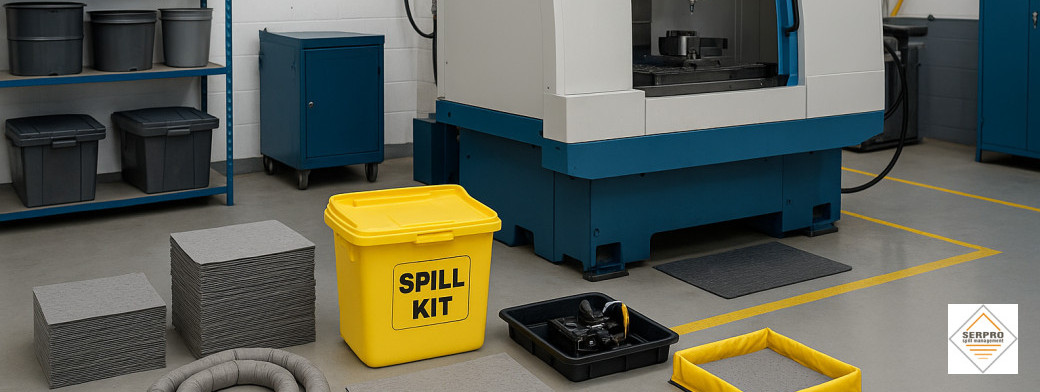
Machine shops should keep a small, clearly visible range of absorbent products close to likely leak points so operators can deal with cutting fluid drips and small spills before they spread across walkways or under equipment. In most cases, that means keeping absorbent rolls for covering larger floor areas, pads for quick wipe-ups and spot leaks, and absorbent socks for surrounding machines, edging drip zones or stopping liquid from travelling towards drains and pedestrian routes.
The best choice depends on how the fluid behaves and where it usually escapes. Soluble coolants and mixed workshop liquids are often suited to general purpose absorbents, while oil-only products may be more useful around hydraulic oil or lubricants. Whatever is selected, the key is accessibility: staff should be able to reach the right product in seconds, without leaving an active leak unattended or searching through a distant stores area.
Essential absorbent types to keep at hand
Absorbent rolls are useful beside machining centres, grinders and maintenance benches because they can be unrolled quickly along the base of a machine or across a contaminated walkway. They work well where leaks spread in a line or where repeated drips need temporary floor protection during servicing.
Absorbent pads are practical for routine housekeeping. They are easy to place under couplings, pumps, valves and swarf bins, and they help operators deal with small drips before they become slip hazards.
Absorbent socks are best for containment. They can be laid around machine feet, along the rear edge of a workstation or in front of thresholds to stop fluid migrating into adjacent areas.
Placement and visibility best practice
Store absorbents at machine cells, coolant mixing points, fluid transfer areas and near workshop entrances to production zones rather than only in a central spill cupboard. Use wall-mounted stations or labelled bins so products stay clean, dry and easy to identify. Clear placement supports faster response and better housekeeping, which aligns with HSE guidance on preventing slips and trips and managing hazardous substances under workplace floor safety and COSHH controls.
Who Should Respond to Spills in the Workplace?
Spills in a machine shop should be handled by people who have been trained to assess the risk, choose the right absorbents or containment tools, and follow the site’s reporting procedure. In practice, that usually means nominated spill responders, supervisors, maintenance staff or other competent employees identified in advance, rather than whoever happens to be closest. Where cutting fluids, oils or cleaning chemicals are involved, staff need to know when a small spill can be dealt with in-house and when the area should be isolated and escalated.
Clear roles matter because machine shops often contain mixed hazards: slippery walkways, moving equipment, hot surfaces, drains and substances covered by COSHH guidance. A fast response is important, but so is a safe one. Staff should know who leads the response, who fetches the spill kit, who protects nearby drains, and who reports the incident so that the cause can be investigated and repeat leaks reduced.
Identify trained spill responders in advance
Each work area should have named personnel responsible for first response to minor spills, with cover for different shifts and absences. Their duties may include isolating the source where safe, setting out absorbent rolls or socks, placing drip trays, using disposal bags and gloves, and keeping others away from the affected area. If the spill is larger, involves an unknown substance or presents a health risk, employees should know to stop work and call for supervisory or specialist support.
Training and drills should be practical
Training should not be limited to induction. Regular refresher sessions and short drills help employees recognise fluid types, locate equipment quickly and use it correctly under pressure. This is also a good point to check that spill station labelling is clear, consistent and visible from the machine area, so responders do not lose time searching for the right kit.
Use clear communication during an incident
During a spill, communication should be simple and immediate: alert nearby staff, mark or cordon off the area, notify the supervisor, and record what has been spilled, where and whether it is still leaking. A straightforward reporting chain helps the team respond quickly, protects pedestrians and forklift routes, and supports follow-up inspections after the clean-up is complete.
How Should Waste Be Separated and Managed?
Waste from cutting fluid leaks should be separated at the point of clean-up so hazardous materials do not get mixed with general waste. In a machine shop, used absorbent rolls, pads, socks, swarf contaminated with oil or coolant, and liquids collected from drip trays may all need different handling depending on what they have absorbed. The safest approach is to identify the fluid first, keep waste streams separate, label them clearly, and store them securely until collection or disposal.
As a rule, non-hazardous waste should only remain in the general waste stream if it is genuinely uncontaminated. Once absorbents, PPE or debris have been used on cutting oils, soluble coolants or other workshop chemicals, they should be treated as potentially hazardous unless your waste assessment confirms otherwise. This reduces the risk of cross-contamination, protects staff handling waste, and supports a more reliable disposal process.
Separate waste by fluid type and contamination level
Best practice is to use clearly designated containers for different waste streams, such as oil-contaminated absorbents, coolant-contaminated materials, general housekeeping waste and recyclable dry materials. Oil-only absorbents used on hydrocarbons should not be mixed with chemical absorbents or general purpose absorbents if they have picked up different substances. Likewise, clean cardboard, plastic and metal packaging should be kept apart from contaminated workshop waste.
Where practical, place suitable disposal bags close to spill stations so used absorbents can be bagged immediately. This helps prevent leaks from carried waste and makes it easier for staff to follow the correct route for disposal.
Label waste clearly and store it safely
Every waste container or bag should be labelled with the type of waste inside, the source area and any relevant hazard information. Clear labelling supports safer handling, avoids accidental mixing and helps waste contractors classify material correctly. Storage areas should be secure, protected from weather where needed, and arranged to prevent further releases to floors or drains.
Follow disposal rules and compliance duties
Machine shops should manage waste in line with their duty of care, COSHH assessments and any hazardous waste requirements that apply to the materials on site. The HSE COSHH guidance helps employers assess substances and suitable controls, while GOV.UK pollution prevention guidance is relevant where waste fluids could affect land or drains. Keep transfer notes or consignment paperwork as required, use authorised disposal routes, and make sure staff know that absorbents and recovered cutting fluids should never be tipped into general drains or skipped without assessment.
How Can Routine Inspections Improve Spill Management?
Routine inspections improve spill management by helping machine shops spot small leaks, worn containment measures and unsafe housekeeping before they become larger slip, contamination or production problems. In areas where cutting fluids, hydraulic oils and soluble coolants are used every day, regular checks make it easier to keep absorbent rolls in the right places, confirm drip trays are still catching drips effectively and identify floor conditions that need prompt attention.
For manufacturing machine shops, inspections should be practical and repeatable rather than occasional or reactive. A simple inspection routine supports cleaner walkways, faster spill response and better control of contamination around machines, pumps, swarf bins and fluid storage points. It also gives supervisors a clear record of what was found, what was corrected and whether further changes are needed, in line with good housekeeping expectations under HSE guidance on slips and trips and wider controls under COSHH essentials.
Checklist for routine floor inspections
- Check for fresh drips, sheens or tracked fluid around machine bases, pumps and hose connections.
- Inspect walkways, operator standing areas and access routes for slippery patches or saturated absorbents.
- Confirm absorbent rolls, pads or socks are positioned where leaks typically start and have not shifted.
- Make sure drip trays are present, stable, not overfilled and large enough for the current leak pattern.
- Look at swarf bins and waste containers for fluid run-off onto the floor.
- Check spill stations are clearly labelled and stocked with suitable materials and PPE.
Frequency and documentation of inspections
High-use areas may need checks each shift, with a more detailed weekly inspection and a recorded monthly review. Use a consistent form or digital checklist, such as those supported by inspection tools, to note date, location, findings, corrective action and who completed the check. This creates a useful trail for maintenance planning and training.
Adjustments based on inspection findings
Inspection results should lead to practical changes. If one machine repeatedly leaks onto a walkway, move or widen the absorbent roll coverage, fit a better-placed drip tray or review the source of the leak with maintenance. If absorbents are becoming saturated too quickly, increase inspection frequency or change the spill-control setup. The aim is continuous improvement: use what inspections reveal to refine placement, response and housekeeping standards.
What Are the Key Takeaways for Managing Cutting Fluid Leaks?
The key takeaway is that managing cutting fluid leaks in manufacturing machine shops depends on a simple, repeatable system: place absorbent rolls close to likely leak points, use drip trays beneath pumps and transfer areas, inspect floors and equipment regularly, and make sure staff know exactly how to respond. Cutting oils, soluble coolants and contaminated run-off can quickly create slip risks, housekeeping problems and potential pollution issues, so the best results come from combining fast containment with routine prevention.
In practice, effective spill management means matching controls to the way the shop operates. Keep absorbent rolls, pads or socks near machines and along vulnerable walkways, position drip trays where fluids may drip during operation or maintenance, protect drains where needed, and separate used absorbents and waste for safe disposal. Just as importantly, teams should understand who responds, where equipment is stored and when an issue needs escalating as part of wider spill preparedness.
Quick recap of best practice
- Identify where leaks are most likely to start, including machine bases, pumps, hoses, swarf bins and fluid transfer points.
- Place absorbent rolls and other suitable spill-control materials close to those areas for quick use.
- Use drip trays under recurring drip points to contain leaks before they spread across the floor.
- Carry out regular inspections of floors, equipment and storage areas to spot minor leaks early.
- Keep walkways clear, dry and well managed to reduce slip hazards.
- Separate waste absorbents, fluids and contaminated materials for safe handling and disposal.
Preparedness and training matter
Even well-placed products are only effective if employees know how to use them. Clear spill station labelling, simple response procedures and regular refresher training help staff act quickly and consistently. This supports safer housekeeping, better control under COSHH arrangements and a more organised response to everyday leaks.
Put the basics into practice
The most reliable approach is to implement these best practices before leaks become disruptive: review machine layouts, stock the right absorbents, check drip trays, inspect routinely and train teams to respond with confidence. Small improvements in placement, containment and inspection can make a significant difference to safety, cleanliness and day-to-day efficiency.