
Published: 1 October 2026
Last updated: 25 August 2026
Why is Spill Preparedness Crucial in Crematoria Plant Rooms?
Spill preparedness in crematoria plant rooms means having planned, practical measures in place to prevent, contain and clean up accidental leaks or drips quickly, safely and discreetly. In this setting, common liquids include fuel for grounds equipment, hydraulic oils, boiler or plant-room fluids, and cleaning chemicals. Suitable controls may include absorbent pads, drip trays, clearly labelled spill stations and routine inspections. The aim is to protect staff, visitors, surfaces, drains and the wider environment while supporting compliance with relevant UK health, safety and pollution-prevention duties.
This is especially important because crematoria combine back-of-house engineering spaces with sensitive public-facing grounds. Even a small spill can create slip hazards, damage flooring, spread odours, stain walkways or raise concerns for visitors if it is visible in memorial areas. Good preparedness allows staff to respond calmly and discreetly, keeping incidents contained and maintaining the respectful, well-managed appearance expected at crematoria sites.
Typical liquids and the risks they present
Plant rooms and associated storage areas may contain fuels, lubricants, hydraulic oils and maintenance chemicals, while external equipment stores may hold petrol or diesel for mowers and other grounds machinery. Cleaning products used in washdown or housekeeping can also present risks, particularly if they are corrosive or unsuitable for discharge to drains. Each liquid behaves differently, so preparedness is not just about having absorbents on site, but having the right type available for the likely spill.
The risks are both immediate and longer term. On the immediate side, contaminated floors increase the chance of slips and trips, a well-recognised workplace hazard highlighted by the HSE. Longer term, poorly controlled leaks can enter drainage systems, affect soil or water, and lead to avoidable clean-up costs or enforcement concerns. UK businesses are also expected to manage oil and chemical storage and handling responsibly under pollution-prevention guidance, including the advice set out by GOV.UK.
In short, spill preparedness matters in crematoria plant rooms because it supports public safety, staff readiness, discreet housekeeping and environmental protection in a setting where operational reliability and sensitivity are equally important.
What Types of Liquids Are Commonly Handled in Crematoria?
In crematoria, the liquids most commonly handled in plant rooms and around grounds equipment include fuels for mowers and utility machinery, hydraulic oils, boiler and heating system liquids, and a range of cleaning chemicals. Each presents different risks: some create slip hazards, some can contaminate drains and soil, and some may affect staff or visitors if vapours, residues or splash exposure are not controlled. In a setting where public areas must remain calm, clean and discreet, understanding these liquid types is the first step in sensible spill preparedness.
Although many spills in crematoria are small, they can still have wider consequences. A minor diesel or petrol leak from grounds equipment may spread across paving, while a hydraulic oil drip can leave persistent contamination on hardstanding. In plant rooms, treatment chemicals, condensate-related residues or cleaning products may require a different response, including the use of suitable oil-only absorbents or chemical absorbents depending on the liquid involved.
Fuel for grounds equipment
Crematoria grounds teams often use petrol or diesel for mowers, strimmers, compact tractors and utility vehicles. These fuels are flammable and can quickly create slip risks on smooth paths, service yards or storage areas. If spilled outdoors, they may also enter surface water drains or soak into the ground, which is why UK pollution prevention guidance places clear emphasis on avoiding releases to the environment.
Hydraulic oils and lubricants
Hydraulic oils may be present in ride-on mowers, lifting equipment, compact plant or maintenance machinery. These oils are often less volatile than fuel, but they can spread widely, leave long-lasting slippery films and be difficult to remove fully from paving or concrete. Leaks are sometimes gradual rather than dramatic, so hoses, seals and parked equipment should be checked routinely for drips and staining.
Boiler-room liquids and cleaning chemicals
Within plant rooms, likely liquids include heating system water, treatment chemicals, oils associated with mechanical systems, and routine cleaning products such as descalers, sanitisers and detergents. Some may be irritants or corrosive, making splash protection and correct absorbent choice important. Under COSHH, substances should be assessed so staff know the hazards, storage needs and first-response measures.
Why these spills matter
Even modest spills can affect both environmental protection and public health. Oil and chemical contamination may reach drains, damage landscaped areas or create odours and residues in spaces used by mourners and staff. Liquid on floors also increases the risk of slips, which the HSE highlights as a common workplace hazard. Good identification, storage and rapid containment help crematoria protect people, preserve dignity in public-facing areas and reduce the chance of pollution incidents.
Where Do Spills Typically Occur in Crematoria Settings?
Spills in crematoria settings most often occur in plant rooms, fuel and chemical storage points, maintenance areas, and around grounds equipment used to keep external spaces tidy and presentable. In practice, the highest-risk locations are where liquids are stored, transferred, topped up or used regularly: for example near boilers, generators, pumps, mowers, strimmers and cleaning cupboards. Even small leaks matter in these areas, as they can create slip risks, damage surfaces and, if they reach gullies, lead to pollution concerns.
Within plant rooms, common spill sources include pipe joints, valves, tanks, dosing systems, condensate lines and machinery with oil or hydraulic components. On the grounds side, refuelling points, parked equipment, workshop benches and vehicle storage areas are typical trouble spots. Keeping suitable spill kits and protective measures such as drain covers close to these locations helps staff respond quickly and discreetly before a minor incident spreads.
Common spill locations to review
Fuel storage areas are an obvious starting point, especially where petrol or diesel is kept for grounds machinery. Drips can happen during decanting, overfilling or from ageing containers. Machinery itself is another frequent source: ride-on mowers, compact tractors, hedge cutters and other powered equipment may leak fuel, engine oil or hydraulic fluid during use, transport or storage. Inside the building, boiler rooms and service spaces can see leaks from heating plant, lubrication points, water treatment chemicals or routine maintenance tasks.
Cleaning stores and janitorial cupboards should not be overlooked. Bottles can split, caps may be left loose, and incompatible products may be stored poorly. Delivery areas and waste holding points can also become spill locations if containers are handled roughly or left on uneven ground.
Why these spills happen
Typical causes include equipment failure, worn seals, corroded fittings, accidental knocks, poor housekeeping and simple human error during refilling or cleaning. In many cases, a spill is not a single dramatic event but a slow drip that goes unnoticed until staining, odour or a slippery floor appears. That is why regular monitoring and preventative maintenance are so important. Routine inspections of storage areas, machinery parking spots, drains and plant-room floors make it easier to spot early signs of leakage and deal with them before they affect safety, presentation or the wider environment.
What Spill Preparedness Equipment Should Be On-Hand?
Yes: crematoria plant rooms and grounds teams should keep a small, clearly organised set of spill response items close to the places where leaks are most likely to start. In practice, that means having the right absorbents and containment tools near boilers, pumps, fuel storage points, maintenance benches, cleaning cupboards and grounds equipment areas, so staff can act quickly without bringing unnecessary attention to an incident.
The most useful approach is to match equipment to the liquids on site, keep it easy to reach, and make sure staff know what each item is for. This supports tidy housekeeping, helps reduce slip risks, and makes it easier to contain oils, water-based liquids and cleaning chemicals before they spread into walkways, public-facing areas or drains.
Recommended spill preparedness items
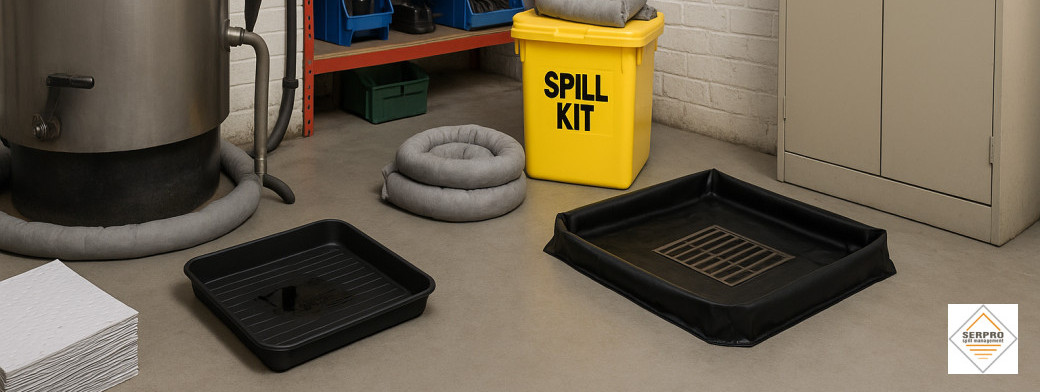
- Absorbent pads for wiping up small drips, catching fresh leaks and cleaning around plant, pumps and service points. They are effective because they can be placed directly onto a spill and removed with minimal disruption.
- Absorbent rolls for larger floor areas or repeated drips along walkways and maintenance zones. Rolls are useful where a wider strip of protection is needed during servicing or cleaning.
- Absorbent socks to surround a spill, stop it travelling under equipment, and protect thresholds or doorways. They are especially effective as a first containment barrier.
- Drip trays to sit beneath plant, containers or grounds equipment during storage and maintenance. Their purpose is prevention as much as response, catching leaks before they reach the floor.
- Small spill kits containing a practical mix of pads, socks, gloves and disposal materials. These give staff a ready-made first response option for minor incidents.
- Oil-only, general purpose and chemical absorbents so the response matches the liquid involved. This helps avoid using the wrong material on fuel, hydraulic oil or cleaning chemicals.
- Drain covers for areas where a spill could migrate outdoors or enter surface water drainage. They provide temporary protection while clean-up is carried out.
- Gloves and labelled disposal bags for safe handling and separation of used absorbents and contaminated waste.
Accessibility matters as much as the equipment itself. Spill items should be stored in visible, labelled stations near risk points rather than locked away in a distant store. In a crematorium setting, that allows staff to respond discreetly, reduce spread quickly and maintain safe, orderly surroundings for colleagues and visitors alike.
Who Should Be Responsible for Responding to Spills?
Responsibility for spill response in a crematorium should be shared, but it must also be clearly assigned. In practice, the first person on the scene may need to make the area safe, but named staff should be responsible for assessing the spill, selecting the right absorbents or containment method, protecting drains and arranging clean-up and waste handling. In a crematoria setting, this usually means a combination of site management, trained plant room or maintenance staff, grounds personnel and appointed deputies for periods when key staff are off site.
A simple rule helps avoid confusion: everyone should know how to raise the alarm and isolate the area, while only trained personnel should lead the response beyond minor, low-risk spills. This is particularly important where liquids may include fuels for grounds equipment, hydraulic oils, boiler-room fluids or cleaning chemicals. Roles should be written into local procedures and supported by clear spill station labelling so staff can quickly identify what equipment is available and who is expected to use it.
Key personnel to identify
Most crematoria benefit from naming specific people for each stage of response. A duty manager or supervisor should normally coordinate the incident, decide whether normal operations need to pause and ensure records are kept. Maintenance or plant room staff are often best placed to deal with leaks from fixed equipment, while grounds staff may respond first to spills involving mowers, utility vehicles or stored fuel. Cleaning teams should know how to secure the area and report contamination, even if they are not expected to handle every substance themselves.
Training requirements for staff
Training should match the likely risks of the role. All staff need basic awareness: how to spot a spill, prevent slips, keep visitors away and report promptly. Those expected to respond should receive practical instruction on using pads, socks, drain covers, gloves and disposal bags, and on when not to proceed without further help. Where substances could present health risks, procedures should align with COSHH essentials. Refresher training and short drills help keep responses calm and discreet.
Why communication matters
A clear communication plan is essential. Staff should know who to call first, where escalation goes and when external assistance is needed. Contact details, spill maps and brief instructions should be easy to find in plant rooms and service areas. This supports faster containment and helps the site meet wider expectations around pollution prevention set out in GOV.UK guidance for businesses.
How Should Waste Be Separated and Handled?
Waste from spills in crematoria plant rooms and around grounds equipment should be separated according to what was spilled, what absorbent or cleaning material was used, and whether the waste is hazardous. In practice, that means keeping oil-contaminated waste, chemical-contaminated waste, general maintenance waste and ordinary rubbish apart, then storing each stream in suitable containers or bags for collection and disposal. This helps reduce cross-contamination, supports safer handling by staff and contractors, and makes it easier to meet UK environmental and workplace duties.
As a starting point, staff should identify the liquid involved before clearing up. Absorbents used on fuels, hydraulic oils or lubricants should be kept separate from those used on detergents, sanitisers or other cleaning chemicals, because disposal routes may differ. Mixed waste can complicate classification and increase disposal costs, so it is usually better to segregate materials at the point of clean-up. Where a spill response uses general purpose absorbents, the used material should still be treated according to the contaminant it has absorbed, not simply the product type.
Use the right bags and containers
Appropriate disposal bags matter because they help contain residues, prevent leaks during movement and support clear identification. Heavy-duty bags, sealed containers and labelled bins should be selected to suit the waste stream and the volume involved. If there is a risk of puncture, free liquid or strong contamination, bagged waste may need to be placed inside a rigid container before removal. Clear labelling also helps prevent cleaners or maintenance teams from placing contaminated absorbents into ordinary refuse.
Follow documented procedures and compliance duties
Waste handling should sit within the site’s written spill procedure, COSHH assessments and contractor arrangements. The HSE’s COSHH guidance is a useful reference for assessing substances and deciding on suitable controls, including handling contaminated materials safely. Sites should also consider wider environmental obligations, including correct classification, storage and transfer of hazardous waste where applicable. A spill kit does not make a site compliant on its own; compliance depends on proper segregation, labelling, storage, documentation and disposal through the correct waste route.
How Can Regular Inspections Improve Spill Preparedness?
Regular inspections improve spill preparedness by making sure equipment, storage areas and response supplies are ready before a leak or spill happens. In crematoria plant rooms and around grounds equipment, routine checks help staff spot early signs of wear, poor housekeeping, low stock levels and unsuitable storage arrangements. This reduces the chance of small drips from fuel, hydraulic oil, boiler-room liquids or cleaning chemicals becoming larger incidents that affect safety, operations or public-facing areas.
Inspections also support a calmer, more discreet response. When staff know that drip trays are in place, absorbents are dry and accessible, and spill points are clearly labelled, they can contain minor incidents quickly and keep walkways, service yards and plant spaces safe. This aligns with wider UK good practice on preventing slips and contamination, including HSE guidance on slips and trips and GOV.UK pollution prevention guidance.
Why routine checks matter
Regular checks are not just about stocktaking. They confirm that spill control measures still match the risks on site. For example, a small kit that was suitable for occasional grounds equipment refuelling may no longer be enough if more machinery is stored nearby. Likewise, a plant room may need different absorbents depending on whether staff are dealing mainly with oils, water-based leaks or cleaning chemicals. Reviewing spill kits, absorbent socks, pads, drain protection, gloves and disposal bags as part of normal inspections helps maintain readiness without creating unnecessary clutter.
Practical inspection checklist
- Check for drips, staining, corrosion, loose fittings and damaged hoses on plant and equipment.
- Confirm drip trays and containment are clean, correctly positioned and not already full.
- Inspect spill kits for missing items, damaged packaging or damp absorbents.
- Make sure the correct absorbents are available for oil, general liquids or chemicals.
- Verify that drain covers, disposal bags and gloves are easy to reach.
- Keep spill stations clearly labelled and free from obstruction.
- Review housekeeping: clean floors, clear access routes and safe storage of liquids.
- Record findings and act promptly on defects or low stock.
Done consistently, inspections prevent spills by catching faults early and improve safety by reducing slip risks, protecting drains and helping staff respond with confidence. They also provide a simple record that spill preparedness is being maintained as part of everyday site management.
Conclusion: The Importance of Discreet Spill Preparedness
Discreet spill preparedness is an essential part of running crematoria plant rooms and maintaining grounds equipment safely, respectfully and efficiently. Across the article, the key message is clear: even small leaks of fuel, hydraulic oil, boiler-room liquids or cleaning chemicals can create slip risks, damage surfaces, interrupt operations and, if not contained properly, lead to wider environmental issues. In a setting where dignity, cleanliness and calm presentation matter, spill planning should be practical, unobtrusive and ready for immediate use.
A well-prepared site does not rely on reacting once a problem becomes visible. It puts sensible measures in place beforehand, such as keeping absorbent pads, absorbent socks, drip trays, small spill kits, suitable gloves and clearly labelled disposal bags close to likely risk points. It also means separating oil-only, general purpose and chemical absorbents where appropriate, protecting drains when needed, and following good housekeeping principles supported by HSE guidance on slips and trips, GOV.UK pollution prevention guidance and COSHH essentials.
The most effective approach is proactive rather than reactive. Regular inspections, tidy storage, prompt replacement of used materials and clear spill station labelling all help reduce disruption and support a more controlled response. Just as importantly, staff should know which materials to use, when escalation is needed and how waste should be handled after clean-up.
As a final step, review your current arrangements: check equipment locations, confirm stock levels, and make staff training and routine equipment checks part of normal site management. Quiet preparedness protects people, premises and public confidence.