
Last reviewed: 13 November 2026
Highway maintenance teams work beside traffic, drainage gullies and often in poor weather. Diesel, hydraulic oil, bitumen-related products and contaminated washwater can all escape from vehicles or equipment. The response must protect road users and workers before anyone approaches the spill.
Vehicles and depots are the first line of defence
Inspect gritters, sweepers, tippers, excavators, service vans and temporary generators for damaged hoses, loose fittings and leaking tanks. Check refuelling points and vehicle parking areas. A small leak that persists through a long shift can spread along a road or into a surface-water gully.
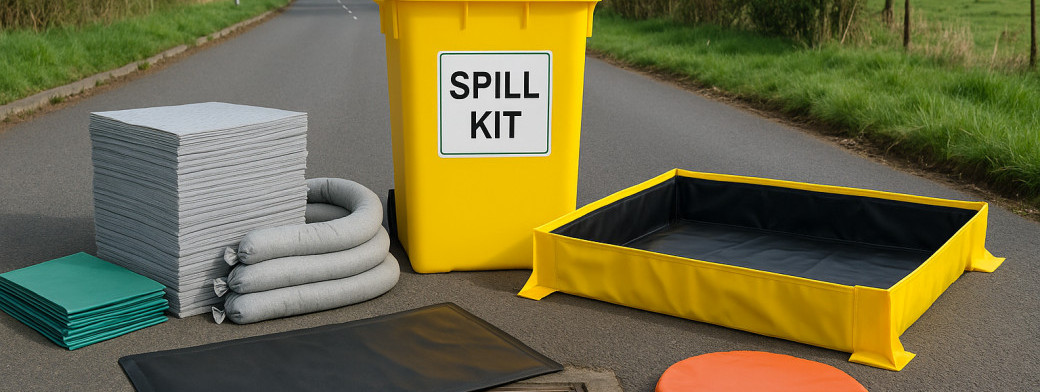
Vehicle-based spill kits with appropriate oil absorbents can help trained staff handle limited hydrocarbon releases. Drip trays can control predictable leaks when plant is parked or serviced. Not every load or roadside spill can be managed with the same kit.
Protect people, traffic and drainage
Any roadside response must be coordinated with the appropriate traffic management arrangements. Workers should not enter live traffic to place absorbents or drain covers. Where the release is substantial, unknown or near a watercourse, follow the authority’s escalation procedure and involve appropriately trained specialists.
Road drainage varies. A gully may connect to a watercourse, a treatment system or a foul network; site teams should know the likely route rather than assuming that all drains are safe places for washwater.
Create practical procedures for mobile teams
- Keep spill response equipment stocked and secured in the relevant vehicle.
- Brief crews on who can stop work, isolate an area and call for help.
- Identify substances before choosing absorbents or cleaning methods.
- Do not wash oil, fuel or contaminated road residues into drains.
- Record quantities, locations, photographs where safe and follow-up maintenance.
Respond to winter and construction conditions
Cold weather, gritting materials, wet surfaces and changing road layouts can make containment harder. Review the arrangements for depots, mobile plant and works beside water before the season changes. The UK Roads Liaison Group provides sector context, while GOV.UK pollution-prevention guidance for England addresses risks to water and drainage.
For road maintenance, a successful spill response is one that protects the public, keeps the crew safe and prevents pollutants reaching the environment.