
Last reviewed: 13 November 2026
Treatment works and pumping stations handle chemicals that are essential to the process but potentially troublesome when released. Sodium hypochlorite, polymers, acids, alkalis and fuels differ substantially in their handling requirements. A plan should reflect the actual substances, their concentration and the consequences of a release into drainage or the water-treatment process.
Why hypochlorite deserves special care
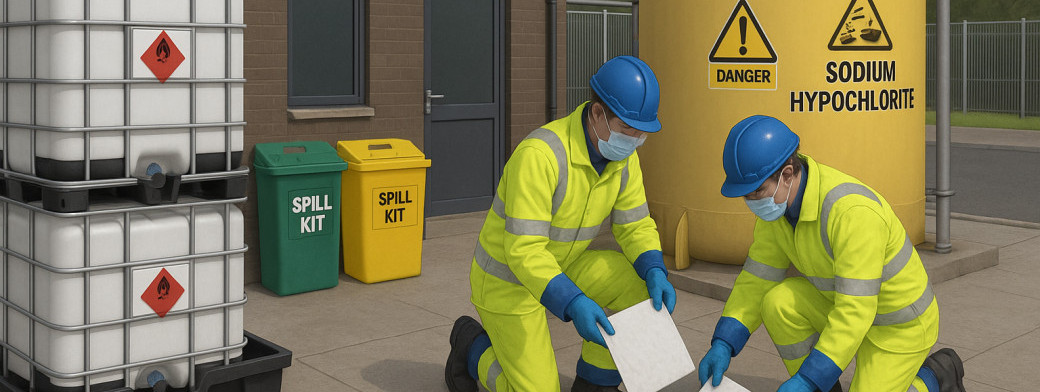
Sodium hypochlorite is an oxidising cleaning and treatment chemical. Contact with acids can release chlorine gas, so incompatible chemical storage and attempted neutralisation can create a serious emergency. Follow the site-specific safety data sheet, segregation rules and emergency procedure; do not treat a significant hypochlorite spill as an ordinary absorbent-pad job.
Polymer solutions present a very different problem. Some leave exceptionally slippery surfaces, even where the liquid is not particularly hazardous by itself. Control pedestrian access, recover bulk product using suitable methods and check the floor before reopening.
Storage, transfer and drainage
Likely points of failure include chemical delivery connections, dosing skids, hose fittings, IBC valves and tanks. Use chemically compatible bunding and inspect it for cracks, standing liquid and damaged seals. Bunded pallets or drip trays may be useful for suitable containers, but the materials and capacity must match the stored chemical.
Do not assume that a surface-water drain, foul drain or process return can accept recovered chemical. Confirm the site’s drainage arrangements and permit conditions before deciding where liquids or rinse water can go.
Keep spill kits substance-specific
Where a risk assessment permits local clean-up, stock selected chemical absorbents and spill kits alongside suitable PPE and clear instructions. Keep incompatible materials apart and identify circumstances in which staff must withdraw and call the designated incident team.
Waste classification depends on the contaminant; collect and label recovered liquids and used absorbents safely. Include contractor handovers and chemical delivery periods in refresher training, not just routine operation.
Practical next steps
Map hypochlorite, polymer and fuel risks separately, then check the containment and response arrangements at each transfer point. The best solution prevents a release reaching a drain or another process chemical in the first place.