
Last reviewed: 13 November 2026
A hospital spill might be a knocked-over drink in reception, a laboratory reagent in a controlled area or a leak beside a standby generator. These incidents should not be managed as though they present the same hazard. An effective plan separates routine housekeeping from clinical, biological, pharmaceutical and chemical incidents, and gives staff a clear route for escalation.
Different spills need different responders
Water and everyday non-hazardous liquid spills can often be managed by trained facilities staff using ordinary cleaning procedures. Blood and other potentially infectious body fluids require the organisation’s infection prevention and control procedure, appropriate disinfectants, contact times and personal protective equipment. Clinical teams must not rely on general-purpose absorbents as a substitute for that procedure.
Cytotoxic medicines, laboratory reagents, sharps and unidentified liquids require specialist assessment. Staff who discover a potentially hazardous release should secure the area and contact the responsible clinical, pharmacy or laboratory team rather than improvise a clean-up.
Check where a release could travel
Ward corridors, sluice rooms, theatres, pathology laboratories and waste-storage areas have different access and hygiene requirements. Map drains and door thresholds as well as the spill source. In a generator compound, diesel and lubricating oil may also threaten external drainage; correctly sized secondary containment and suitable drip trays can help prevent small leaks becoming wider incidents.
Where oil is stored, check the applicable rules for the relevant UK nation and the installation rather than assuming one threshold applies everywhere. For hospitals in England, the official business oil-storage guidance explains relevant thresholds and exemptions.
Equip people for their actual tasks
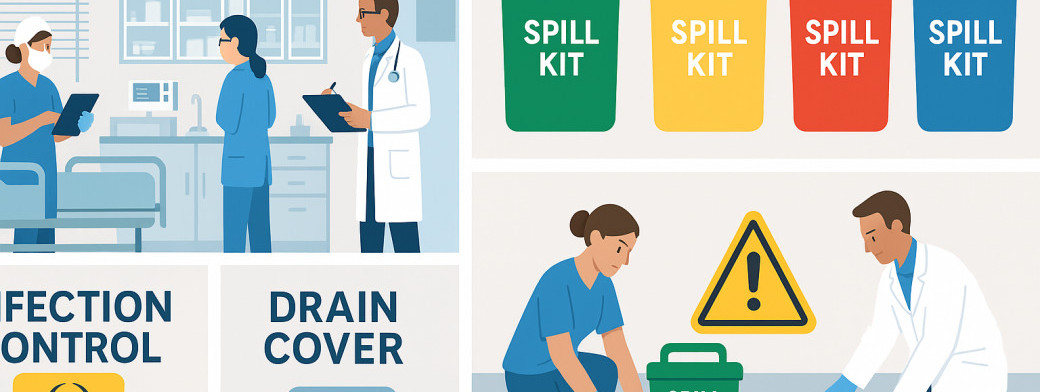
A single kit is not appropriate for every ward, laboratory and plant room. Provide an approved clinical spill procedure and dedicated materials where biological contamination is foreseeable. Engineering areas may need spill kits, oil absorbents and drain protection; chemical stores may require chemical absorbents selected against the safety data sheets.
Keep clean-up materials away from sterile supplies. Record the incident, the substance involved, who cleared the area, any exposure and the relevant waste route; reinstate access only after the responsible team confirms it is safe.
Practical next steps
Review the hospital’s own infection-control and hazardous-substance arrangements first. Use SERPRO products for the compatible, non-clinical containment tasks they can safely support; do not substitute them for approved healthcare procedures.
