
Last reviewed: 13 November 2026
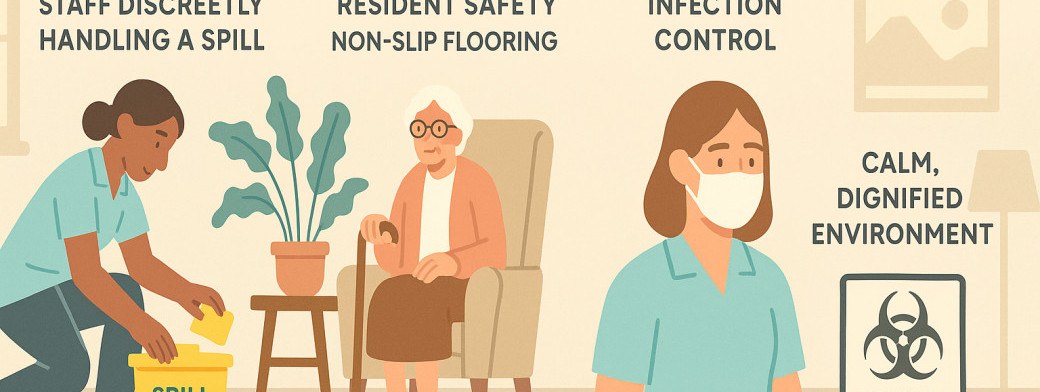
A spill in a care home is as much a matter of resident dignity as it is of housekeeping. Residents may have reduced mobility or be more vulnerable to falls, while shared bathrooms, dining rooms and laundry areas have frequent changes in floor condition. A simple, discreet procedure makes it easier to keep people safe without unnecessary disruption.
Start with the resident and the route
Keep residents, visitors and staff away from a contaminated floor, using assistance and temporary barriers rather than relying on a wet-floor sign. Where a resident needs help, arrange that support before beginning the clean-up. Keep mobility aids, walking frames and wheelchair wheels away from the affected area until it is safe.
Spilled drinks, bathwater and ordinary food liquids can usually be managed under approved housekeeping procedures. Body-fluid spills require the home's infection prevention and control arrangements, not a general industrial spill response.
Cleaning stores and maintenance spaces
A leaking disinfectant or descaler may present skin, eye or inhalation risks in addition to slipping. Do not mix cleaning chemicals or assume that an absorbent is compatible merely because it is labelled 'chemical'. Consult the product safety data sheet and the site's COSHH assessment.
Boiler rooms, external fuel stores and maintenance cupboards can present different risks. Place drip trays beneath small recurring drips and suitable spill kits near compatible maintenance liquids, away from resident access.
Train, inspect and record
All shifts need to know how to make an area safe, alert the duty manager and request a specialist response. Match training to the tasks staff may actually perform. Keep cleaning equipment and any used absorbents out of resident areas, and segregate waste according to what contaminated it.
Daily walk-rounds should include dining areas, bathrooms, entrance mats, waste-handling routes and any known leaks. The manager should review repeated incidents and arrange a repair rather than treating a drip as a permanent cleaning task.
Practical next steps
The aim is a safe, dry floor and a consistent response that protects residents, staff and visitors. Facilities teams can use suitable absorbents for appropriate maintenance tasks, while infectious incidents stay within the care home’s clinical procedures.
