
Published: 20 March 2026
Last updated: 17 March 2026
What Are Solvent Spills and Why Are They a Concern in Museum Conservation Labs?
Solvent spills in museum conservation labs are accidental releases of liquid chemicals used to clean, soften, dissolve or remove coatings, adhesives and contaminants from historic objects. Common examples include ethanol, acetone, isopropanol, white spirit and other hydrocarbon or ketone-based mixtures used during treatment. In conservation settings, even a small spill matters because it can damage sensitive materials, create harmful vapours and increase fire risk. Typical control measures include spill kits, inert absorbents, bunded storage, sealed waste containers, local exhaust ventilation and clear procedures aligned with UK health and safety law, especially COSHH requirements and HSE guidance on working safely with solvents.
Museum conservation labs are especially vulnerable because solvents are used close to irreplaceable collections made from paper, textiles, wood, paint layers, metals, plastics and composite materials. A spill may spread across benches, wick into porous fibres, stain surfaces, mobilise historic finishes or trigger corrosion. At the same time, staff may be exposed through inhalation or skin contact, so spill response must protect both collections and people.
Types of solvents used in conservation
Conservators may work with polar solvents such as ethanol and acetone, petroleum-based solvents such as white spirit, and blended formulations chosen for specific treatments. Each behaves differently in a spill. Fast-evaporating solvents can generate concentrated vapours quickly, while slower-evaporating products may remain in contact with artefacts or work surfaces for longer. Understanding these properties is essential for safe solvent handling and selecting the right containment method.
Why spill management is critical
The main concerns are material sensitivity, worker health, fire safety and lawful disposal. Solvents can swell varnishes, disrupt adhesives, extract dyes and weaken fragile fibres or coatings. Exposure may cause irritation, dizziness or longer-term health effects, depending on the substance and duration. UK labs must assess risks, control exposure and manage contaminated absorbents and residues correctly under COSHH and related waste duties. Good practice includes segregating hazardous waste and using specialist waste management routes rather than general disposal.
What Are the Material Sensitivities to Solvents in Conservation?
Materials in conservation labs can react very differently to solvents, so understanding material sensitivity is essential before any cleaning, consolidation or adhesive-removal work begins. A solvent that is effective on one surface may cause swelling, staining, embrittlement, dye migration or irreversible loss on another. In practice, conservators must assess both the object material and any coatings, finishes, repairs or contaminants present, using a risk-based approach aligned with COSHH guidance from HSE and careful spot testing before wider application.
Common materials encountered in conservation include paper, parchment, textiles, wood, painted surfaces, metals, ceramics, glass, plastics and composite objects made from several layers or components. Each has distinct vulnerabilities. This is why a strong understanding of materials sensitivity is central to safe solvent use: the same spill or treatment can affect fibres, binders, pigments and substrates in very different ways, even within a single artefact.
How solvents affect common conservation materials
Paper and other cellulose-based materials may cockle, distort or weaken when exposed to polar solvents, while inks and media can feather, bleed or dissolve. Parchment and leather are particularly sensitive because solvent exposure may alter surface finishes, extract oils and change flexibility. Textiles, especially dyed historic fibres, can suffer colour loss, shrinkage or tideline formation if solvents spread unevenly.
Wood and furniture finishes may soften or blanch, and historic varnishes can become tacky or partially solubilised. Painted and gilded surfaces are often among the most vulnerable because solvents may disrupt binding media, lift overpaint, dull gloss or detach fragile decorative layers. Metals are not immune either: although some solvents do not directly corrode metal, they can remove protective coatings or drive contaminants into cracks and joins. Plastics present a growing challenge in modern collections, as many polymers craze, swell, become sticky or crack after contact with common solvents.
Why composite objects increase the risk
Many museum objects are composite, combining wood, textile, adhesive, paint and metal elements. In these cases, selecting a solvent for one component may endanger another. A cleaning solvent that appears safe on a painted wooden frame, for example, may mobilise an adhesive beneath decorative fabric or affect a later restoration layer. This makes testing, isolation and controlled application vital, alongside safe handling procedures described in HSE’s guidance on working safely with solvents.
Examples of solvent damage in practice
Typical case examples in conservation include acetone causing local whitening on lacquered wooden surfaces, ethanol mobilising sensitive dyes in historic textiles, and stronger solvent blends softening acrylic or cellulose nitrate plastics in modern heritage collections. There are also well-documented instances where over-wetting with solvent has created tidelines on paper or disturbed friable paint on ethnographic objects. These cases show that solvent damage is often not dramatic at first; subtle changes in sheen, texture or dimensional stability can be just as serious because they alter the object’s authenticity and long-term condition.
How Can Museum Conservation Labs Prepare for Solvent Spills?
Museum conservation labs can prepare for solvent spills by combining formal risk assessment, disciplined storage and labelling, and regular staff training. Because conservators often work with volatile, fast-spreading liquids around sensitive historic materials, prevention is more effective than response alone. A good preparation plan identifies where spills are most likely, limits the quantity of solvent in active use, and ensures staff can contain incidents quickly without increasing harm to collections, people, or the wider workspace.
Preparation should reflect both the hazards of the solvent and the vulnerability of nearby artefacts. In practice, this means reviewing bench layouts, transfer methods, waste routes, ventilation, and emergency equipment before work begins. Guidance from the HSE on working safely with solvents supports a preventative approach based on reducing exposure, controlling ignition risks, and handling chemicals in a planned, consistent way.
Carry Out Task-Specific Risk Assessments
Every conservation task involving solvents should be covered by a documented assessment that considers the substance used, the amount handled, the method of application, and the consequences of a spill. This should include risks to staff, drains, surfaces, and collection items such as paper, textiles, painted finishes, adhesives, and composite objects that may stain, swell, dissolve, or distort on contact.
A robust risk assessment should also identify control measures such as spill trays, absorbent materials compatible with the solvent, sealed waste containers, and clear evacuation or isolation procedures for larger releases. Reviewing near misses is equally important, as small drips and transfer errors often reveal weaknesses in workflow before a serious incident occurs.
Store and Label Solvents Correctly
Proper storage reduces the chance of accidental knocks, leaks, and misidentification. Solvents should be kept in suitable, clearly labelled containers, with lids secured when not in use and only minimal working volumes brought to the bench. Segregating incompatible substances, using secondary containment, and storing stock in designated cabinets helps prevent both spills and cross-contamination.
Labels should remain legible and consistent, showing product identity and relevant hazards. Decanted solvents should never be left in unmarked jars or temporary vessels, especially in shared labs where multiple treatments may be underway at once.
Train Staff in Spill Prevention
Staff training should cover more than emergency clean-up. Conservators, technicians, volunteers, and visiting specialists need instruction on safe decanting, transport between work areas, waste handling, and the selection of appropriate absorbents and PPE. Training should also explain how solvent spills can affect sensitive fibres, coatings, and historic substrates, so prevention is understood as a collections-care issue as well as a health and safety duty.
Regular refresher sessions, induction training, and short spill drills help maintain good habits. Clear reporting lines and accessible written procedures make it easier for staff to act quickly and consistently when conditions change.
What Should You Do in the Event of a Solvent Spill?
In the event of a solvent spill in a museum conservation lab, act immediately but do not rush in without assessing the risk. The correct response is to stop work, identify the substance if possible, protect people first, and only attempt clean-up if the spill is small, contained, and safe to manage with the materials and training available. Because conservation labs often use volatile, flammable, or toxic solvents around sensitive collections, a spill response must balance staff safety, fire risk, ventilation, and the protection of nearby objects.
As a practical rule, isolate the area, remove ignition sources, improve ventilation where this can be done safely, and consult your COSHH assessment and local spill procedure. The UK Health and Safety Executive’s guidance on working safely with solvents is a useful reference for understanding exposure, vapour hazards, and safe handling controls during an incident.
Take immediate action
- Stop the source if this can be done safely, for example by uprighting a container or closing a valve.
- Warn others nearby and prevent anyone from walking through the spill or spreading contamination into other work areas.
- Remove ignition sources, including hot tools, naked flames, and non-essential electrical equipment, especially where flammable vapours may be present.
- Protect collections by moving vulnerable objects only if they are not already contaminated and can be relocated without increasing risk.
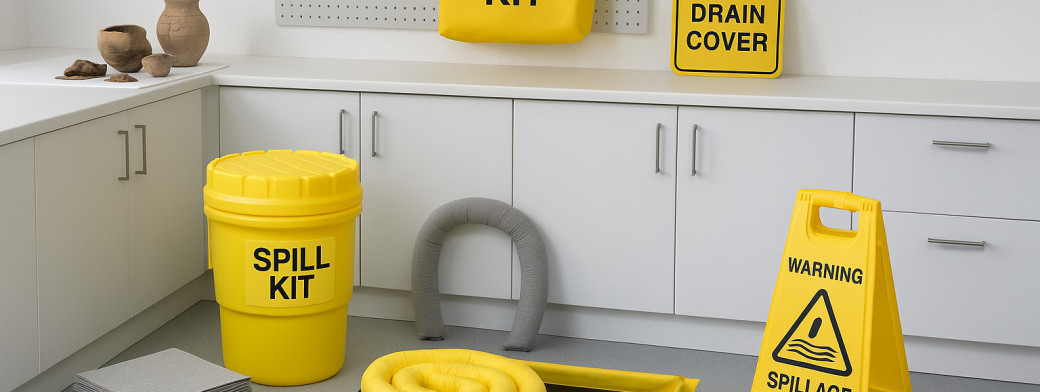
- Use the correct spill kit and appropriate PPE if trained to do so. For general response planning and containment methods, see spill response.
Know when to evacuate
Evacuation may be necessary if the solvent is unknown, highly volatile, producing strong vapours, spreading rapidly, or approaching drains, ignition sources, or collection storage. Leave the area immediately if anyone feels unwell, if ventilation is inadequate, or if the spill exceeds the lab’s trained response capability. Follow your site emergency procedure, close doors if appropriate to limit vapour movement, and keep people out until the area has been assessed as safe.
Contain, clean, and handle waste safely
For minor spills, contain the liquid with compatible absorbents, pads, socks, or inert granules, working from the outside in. Avoid materials that may react with the solvent. Place used absorbents, contaminated wipes, disposable PPE, and any affected packaging into clearly labelled hazardous waste containers with secure lids. Waste from solvent spills should not be put into general rubbish or poured down drains; follow HSE guidance on chemical disposal and your contractor’s hazardous waste procedures.
Report and document the incident
Every solvent spill should be reported according to internal policy, even if it is small. Record the date, time, location, substance, estimated quantity, cause, people involved, control measures used, waste generated, and whether any collection material was affected. Documentation supports COSHH review, helps identify recurring handling problems, and provides evidence that the incident was managed correctly. If exposure, injury, or significant contamination occurred, escalate promptly to the responsible manager, health and safety lead, and collections staff as required.
How to Handle and Dispose of Solvent Waste Safely?
Solvent waste in museum conservation labs should be handled as hazardous waste: identify it, contain it, segregate it, label it clearly and arrange disposal through a competent waste contractor. In the UK, this process is guided by COSHH, which requires employers to assess the risks from hazardous substances, prevent or control exposure, and put safe storage and disposal arrangements in place. For conservation teams working with sensitive collections, safe waste handling protects both staff and artefacts from fire risk, vapour exposure and accidental cross-contamination.
Good practice starts at the point waste is created. Used solvents, contaminated wipes, absorbents, swabs, PPE and residues from spill clean-up should never be treated as general rubbish or poured into drains. The HSE guidance on chemical disposal makes clear that hazardous chemical waste must be stored securely, described accurately and removed using appropriate disposal routes. This is especially important in conservation labs, where even small volumes may contain mixed solvents or dissolved conservation materials.
COSHH and solvent waste management
Under COSHH, labs should carry out a risk assessment covering how solvent waste is produced, collected, stored and removed. This includes selecting suitable containers, reducing evaporation, preventing ignition and ensuring staff know the correct emergency and disposal procedures. Waste containers should be compatible with the solvent involved, fitted with secure lids and kept in a designated area away from heat sources and collection workspaces.
Why waste segregation matters
Waste segregation is essential for safety and compliance. Different solvent streams should not be mixed unless your disposal contractor has confirmed that this is acceptable. Segregating halogenated and non-halogenated solvents, separating liquid waste from contaminated solids, and isolating unknown substances all help reduce dangerous reactions, simplify classification and lower disposal risk. Clear labelling should identify contents, hazards and the date waste was first stored.
Safe disposal methods
Best practice is to collect solvent waste in approved, sealed containers with secondary containment where needed, then transfer it to a licensed specialist. Contaminated absorbents and clean-up materials should be bagged or containerised as hazardous waste rather than left exposed. Keep waste inventories up to date and maintain collection records. If you need support with compliant collection and onward treatment, use a specialist waste disposal service familiar with hazardous materials handling in regulated environments.
What Are the Legal Responsibilities of Museum Conservation Labs Regarding Solvent Use?
Museum conservation labs in the UK must manage solvent use under health and safety law, chiefly by assessing risks, preventing or controlling exposure, training staff, and ensuring safe storage, handling and disposal. In practice, this means conservation employers must follow the Control of Substances Hazardous to Health (COSHH) framework for solvents used in cleaning, adhesive removal, coating work and other treatment processes, while employees must use those controls properly and report defects or incidents.
The main legal duties sit within COSHH, supported by the Health and Safety at Work etc. Act 1974 and related workplace safety rules. For museum conservation settings, these obligations apply even where solvent quantities are modest, because repeated handling, evaporation, contaminated wipes and mixed waste can still create risks to people, collections and the wider workplace. Good compliance also supports documented spill planning and aligns with broader guidance on legal responsibilities for hazardous spills.
Overview of Relevant Legislation
Under COSHH, employers must identify hazardous solvents, assess how staff may be exposed, and put effective control measures in place. The HSE’s guidance on working safely with solvents is especially relevant to conservation tasks involving swabbing, poultices, baths or decanting. Labs must also consider fire risk, ventilation, labelling, storage compatibility and emergency arrangements for leaks or spills. Where solvent waste is generated, it must be handled in line with HSE expectations for chemical disposal, including segregation and use of suitable waste containers.
Responsibilities of Employers and Employees
Employers are responsible for risk assessments, safe systems of work, local exhaust ventilation where needed, personal protective equipment, staff information and training, and maintaining spill response materials. Employees must follow procedures, wear issued protection, use extraction correctly, avoid unsafe decanting or mixing, and report symptoms, spills or faulty controls without delay.
Consequences of Non-Compliance
Failure to comply can lead to HSE enforcement action, improvement or prohibition notices, prosecution, fines, reputational damage and disruption to conservation work. It may also increase the risk of staff illness, fire, contamination of sensitive heritage materials, and improper disposal of hazardous solvent waste.