
Hospitality Spill Management for Hotels, Restaurants & Commercial Kitchens
Why hospitality spills are different
The hospitality sector, particularly hotels, restaurants, and commercial kitchens, faces unique challenges when it comes to spill management. High footfall areas combined with mixed users, including staff, guests, and delivery personnel, create a dynamic environment for spills to occur. Here are some key considerations:
- High footfall, mixed users (staff/guests/deliveries) and fast-changing conditions.
- Multiple spill types in close proximity: oils, food/drink, cleaning chemicals, wastewater.
- Reputational impact: guest perception, hygiene confidence, online reviews.
- Control expectation: proactive housekeeping and rapid response aligned to HSE catering guidance.
Common spill types in hotels, restaurants and commercial kitchens
Cooking oils, fats and grease
Spills from fryer oil, pan drips, and waste oil decanting are common and can lead to severe slip hazards. For example, a fryer oil spill near the pass can create a significant risk not only for staff but also for guests. Tracking these spills is crucial to preventing accidents.
Food and drink
Spills involving sauces, ice, coffee, and beer can create sticky residues that attract pests and pose slip risks. Staff must be vigilant about maintaining cleanliness in both back-of-house and public areas.
Cleaning chemicals (COSHH)
Spills from cleaning chemicals, such as dilution errors or trigger-spray leaks, can also pose risks. Those handling these substances must adhere to the Control of Substances Hazardous to Health (COSHH) regulations, ensuring proper training and Personal Protective Equipment (PPE) usage.
Wastewater/grease trap and plant room incidents
Incidents such as grease trap overflows in plant rooms can lead to not only slip risks but also odour issues and drainage contamination. A practical example here is a grease trap overflow that can quickly escalate into a significant hygiene concern.
Back-of-house vs public areas: different controls
Controls for managing spills differ significantly between back-of-house and public areas:
- Back-of-house: Areas such as service corridors, loading bays, dishwash, and prep areas require higher frequency monitoring and controlled access. Staff should wear appropriate footwear and PPE to mitigate risks.
- Public areas: Bar areas, lobbies, and toilets require quick response protocols due to guest behaviour and visibility. Rapid containment and traffic management are essential.
Controls should be tailored to specific zones, including:
- Matting to absorb spills.
- Housekeeping cadence for regular checks.
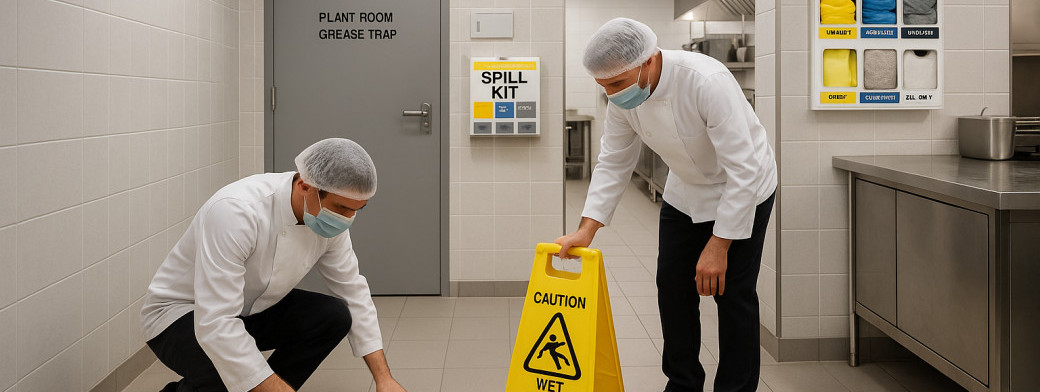
- Pre-positioned spill kits and wet floor signage.
- Barriers to restrict access during clean-up.
These strategies must align with the Workplace (Health, Safety and Welfare) Regulations for safe floors and traffic routes.
Odour, hygiene and cross-contamination controls
Maintaining hygiene standards and controlling odours is paramount. Effective practices include:
- Segregating clean-up tools by area (kitchen vs toilets vs plant) to avoid cross-contamination.
- Aligning with Hazard Analysis and Critical Control Points (HACCP) principles, treating spills as hygiene hazards and isolating food and food-contact items during clean-up (FSA HACCP guidance).
- Implementing odour control tactics such as rapid removal of waste, using sealed bags/containers, and maintaining bin area discipline.
- Managing waste effectively: prevent leaks, label waste correctly, keep lids closed, and clean bins and surrounding areas regularly.
Immediate response: the 5-step spill routine
An effective spill response is crucial for minimising risks. Follow this 5-step spill routine:
- Make safe: Stop the source of the spill, isolate the area, and use wet floor signage and barriers to protect guests and staff.
- Identify: Determine the nature of the spill (oil/food/chemical), assess the volume, slip risk, fumes, and proximity to drains. Refer to the Safety Data Sheet (SDS) for chemicals.
- Contain: Use absorbent socks, booms, and drain protection (covers) to prevent tracking and entry into drains.
- Absorb: Apply absorbent pads, granules, or fibre-based absorbents; implement a quick-clean technique and secondary wash-down if necessary.
- Dispose/record: Bag contaminated materials and follow hazardous waste disposal guidelines where relevant. Maintain a spill log, capturing near-miss incidents and corrective actions.
Understanding when to use pads, socks, granules, and drain covers is critical in these scenarios.
Signage and traffic management
Effective signage and traffic management are essential for safety during spill incidents:
- Position wet floor signage strategically along approach routes.
- Use barriers and temporary reroutes to manage foot traffic.
- Adopt a housekeeping cadence that includes peak times and handover checks.
- Avoid sign fatigue by promptly removing signage once the area is dry and safe.
For further guidance, refer to HSE slips and trips guidance.
Choosing the right absorbents and spill kit for hospitality
Selecting the appropriate spill kit and absorbents is crucial for effective spill management. Here’s a comparison of different types:
| Type | Best for | Limitations | Typical locations |
|---|---|---|---|
| Oil-only | Cooking oil and grease spills | Not suitable for water-based spills | Kitchen, fryer areas |
| Chemical | Cleaning chemicals and hazardous substances | Specific chemical compatibility required | Housekeeping cupboard, storage areas |
| Maintenance/General Purpose | Food and drink spills | May leave residues; not food-safe | Bar areas, dining rooms |
| Food-safe considerations | Food-related spills | Limited availability; verify suitability | Preparation areas, service zones |
Choosing the right absorbent and spill kit should be based on the specific needs of the site and type of potential spills. Ensure compliance with relevant guidelines and verify with suppliers.
Storage, replenishment and training
Proper storage and maintenance of spill kits are vital:
- Location: Place kits within 10–20 metres of high-risk points; they should be visible and unobstructed.
- Replenishment: Establish a system for monitoring stock levels, using QR codes for checks, and coordinating with contractors.
- Training: Conduct short drills, allocate roles, ensure COSHH awareness, and promote familiarity with SDS and PPE usage.
Relevance to PUWER is also important, especially where spill response involves the use of equipment such as wet vacs or scrubbers to ensure suitability and maintenance.
Grease trap/plant room incident playbook
In the event of a grease trap or plant room incident, a structured response is crucial:
- Containment: Isolate the source, use bunding, and employ absorbent socks or booms to protect thresholds.
- Drainage protection: Use drain covers and block-off points to prevent discharge into surface water.
- Odour control: Implement rapid removal, manage ventilation, and use sealed waste containers.
- Escalation: Establish a clear chain of command for reporting incidents, including out-of-hours contacts and contractor attendance.
- Environmental duty: Prevent pollution and ensure proper disposal routes for oily waste and contaminated absorbents.
For detailed guidance, refer to UK Government hazardous waste disposal guidelines and the Environment Agency pollution prevention expectations.
Compliance checklist for UK hospitality operators
To ensure compliance with regulations, operators should adhere to the following checklist:
- COSHH: Complete assessments, implement controls, provide training, and maintain access to SDS.
- Slip risk management: Regularly assess floor conditions, cleaning regimes, and footwear policies; review incident reports.
- Workplace (Health, Safety and Welfare) Regulations: Ensure safe floors, traffic routes, drainage, and cleanliness expectations.
- Waste duty of care: Correctly segregate waste, provide transfer notes, and ensure licensed carriers for hazardous waste.
- Incident reporting expectations: Maintain internal reporting frameworks and consider RIDDOR implications for specified injuries and dangerous occurrences; refer to HSE RIDDOR overview.
FAQ
- What is the difference in response for oil versus chemical spills? Oil spills typically require different absorbents than chemical spills; ensure you have the right spill kit for each type.
- Can absorbent granules be used on tiles? Yes, but ensure they are suitable for the surface to avoid any damage.
- How should oily absorbent pads be disposed of? These should be treated as hazardous waste and disposed of accordingly.
- What should I do if chemicals enter a drain? Immediately contain the spill and inform the relevant authorities as per your incident reporting protocols.
- How can we prevent repeat fryer spills? Implement regular checks and maintenance schedules for fryers, and ensure staff are trained in spill response.
- What signage is expected during a spill? Wet floor signage should be prominently displayed to alert staff and guests to potential hazards.
- How often should we check spill kits? Regular checks should be part of your housekeeping cadence, ideally during shift changes or after incidents.
References
- HSE – Kitchens & Catering Health & Safety
- HSE – Slip and spill hazards in foodservice environments
- HSE – Control of Substances Hazardous to Health (COSHH)
- Food Standards Agency – HACCP in Catering
- Environment Agency – Waste Oils & Spill Management
- UK Government – Manage Your Waste Overview
- HSE – Reporting of Injuries, Diseases and Dangerous Occurrences Regulations (RIDDOR)
- HSE – Provision and Use of Work Equipment Regulations (PUWER)
In conclusion, effective spill management in hospitality settings is crucial for ensuring safety and compliance. Facilities and operations managers are encouraged to review spill points, assess kit placements, and refresh staff training regularly. Conduct site-specific risk assessments to ensure optimal spill management practices are in place.
```