
Published: 12 March 2026
Last updated: 18 March 2026
What are the Best Practices for Spill Management in COMAH-Adjacent Drum Stores?
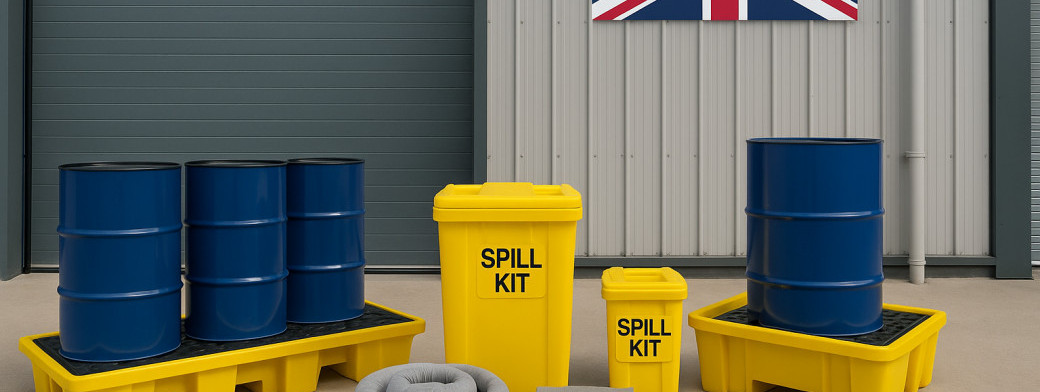
Best practice for spill management in COMAH-adjacent drum stores is to combine robust secondary containment, safe aisle layout, routine inspections, and a clear emergency response plan. In this context, COMAH-adjacent drum stores are storage areas holding drums of oils, fuels, solvents, acids, alkalis, paints, waste chemicals, or other hazardous substances on sites that sit within, support, or operate close to activities regulated under the UK Control of Major Accident Hazards regime. Common spill types include leaks from damaged drums, overfills during transfer, pallet collapse, valve failures, and rainwater-contaminated residues. Effective controls typically include bunds, spill pallets, drip trays, absorbent socks, pads and granules, drain covers, and compatible PPE, supported by compliance with COSHH, COMAH-related expectations, and wider HSE storage guidance.
For most operators, the priority is to prevent a small drum leak becoming a wider fire, toxic exposure, or environmental incident. That means using suitable secondary containment sized for the materials stored, separating incompatible substances, and following HSE guidance on drum and cylinder technical measures and packaged dangerous substance storage. A documented spill management approach also helps demonstrate legal compliance and readiness.
Key controls for COMAH-adjacent drum stores
Secondary containment should be chemically compatible, in good condition, and able to capture foreseeable losses from drums, IBC interfaces, and transfer points. Aisles should remain wide enough for safe access, inspection, and emergency intervention, with clear segregation between flammables, corrosives, oxidisers, and wastes. Keep pallets stable, labels visible, and drains protected.
Inspection schedules should cover drums, bunds, valves, floors, racking, and spill kit stock at defined intervals, with defects logged and corrected promptly. Emergency response protocols should set out who raises the alarm, how the source is isolated, which absorbents or drain covers are used, when evacuation is required, and when specialist cleanup or regulatory reporting is triggered. Regular drills and staff training are essential to keep procedures effective.
How Does Secondary Containment Work in Drum Stores?
Secondary containment is the engineered barrier that sits outside the primary container—such as a drum, IBC or small package—to catch leaks, spills or catastrophic failures before they spread into aisles, drains, soil or surface water. In drum stores adjacent to COMAH sites, it is a core control measure because it limits escalation, protects people and the environment, and supports compliance with UK expectations for hazardous substance storage. In practice, it works by providing a dedicated, chemically compatible holding area sized to retain foreseeable losses and designed to remain effective during routine handling and emergencies.
For COMAH-adjacent operations, secondary containment should not be treated as a simple tray under a drum. It must be matched to the substances stored, the quantities involved, the risk of drum damage during movement, and the wider site drainage and emergency arrangements. The HSE’s COMAH technical measures guidance highlights the need for suitable bunding and spill control around packaged dangerous substances, while secondary containment systems should be selected and maintained as part of a documented risk-based approach.
Common Types of Secondary Containment
Typical systems in drum stores include bunded pallets for individual or grouped drums, spill decks for low-profile dispensing areas, fixed bunded compounds for larger storage zones, sump pallets, and hard-standing areas with sealed drainage to a contained collection point. Temporary measures, such as overdrums and drain covers, may support emergency response but should not replace permanent containment where routine storage risks exist.
What Do UK Regulations Expect?
UK requirements are shaped by COMAH where thresholds and scenarios are relevant, by general duties under health, safety and environmental law, and by substance-specific assessment under COSHH. HSE guidance in HSG71 also sets out good practice for storing packaged dangerous substances. In practical terms, secondary containment should be impermeable, compatible with the stored product, protected from impact, and capable of containing credible spill volumes. Regular inspection, prompt removal of rainwater or residues, and clear segregation of incompatible substances are essential to keep the system effective.
What is the Ideal Aisle Layout for Drum Stores?
The ideal aisle layout for a drum store is one that gives operators safe, direct access to every drum, keeps routes to spill kits and emergency equipment unobstructed, and allows a fast, controlled response if a leak occurs. In UK COMAH-adjacent environments, aisle design should support safe handling, segregation, inspection, and emergency access in line with HSG71 guidance on packaged dangerous substances, relevant COSHH requirements, and HSE expectations for containment and emergency measures.
As a practical rule, layouts should avoid tightly packed rows that force staff to move drums to reach others. Instead, use clearly marked aisles wide enough for pedestrian movement and any handling equipment in use, with turning space at aisle ends and direct lines of travel to exits, eyewash points, fire points, and spill response materials. This reduces handling risk and can significantly cut spill response times when seconds matter.
Aisle width and spacing
Aisle widths should be set by risk assessment, taking account of drum size, handling method, and traffic type. Pedestrian-only aisles should allow safe two-way passage and inspection access, while routes used by pallet trucks or forklifts must be wider and kept free from projections, overhangs, and stored items. Spacing should also allow visual inspection of drum condition, labels, closures, and any signs of seepage without disturbing adjacent containers. Where possible, store drums on suitable drum storage solutions with integrated secondary containment to maintain order and prevent blocked walkways.
Access to emergency equipment
Emergency equipment is only effective if staff can reach it immediately. Spill kits, drain covers, absorbents, alarms, extinguishers, and first-aid or decontamination points should be positioned on or beside main aisles, not behind stored drums or inside congested corners. HSE technical measures for drum and cylinder handling in COMAH settings reinforce the need for practical emergency access and containment arrangements.
How layout affects spill response times
Poor layout slows isolation, containment, and clean-up. Narrow aisles, dead ends, and obstructed equipment stations can delay responders, increase exposure, and allow spilled liquids to spread further across the store. A well-planned aisle layout helps operators identify the source quickly, deploy absorbents faster, and protect drains and doorways before contamination escalates.
How Often Should Drum Stores be Inspected?
Drum stores should be inspected at more than one interval: a brief visual check should be carried out daily or at the start of each shift, a more formal weekly inspection should review storage condition and spill controls in detail, and a documented periodic inspection—often monthly or in line with site risk assessment—should confirm that containment, housekeeping and emergency arrangements remain effective. For COMAH-adjacent sites, inspection frequency should reflect the substances stored, throughput, incident history and findings from COSHH and major accident hazard assessments.
In practice, the higher the risk, the shorter the interval between checks. Stores holding oils, solvents, corrosives or other packaged dangerous substances should be inspected often enough to identify leaks, damaged drums, blocked access routes, overfilled sumps and depleted spill kits before they escalate. HSE guidance in HSG71 supports a risk-based approach to storage, segregation and routine monitoring, while COMAH-related controls also require attention to containment integrity and emergency preparedness.
Recommended inspection frequency
- Daily / per shift: visual walk-through for leaks, staining, odours, damaged containers and trip hazards.
- Weekly: structured inspection of bunds, pallets, drum condition, labels, aisle access, spill kits and signage.
- Monthly or periodic formal review: documented compliance check against site procedures, training status and maintenance issues.
- After any incident: immediate inspection following spills, near misses, heavy rainfall affecting external stores, or stock changes.
What should the inspection checklist include?
- Condition of drums, lids, taps, valves and closures
- Evidence of leaks, corrosion, bulging, dents or incompatible storage
- Integrity and free capacity of bunds, spill pallets and secondary containment
- Clear aisles, safe access, legible labels and correct segregation
- Availability of absorbents, drain covers, PPE and emergency instructions
- Housekeeping standards, including removal of waste and contaminated absorbents
Documentation and record-keeping
Each inspection should be recorded with the date, time, inspector name, findings, corrective actions and close-out date. Records should show recurring defects, response times and whether actions were verified as complete. Using a competent provider for periodic audits can strengthen compliance; see inspection services. Retained records help demonstrate due diligence under site procedures, COSHH controls and HSE expectations for packaged dangerous substance storage.
What Emergency Response Protocols Should Be in Place?
Drum stores should have a written emergency response plan that enables staff to identify a spill quickly, raise the alarm, isolate the area, contain the release safely, and escalate without delay where there is risk to people, drains, watercourses or neighbouring premises. In COMAH-adjacent environments, the response must be proportionate to the materials stored, the likely spill scenarios, and the site’s wider major-accident controls, with procedures aligned to COSHH requirements and relevant HSE guidance on packaged dangerous substances and drum storage.
At minimum, the protocol should define who does what, when spill kits are used, when evacuation is required, and when only trained responders may intervene. It should also set out how to protect personnel first, prevent environmental escape second, and restore the area only after the substance has been identified, residues removed, and contaminated absorbents, including pads, socks and granules, placed into suitable waste containers for compliant disposal.
Core steps in the emergency response plan
A practical plan should cover the full sequence of actions: stop work; assess the substance and hazards; alert supervisors and nearby personnel; don appropriate PPE; isolate ignition sources where relevant; protect drains with covers or barriers; use compatible spill-control materials to contain and absorb the release; and arrange safe clean-up, waste segregation and incident reporting. It should also define trigger points for calling the fire and rescue service, specialist contractors, or activating a dedicated emergency response service.
Training requirements for staff
All personnel working in or near the drum store should receive role-specific training. This should include hazard awareness, label and SDS interpretation, spill kit locations, PPE selection, drain protection, first aid measures, and when not to attempt clean-up. Refresher training and drills should be scheduled routinely, with additional instruction for supervisors and designated spill responders handling larger or higher-risk releases.
Communication protocols during a spill incident
Communication procedures should be clear, simple and rehearsed. Staff need defined alarm routes, contact lists, and escalation criteria covering internal management, health and safety leads, environmental contacts, and emergency services. The protocol should specify how to communicate the substance involved, estimated volume, location, injuries, and whether containment has failed or drainage systems are threatened. After the incident, a formal debrief should capture lessons learned, corrective actions and any updates needed to the response plan.