
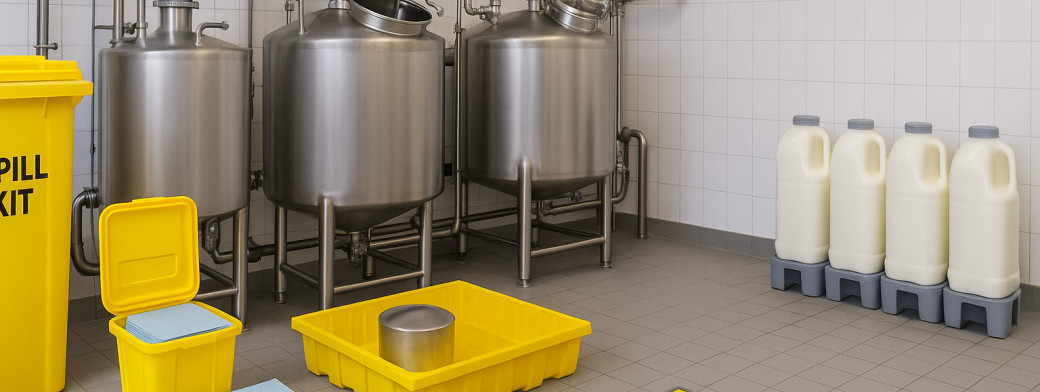
Introduction to Spill Risks in Dairy Processing
Dairy processing is a critical sector that involves the handling of various products, primarily milk and its derivatives. However, this industry is not without its risks, particularly concerning spills. There are several types of spills that can occur in dairy processing, including milk fats, cleaning agents, and sanitising chemicals, which can lead to significant safety and operational challenges.
Overview of Spill Types in Dairy Processing
Common spill types in dairy processing include:
- Milk Spills: These can occur during transfer, storage, or processing, often resulting in slippery surfaces and potential safety hazards.
- CIP Chemical Spills: Cleaning In Place (CIP) systems use a variety of chemicals that can be hazardous if spilled, necessitating careful management and containment.
- Wastewater and Contaminants: Improper disposal or accidental release of wastewater can lead to environmental pollution, impacting local ecosystems.
Statistics on Spills and Accidents in the Dairy Industry
According to data from the Health and Safety Executive, slips and trips are among the most common causes of workplace injuries in the dairy sector. These incidents not only result in physical harm but can also lead to significant financial losses due to downtime and clean-up efforts. Effective spill management is essential to mitigate these risks.
Importance of Effective Spill Management
The importance of effective spill management in dairy processing cannot be overstated. Implementing robust spill management protocols can help ensure compliance with health and safety regulations, such as those outlined by the HSE. Additionally, proper management practices protect workers, reduce the risk of contamination, and prevent environmental pollution, as detailed in the GOV.UK guidelines. For further insight into spill management strategies, visit Serpro.
The Role of Milk Fats and CIP Chemicals
In dairy processing, the management of spills is crucial not only for maintaining operational efficiency but also for ensuring a safe working environment. Two significant contributors to spill risks are milk fats and cleaning-in-place (CIP) chemicals.
Characteristics of Milk Fats
Milk fats, primarily composed of triglycerides, exhibit unique characteristics that influence their behaviour during spills. They are hydrophobic, which means they repel water and can create a slippery surface when spilled. This property increases the risk of slips and trips, particularly in wet production areas. According to the HSE, managing such hazards is essential for workplace safety.
Common CIP Chemicals and Their Hazardous Properties
CIP systems are integral to maintaining hygiene in dairy processing, employing various chemicals including acids, alkalis, and sanitisers. Each of these substances possesses hazardous properties that can pose risks during spills. For instance, strong acids can cause severe burns, while alkalis can lead to skin irritation and damage. Understanding these hazards is vital for implementing effective spill management strategies. The COSHH framework provides guidelines for the safe use of these chemicals, helping to mitigate risks associated with their handling and potential spills.
Impact on Spill Management
The combination of milk fats and CIP chemicals presents unique challenges for spill management in dairy processing. Spills involving milk fats require immediate containment to prevent slippery surfaces and potential accidents. In contrast, spills involving hazardous CIP chemicals necessitate prompt and careful handling to avoid health risks and environmental contamination. Effective spill management protocols should include the use of absorbent materials specifically designed for both oil-based and chemical spills. Additionally, regular training for staff on spill response and the proper use of CIP chemicals can enhance preparedness and reduce spill incidents.
Selecting Appropriate Absorbents
In the dairy processing industry, managing spills effectively is crucial to maintaining hygiene and safety standards. Selecting the right absorbents is a vital part of this process. Here, we will explore the types of absorbents suitable for dairy spills, factors to consider when making your selection, and best practices for using absorbents effectively.
Types of Absorbents Suitable for Dairy Spills
When dealing with dairy spills, it is essential to choose absorbents that are specifically designed for liquid fats and milk products. Some suitable types include:
- Natural Absorbents: These are made from organic materials like sawdust, straw, or peat. They are biodegradable and effective for absorbing milk and fats.
- Synthetic Absorbents: These include products made from materials such as polypropylene, which are highly effective in soaking up liquid spills quickly and efficiently.
- Granular Absorbents: These are often used for larger spills and can be easily swept up after use.
Factors to Consider When Selecting Absorbents
When choosing absorbents for dairy processing spills, consider the following factors:
- Type of Spill: Different spills require different absorbents. For example, spills involving milk fats may need more robust absorbents to tackle the viscosity.
- Regulatory Compliance: Ensure that the absorbents you choose meet relevant health and safety regulations, such as those outlined by the HSE – COSHH.
- Environmental Impact: Opt for biodegradable absorbents whenever possible to reduce environmental harm, as highlighted in the GOV.UK – Pollution prevention for businesses.
Best Practices for Using Absorbents Effectively
To maximise the effectiveness of your chosen absorbents, follow these best practices:
- Prompt Response: Address spills immediately to prevent slip hazards and contamination. Refer to HSE – Slips and trips for guidance on managing these risks.
- Proper Application: Apply the absorbent evenly over the spill and allow it to sit for the recommended time for maximum absorption.
- Safe Disposal: Follow local regulations for disposing of used absorbents to ensure compliance with environmental standards.
For a comprehensive range of absorbents suitable for dairy spills, consider visiting Serpro’s absorbent products.
Hygiene Expectations in Spill Management
In dairy processing, maintaining high hygiene standards is critical not only for product quality but also for safeguarding public health. Contamination from spills can lead to significant health risks, including the possibility of foodborne illnesses. Therefore, implementing effective hygiene practices during spill management is essential to ensure the safety of dairy products and compliance with regulatory requirements.
Importance of Hygiene in Dairy Processing
The dairy industry is particularly susceptible to contamination due to the nature of its products. Milk fats, when spilled, can create slippery surfaces that pose safety hazards and may lead to slips and trips, as highlighted by the HSE's guidelines on slips and trips. Additionally, the presence of dairy residues can encourage the growth of harmful microorganisms if not managed properly. Therefore, hygiene must be a top priority within every aspect of dairy processing.
Steps to Maintain Hygiene During Spill Clean-Up
- Immediate Response: Address spills as soon as they occur. This involves cordoning off the area to prevent accidents and notifying relevant personnel.
- Use of Appropriate PPE: Ensure that all personnel involved in the clean-up are equipped with personal protective equipment (PPE) such as gloves, aprons, and slip-resistant footwear.
- Containment: Use absorbent materials to contain the spill and prevent it from spreading. This not only aids in the clean-up process but also helps in preventing cross-contamination.
- Cleaning Agents: Use approved cleaning agents that comply with COSHH regulations for managing acids, alkalis, and sanitisers used in CIP processes to ensure effective decontamination.
- Thorough Cleaning: After containment, thoroughly clean the affected area with appropriate sanitising agents. Ensure that all residues are removed to prevent any future contamination.
- Inspection: Conduct a post-clean-up inspection to ensure that the area is clean and safe for operations to resume.
Regulatory Hygiene Standards
Compliance with hygiene standards is paramount in dairy processing. The hygiene standards outlined by various regulatory bodies guide dairy processors in maintaining safe and hygienic environments. These standards encompass guidelines on the proper handling of spills, regular training for staff on hygiene practices, and the implementation of comprehensive spill management plans.
By adhering to these hygiene expectations during spill management, dairy processors can significantly reduce the risk of contamination and ensure that their products remain safe for consumers.
Safe Waste Segregation
Effective spill management in dairy processing not only involves immediate containment and cleanup but also the systematic segregation of waste generated from spills. Proper waste segregation is critical in ensuring that hazardous materials are disposed of correctly, thereby minimising environmental impact and adhering to regulatory standards.
Types of Waste Generated from Spills
In a dairy processing facility, various types of waste may arise from spills, including:
- Milk Fats: These can create additional challenges due to their greasy nature, making them difficult to clean up and posing a risk of slips and trips (HSE – Slips and trips).
- CIP Chemicals: Cleaning in Place (CIP) chemicals, such as acids and alkalis, can be harmful if not disposed of properly (HSE – COSHH).
- Contaminated Materials: Items used during the cleanup process, such as absorbent pads, gloves, and cleaning tools, may also become hazardous waste.
Regulations Governing Waste Segregation
In the UK, businesses are required to follow strict regulations concerning waste management. The GOV.UK guidance on pollution prevention outlines the importance of proper waste segregation to minimise environmental contamination. Compliance with these regulations not only protects the environment but also safeguards the health and safety of employees and the public.
Best Practices for Safe Waste Disposal
To ensure safe waste disposal and effective spill management, consider the following best practices:
- Training: Regularly train staff on waste segregation protocols and the importance of proper disposal methods.
- Clearly Marked Containers: Use colour-coded bins for different types of waste to prevent cross-contamination.
- Regular Audits: Conduct periodic audits of waste management practices to identify areas for improvement.
- Documentation: Maintain records of waste disposal to ensure compliance with regulatory requirements.
By implementing these practices, dairy processing facilities can manage spills more effectively, ensuring a cleaner and safer work environment.
Conclusion and Best Practices
Effective spill management is crucial in the dairy processing industry, particularly when dealing with milk fats and cleaning-in-place (CIP) chemicals. Not only does it safeguard the integrity of the production environment, but it also protects the health of employees and the surrounding community. By implementing robust spill management strategies, dairy processors can minimise risks associated with slip hazards, contamination, and environmental pollution.
To achieve optimal spill management, it is essential to adopt best practices that include regular training for staff on spill response, maintaining adequate spill kits, and ensuring the proper storage and handling of chemicals. The Serpro Spill Management guide offers valuable insights into effective strategies tailored for the dairy sector.
Furthermore, staying informed about the latest regulations and guidelines is paramount. Resources such as the HSE guidelines on slips and trips and the COSHH framework provide essential information on managing hazards in wet production areas and the safe handling of CIP chemicals. Additionally, the GOV.UK guidance on pollution prevention can assist in preventing pollution from wash-down and chemical handling.
In conclusion, dairy processors must prioritise spill management as a vital aspect of their operations. By fostering a culture of safety and compliance, implementing best practices, and staying updated on regulations, we can ensure a safer and more sustainable dairy processing environment.