
Introduction
A chemical spill is defined as any unintentional release of hazardous substances that can pose a risk to health, safety, and the environment. In laboratory settings, these spills can occur due to accidents, equipment failures, or improper handling of materials. The importance of a prompt response cannot be overstated; swift action can prevent injuries, protect the environment, and mitigate damage to laboratory equipment.
Laboratories must be prepared for chemical spills, as the consequences of inaction can be severe. Immediate response measures, including the use of chemical spill kits, should be readily available. Staff training on spill response protocols is essential to ensure that everyone can act quickly and effectively. Adhering to best practices not only safeguards personnel but also ensures compliance with UK regulations.
Overview of UK Regulations
In the UK, regulations governing chemical spills and waste disposal are primarily outlined in the Control of Substances Hazardous to Health (COSHH) regulations. These guidelines establish a framework for assessing and managing chemical risks in laboratories. For detailed information, you can refer to the HSE COSHH guidance.
Additionally, the disposal of hazardous waste is strictly regulated. Laboratories must comply with the legal requirements for disposing of chemical waste, as outlined by the Health and Safety Executive (HSE). For further information on safe disposal practices, consult the HSE guidance on managing and disposing of chemical waste.
Understanding these regulations is crucial for laboratories to maintain compliance and ensure a safe working environment. By implementing effective spill response strategies and adhering to disposal guidelines, laboratories can significantly reduce the risks associated with chemical spills.
Containment Strategies
When a chemical spill occurs in a laboratory, immediate and effective response is crucial to ensure safety and compliance with regulations. Below, we outline the essential actions to take upon discovering a spill, the types of containment materials and equipment available, and the importance of personal protective equipment (PPE).
Immediate Actions to Take Upon Spill Discovery
Upon discovering a chemical spill, it is vital to follow these immediate actions:
- Alert Personnel: Immediately notify all individuals in the vicinity of the spill to ensure their safety.
- Evacuate Non-Essential Personnel: If the spill poses a risk, evacuate non-essential personnel from the area.
- Assess the Situation: Determine the type of chemical spilled and the extent of the spill. This assessment will guide your containment and cleanup strategies.
- Implement Containment Measures: Use appropriate containment materials to prevent the spread of the chemical.
Types of Containment Materials and Equipment
Effective containment of chemical spills requires specific materials and equipment, including:
- Absorbent Materials: Use absorbent pads, booms, or granules designed for the specific type of chemical spilled. For example, oil-based spills require different absorbents than acid spills.
- Containment Berms: Deploy containment berms to create a barrier around the spill area, preventing further spread.
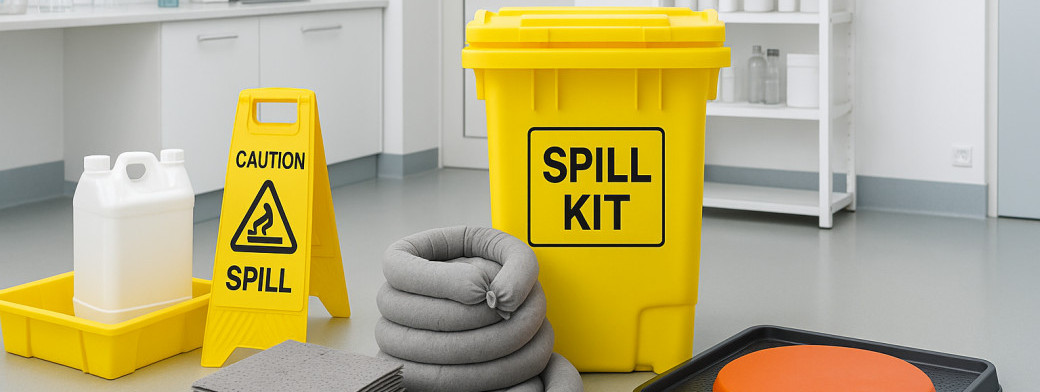
- Spill Kits: Ensure that your laboratory is equipped with spill kits that contain all necessary materials, including PPE, absorbents, and disposal bags. You can explore a range of containment solutions for your laboratory needs.
Importance of Personal Protective Equipment (PPE)
Before beginning any cleanup efforts, it is essential to wear appropriate personal protective equipment (PPE). PPE may include gloves, goggles, face shields, and lab coats, depending on the chemical involved. Proper PPE protects individuals from exposure and ensures compliance with the Control of Substances Hazardous to Health (COSHH) regulations.
By following these containment strategies, laboratories can effectively manage chemical spills, ensuring safety and compliance with UK regulations.
Clean-Up Procedures
Responding to a chemical spill in a laboratory environment requires a systematic approach to ensure safety and compliance with UK regulations. The following steps outline safe and effective clean-up procedures.
1. Assessment of the Spill
Before initiating the clean-up process, it is crucial to assess the spill. Identify the type of chemical involved by consulting Safety Data Sheets (SDS) and determine the potential hazards associated with it. Evaluate the extent of the spill and whether it poses a risk to personnel or the environment. If the spill is large or involves hazardous substances, consider evacuating the area and contacting a trained response team.
2. Use of Appropriate Clean-Up Materials
Utilise suitable clean-up materials based on the nature of the chemical. For spills of liquids, absorbent materials such as spill pads or granules can be effective. Ensure that these materials are compatible with the spilled substance to prevent further reactions. You can find a range of clean-up products specifically designed for various chemicals. Additionally, personal protective equipment (PPE) such as gloves, goggles, and lab coats should be worn to protect against exposure.
3. Disposal of Contaminated Materials
Once the area has been cleaned, all contaminated materials, including absorbents and PPE, must be disposed of properly. Follow the guidelines provided by the Health and Safety Executive (HSE) for safe disposal of chemical waste. Ensure that waste is segregated according to its type and stored in labelled containers. Refer to the GOV.UK guidance for additional information on the duty of care requirements for hazardous waste producers. For smaller spills, consider using a spill response kit that includes appropriate disposal options.
By following these clean-up procedures, laboratories can effectively manage chemical spills while ensuring compliance with UK regulations and maintaining a safe working environment.
Segregation of Waste
The segregation of waste in laboratories is a critical practice that ensures the safety of personnel, compliance with regulations, and the minimisation of environmental impact. Proper waste segregation not only aids in effective disposal but also facilitates recycling and recovery processes.
Types of Chemical Waste
In a laboratory setting, chemical waste can be broadly categorised into several types:
- Hazardous Waste: This includes chemicals that are toxic, corrosive, reactive, or flammable.
- Non-Hazardous Waste: These are materials that do not pose a risk to health or the environment.
- Biological Waste: Includes materials that are contaminated with biological agents.
- Radioactive Waste: Any waste that contains radioactive substances.
Guidelines for Segregation
To effectively segregate waste, laboratories should adhere to the following guidelines:
- Identify and classify all waste types generated in the laboratory.
- Use clearly labelled containers for each waste type, ensuring they are compatible with the materials being disposed of.
- Train staff on the importance of waste segregation and the specific procedures to follow.
- Regularly review and update waste management protocols to align with UK regulations.
Benefits of Proper Waste Management
Implementing effective waste segregation practices offers numerous benefits:
- Safety: Reduces the risk of accidental exposure to hazardous substances.
- Compliance: Helps laboratories meet legal obligations under the HSE guidelines and other regulations.
- Environmental Protection: Minimises the impact of waste on the environment and promotes sustainability.
- Cost Efficiency: Proper segregation can lower disposal costs and enhance recycling opportunities.
For more information on effective waste management products, visit Serpro Waste Management Products and explore our segregation solutions.
Compliant Disposal Methods
Disposing of hazardous chemical waste in compliance with UK regulations is a critical responsibility for laboratories. The GOV.UK guidelines outline the legal requirements that must be adhered to when disposing of such materials, ensuring both environmental protection and public safety.
Legal Requirements for Disposal
Under the Control of Substances Hazardous to Health (COSHH), laboratories must assess the risks associated with chemical waste and implement appropriate disposal methods. The key legal obligations include:
- Identifying hazardous waste and treating it accordingly.
- Ensuring that all waste is stored securely until disposal.
- Maintaining accurate records of waste generation and disposal.
- Engaging licensed waste carriers for transportation and disposal.
Different Disposal Options Available
Laboratories have several options for disposing of hazardous chemical waste, including:
- Incineration: This is often used for organic wastes that cannot be recycled or treated. It effectively reduces waste volume and destroys harmful substances.
- Landfill: Only suitable for non-hazardous waste, specific conditions must be met for disposing of certain types of chemical waste in landfills.
- Recycling: Some chemical wastes can be treated and recycled into usable materials, which helps to minimise environmental impact.
- Neutralisation: Certain chemicals can be neutralised on-site before disposal, reducing their hazard level.
Role of Licensed Waste Carriers
Utilising licensed waste carriers is essential for compliant disposal. These carriers are authorised to handle hazardous waste and ensure that it is disposed of in accordance with legal requirements. They provide necessary documentation, including waste transfer notes, which are crucial for maintaining a paper trail for regulatory compliance.
In conclusion, laboratories must prioritise compliant disposal methods for hazardous chemical waste. By following legal requirements, exploring various disposal options, and engaging licensed waste carriers, laboratories can effectively manage their chemical waste responsibly.