
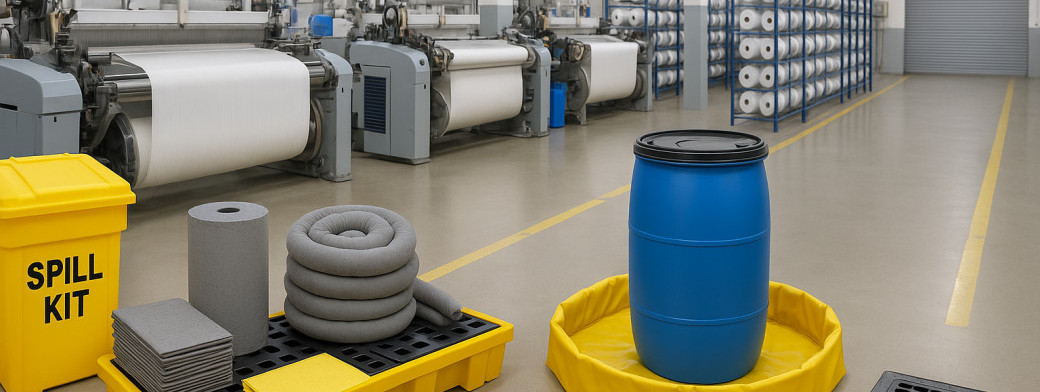
Introduction to Spill Control in Textile Manufacturing
In the textile manufacturing and dye house industry, spills refer to the unintended release of substances such as dyes, solvents, wash water, and finishing chemicals. These spills can occur during various processes, including dyeing, washing, and finishing, and pose significant risks to both the environment and the safety of workers.
The importance of spill control cannot be overstated. Effective spill management not only minimizes environmental damage but also protects workers from exposure to hazardous chemicals. Implementing proper spill control measures is essential for compliance with health and safety regulations, such as the Control of Substances Hazardous to Health (COSHH) framework, which provides guidelines for assessing and controlling chemical exposure in the workplace (HSE, COSHH).
This blog will explore various strategies for spill control specific to the textile industry and dye houses. We will discuss the types of chemicals commonly involved in spills, including dyes and solvents, and highlight the importance of using chemical absorbents and colour-coded spill kits. Additionally, we will address the significance of drain protection and the risks associated with slips and falls due to spills. By understanding these elements, textile manufacturers can create a safer workplace and contribute to environmental sustainability.
For more information on spill control measures, visit Serpro's Spill Control page.
Types of Spills in Textile Manufacturing and Dye Houses
In the textile manufacturing and dyeing industries, the handling of various chemicals is integral to production processes. However, this also creates the potential for different types of spills that can pose risks to both health and the environment. Understanding these spills is crucial for effective spill control measures.
Dye Spills
Dye spills are perhaps the most common type of incident in dye houses. These spills can occur during the mixing, application, or rinsing processes, often resulting in vibrant colours staining floors and equipment. Beyond the immediate visual impact, dye spills can lead to significant environmental concerns if not managed properly. For further insights on managing dye spills, visit this resource.
Solvent Spills
Solvents are widely used in textile manufacturing for cleaning and dyeing processes. However, they are volatile and can evaporate quickly, leading to potential inhalation hazards and environmental pollution. Solvent spills can occur during transfer, storage, or application, necessitating strict handling protocols. To learn more about the risks associated with chemical spills, refer to this link.
Wash Water Spills
Wash water, often containing dyes, detergents, and other chemicals, can also result in significant spills. These occurrences typically arise during the washing and rinsing of textiles. If not contained, wash water can lead to contamination of local water bodies and soil. It is essential to implement effective controls to manage wash water runoff, as outlined by GOV.UK’s pollution prevention guidelines.
Finishing Chemical Spills
Finishing chemicals, which enhance the properties of textiles, can also lead to spills during application. These chemicals may include softeners, flame retardants, and water repellents. Similar to dye and solvent spills, finishing chemical spills can pose health risks and environmental hazards if not properly contained. The HSE’s COSHH guidelines provide a framework for assessing and controlling exposure to these substances.
Recognising these types of spills is the first step in developing effective spill control strategies that protect workers and the environment alike.
Best Practices for Spill Management
Effective spill management is crucial in textile manufacturing and dye houses, where the use of dyes, solvents, wash water, and finishing chemicals can pose significant environmental and safety risks. By implementing immediate response procedures, employing chemical absorbents, and ensuring proper disposal methods, facilities can significantly mitigate these risks.
Immediate Response Procedures
When a spill occurs, the first step is to immediately assess the situation. Identify the type of chemical involved and the extent of the spill. Ensure that all personnel in the vicinity are evacuated to a safe distance. Activate the emergency response team if necessary and notify relevant authorities. Follow the guidance on pollution prevention for businesses to ensure compliance with legal obligations.
Use of Chemical Absorbents
Utilising chemical absorbents is a vital part of spill control. These materials are designed to quickly absorb liquids and contain spills, preventing them from spreading and causing further contamination. Choose absorbents that are specifically designed for the type of chemical spilled, whether it be dyes, solvents, or other hazardous materials. Regularly train staff on the correct application and disposal of these absorbents to maintain safety and compliance.
Proper Disposal Methods
After a spill has been contained and cleaned up, it is essential to dispose of the absorbents and any contaminated materials correctly. Follow the guidelines provided by the HSE on chemicals in textiles and ensure that all waste is disposed of in accordance with local regulations. This includes using designated hazardous waste disposal services where necessary. For more information on safe disposal methods, visit Serpro's disposal page.
By adhering to these best practices for spill management, textile manufacturers and dye houses can protect their employees, the environment, and their operations from the damaging effects of chemical spills.
Implementing Drain Protection Measures
In the textile manufacturing and dyeing industries, protecting drains from chemical spills is paramount to prevent environmental contamination and maintain compliance with regulations. Effective drain protection measures can mitigate the risk of harmful substances entering the sewage system and ultimately affecting local water bodies.
Types of Drain Protection
There are several types of drain protection systems that can be employed in textile facilities. These include:
- Drain covers: Physical barriers that can be placed over drains to prevent spills from entering the drainage system.
- Spill containment booms: Flexible barriers that can be deployed around drains to contain spills and prevent them from spreading.
- Drain filters: Devices that allow water to flow through while capturing solid particles and chemicals.
Installation of Spill Barriers
Proper installation of spill barriers is crucial for their effectiveness. Barriers should be strategically placed near high-risk areas, such as dyeing and finishing sections, where chemical spills are more likely to occur. It is essential to ensure that barriers are regularly checked for wear and tear and are capable of withstanding the specific chemicals used in the facility.
Regular Maintenance Checks
Routine maintenance checks are vital to ensure that drain protection measures are functioning correctly. This includes inspecting barriers for damage, clearing any debris that may obstruct drains, and ensuring that all protective measures comply with the HSE guidelines on chemical safety in textiles. Additionally, regular audits can help identify potential vulnerabilities in the spill control strategy and inform necessary adjustments.
For more information on pollution prevention and best practices for drain protection, visit Serpro's drain protection solutions.
Colour-Coded Spill Kits: A Practical Approach
In the textile manufacturing and dyeing industry, managing spills effectively is crucial for safety and environmental protection. One practical solution is the implementation of colour-coded spill kits, which can streamline response efforts during an incident.
Types of Spill Kits
Spill kits come in various types, designed to handle specific substances found in textile manufacturing. For instance, kits can be tailored for:
- Dyes: These kits typically contain absorbents capable of soaking up vibrant liquids without compromising their colour integrity.
- Solvents: Specialised kits designed for flammable solvents often include fire-resistant materials and PPE.
- Wash Water: Kits for wash water spills may focus on neutralising agents and absorbents that can manage large volumes of liquid.
- Finishing Chemicals: Kits for finishing chemicals include absorbents that can handle both liquids and powders safely.
Benefits of Colour Coding
Colour coding spill kits enhances the efficiency of spill response by allowing for quick identification of the appropriate kit for a specific spill type. For example, a kit with a blue label may be designated for water-based dyes, while a red label might indicate kits for flammable solvents. This system reduces confusion and ensures that the right materials are deployed swiftly, minimising potential harm and environmental impact.
Training Staff on Spill Kit Usage
To maximise the effectiveness of colour-coded spill kits, it is essential to train staff on their proper usage. This includes familiarisation with COSHH regulations, which provide a framework for assessing and controlling chemical exposure. Regular training sessions ensure that employees understand how to identify spills, select the appropriate kit, and execute clean-up procedures safely. This proactive approach not only enhances workplace safety but also ensures compliance with environmental regulations as outlined in GOV.UK guidelines.
Addressing Slip Risks in Spill Scenarios
In textile manufacturing and dye houses, spills of dyes, solvents, wash water, and finishing chemicals can create significant slip hazards. Common slip hazards include wet floors, spilled chemicals, and improperly stored materials that may cause tripping or slipping incidents. These risks not only endanger the safety of employees but can also lead to costly downtime and potential legal repercussions.
Common Slip Hazards
Wet surfaces are the most obvious slip hazards, particularly in areas where washing or dyeing takes place. Additionally, chemical spills can create slick surfaces that are difficult to detect, especially if the spilled substance is colourless or blends with the floor. Furthermore, materials such as fabric scraps or unused chemical containers left on walkways can contribute to tripping risks.
Preventative Measures
To mitigate slip risks, it is essential to implement a comprehensive spill control plan. This includes:
- Regularly inspecting and maintaining floors to ensure they are clean and dry.
- Using chemical absorbents to quickly address spills as they occur.
- Establishing proper storage protocols for chemicals to prevent accidental spills.
- Training staff on how to respond to spills safely and effectively.
Importance of Signage
Clear and visible signage is crucial in areas prone to spills. Warning signs should be placed in locations where spills are likely to occur, such as near dyeing machines or chemical storage areas. These signs alert employees to the potential hazards and remind them to exercise caution. For more information on managing slip risks, visit Serpro's slip risk resources.
For guidance on pollution prevention in relation to chemical spills, refer to GOV.UK's pollution prevention resources.
Training and Awareness for Staff
Effective spill control in textile manufacturing and dye houses begins with a well-trained workforce. Regular training sessions are essential to ensure that all staff members are familiar with the various chemicals used in the production process and the proper procedures for handling spills. According to the HSE, understanding the risks associated with chemicals in textiles is crucial for minimising exposure and ensuring a safe working environment.
Regular Training Sessions
Conducting regular training sessions not only educates employees about the potential hazards but also reinforces the importance of following safety protocols. These sessions should cover the identification of chemicals, the proper use of personal protective equipment (PPE), and the correct techniques for spill containment and clean-up.
Emergency Response Drills
In addition to training, implementing emergency response drills is vital. These drills help staff practice their response to various spill scenarios, ensuring that they can react swiftly and effectively in case of an actual incident. Familiarity with the layout of the facility, including emergency exits and spill kit locations, can significantly reduce response times and mitigate risks.
Creating a Culture of Safety
Ultimately, creating a culture of safety within the workplace is key to effective spill control. Encouraging open communication about safety concerns and promoting a proactive approach to spill management will empower employees to take ownership of their safety and that of their colleagues. This culture can be fostered by involving staff in the development of safety protocols and encouraging feedback on existing measures.
For further information on safe handling of chemicals in textile processing, refer to the COSHH framework. Additionally, businesses can find guidance on pollution prevention measures related to wash water and chemical storage in the GOV.UK resource.
By prioritising training and awareness, textile manufacturers can significantly reduce the risk of spills and create a safer working environment for all employees.
Conclusion and Call to Action
In the textile manufacturing and dye house sectors, effective spill control is paramount to ensure safety, environmental protection, and compliance with regulations. Throughout this article, we have explored various strategies for managing spills involving dyes, solvents, wash water, and finishing chemicals. Key measures include the use of chemical absorbents, installation of drain protection systems, and the implementation of colour-coded spill kits tailored to specific chemical types.
It is essential for businesses to adopt best practices in spill control to minimise risks associated with chemical exposure and environmental contamination. Regular training for staff on the proper use of spill kits and the importance of quick response can significantly reduce the impact of spills. Additionally, conducting routine assessments in accordance with the COSHH framework will help identify potential hazards and reinforce a culture of safety.
We encourage all textile manufacturers and dye houses to review their current spill management practices and consider implementing the strategies discussed. For further information and resources, visit Serpro's resource page or refer to the GOV.UK guidance on pollution prevention. By taking proactive steps, you can protect your workforce, your products, and the environment.