
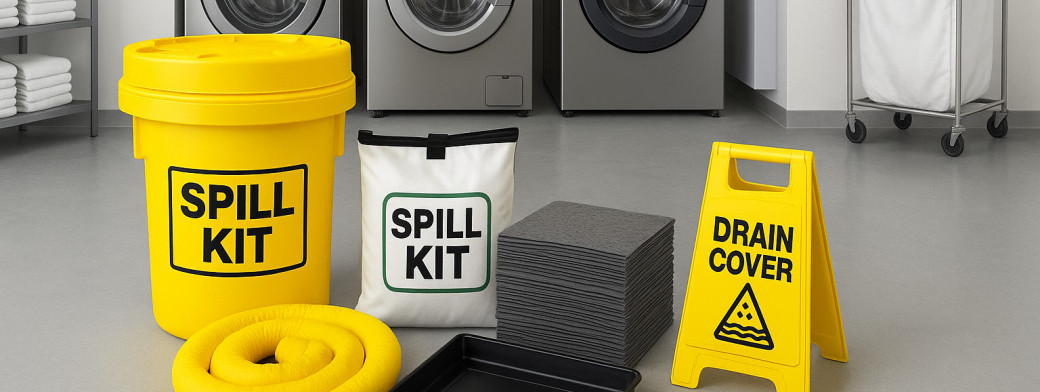
Understanding Types of Spills in Commercial Laundries
In the context of commercial laundries, a spill refers to the unintended release of liquids, which can disrupt operations and pose safety hazards. Effective spill management is crucial for maintaining a safe working environment and ensuring compliance with health and safety regulations.
Common Types of Spills
There are several common types of spills that can occur in commercial laundries, including:
Detergents
Spills involving detergents are frequent in laundries, given their ubiquitous use in cleaning processes. These spills can create slippery surfaces, increasing the risk of slips and falls. Additionally, improper handling of detergents may lead to skin irritation or respiratory issues, as detailed in the HSE guidance on detergents.
Alkalis
Alkaline substances, often used in laundry processes for their stain removal capabilities, can also result in spills. Such spills not only pose slip hazards but can also cause chemical burns upon contact with skin. For more information on the safe handling of alkalis, refer to this resource.
Acids
Although less common, spills involving acids can occur, particularly during the cleaning of machinery or in the use of certain detergents. These spills are particularly hazardous, as they can lead to severe chemical burns and respiratory problems if inhaled. It is essential to have proper spill kits readily available for such incidents.
Large-Volume Water Spills
Large amounts of water can spill during laundry operations, often due to equipment malfunction or overflow. While water itself is not hazardous, it can create dangerous slip conditions, especially in busy areas of the laundry. Implementing effective drainage systems and maintaining equipment can help mitigate these risks.
Potential Hazards Associated with Each Type of Spill
Each type of spill presents unique hazards that require specific management strategies. Detergent and alkali spills primarily pose slip hazards, while acid spills require immediate containment and specialized cleanup procedures. Large-volume water spills, while less toxic, can lead to significant safety risks if not addressed promptly.
Prevention Strategies for Spill Management
Effective spill management begins with proactive prevention strategies that are essential in commercial laundries. The importance of proper storage and handling of chemicals cannot be overstated. All detergents, alkalis, and acids should be stored in clearly labeled, secure containers to minimise the risk of accidental spills. Implementing a systematic storage solution not only helps in maintaining an organised workspace but also ensures that hazardous materials are kept away from areas where they can cause harm.
Regular Maintenance of Laundry Machinery
Regular maintenance of laundry machinery is crucial in preventing spills, particularly those involving large volumes of water. Poorly maintained equipment can lead to leaks or malfunctions, which may result in significant spills. Performing scheduled inspections and adhering to the guidelines set out by the Textile Services Association can help identify potential issues before they escalate. Ensure that all machinery is kept in excellent working condition to minimise the risk of spills and accidents.
Employee Training on Spill Prevention and Chemical Safety
Another critical component of spill prevention is comprehensive employee training. Staff should be well-versed in the safe handling of chemicals and the correct procedures to follow in the event of a spill. Regular training sessions can reinforce the importance of safety measures, including the use of personal protective equipment (PPE) and proper spill response protocols. Resources such as the HSE COSHH guidance provide valuable information on risk assessment and the control of hazardous cleaning chemicals, ensuring that employees are equipped with the knowledge necessary to maintain a safe working environment.
For further details on spill prevention strategies, visit Serpro's Spill Management page.
Spill Response Procedures
In a commercial laundry environment, spills can pose significant risks to both safety and operational efficiency. Having a clear response procedure in place is essential for managing these incidents effectively while ensuring compliance with health and safety regulations.
Immediate Actions to Take When a Spill Occurs
When a spill occurs, the first step is to assess the situation. Ensure that the area is safe for you and any nearby personnel before taking further action. If the spill involves hazardous materials, such as detergents, alkalis, or acids, follow these immediate steps:
- Alert colleagues in the vicinity to the spill to prevent accidents.
- Evacuate the area if necessary, particularly if the spill poses a risk of injury or exposure.
- Contact your spill response team or supervisor to report the incident.
Use of Personal Protective Equipment (PPE)
Proper use of personal protective equipment (PPE) is critical when dealing with spills, especially those involving hazardous chemicals. Ensure that you are equipped with:
- Gloves – to protect your hands from chemical exposure.
- Safety goggles – to shield your eyes from splashes.
- Face masks or respirators – if there is a risk of inhaling fumes.
- Slip-resistant footwear – to prevent slips and falls on wet surfaces.
Steps for Cleaning Up Different Types of Spills
Different types of spills require specific cleaning methods to ensure safety and effectiveness. Here’s how to handle various spills:
Detergent Spills
- Contain the spill using absorbent materials such as spill pads or sand.
- Carefully collect the detergent using a scoop or dustpan.
- Clean the area with water and a neutralising agent if necessary, following the HSE guidelines for detergents.
Alkali Spills
- Evacuate the area and don appropriate PPE.
- Neutralise the alkali with an acid (e.g., vinegar) if it is safe to do so.
- Use absorbent materials to soak up the spill and dispose of them according to local regulations.
Acid Spills
- Immediately evacuate the area and assess the risk.
- Use a neutralising agent (e.g., baking soda) to neutralise the acid.
- Once neutralised, absorb the spill with suitable materials and dispose of them in compliance with hazardous waste regulations.
Large-Volume Water Spills
- Shut off any equipment that may be affected by the water.
- Use pumps or wet vacuums to remove excess water.
- Ensure the area is dried thoroughly to prevent slip hazards. Consider using dehumidifiers if necessary.
For more comprehensive spill management strategies, visit Serpro's Spill Management Response. Following these procedures not only helps in maintaining a safe working environment but also ensures compliance with regulatory standards, such as those outlined in the Textile Services Association's Machinery Safety Guidance.
Regulatory Compliance in Spill Management
In the United Kingdom, the management of spills in commercial laundries is governed by a range of regulations that aim to ensure safety and environmental protection. Key among these are the Health and Safety Executive (HSE) regulations concerning the use of detergents and hazardous substances.
HSE Regulations on Detergents and Hazardous Substances
The HSE provides comprehensive guidance on the safe use of detergents in industrial settings. These regulations stipulate that all detergents used must be properly labelled and compliant with safety standards, ensuring that any potential hazards are clearly communicated to workers. Moreover, the handling of hazardous substances is subject to strict controls to minimise risks associated with spills.
Importance of COSHH Assessments
Conducting a COSHH assessment (Control of Substances Hazardous to Health) is crucial for any laundry operation. This assessment helps identify hazardous substances present in the workplace, evaluates the risks associated with these substances, and outlines necessary control measures. Regular COSHH assessments not only ensure compliance with legal obligations but also promote a safer working environment by preventing accidents related to chemical spills.
Consequences of Non-Compliance
Failure to comply with HSE regulations and COSHH requirements can lead to severe consequences for commercial laundries. Non-compliance may result in hefty fines, legal action, and increased scrutiny from regulatory bodies. Moreover, the health risks posed to employees from chemical exposure can lead to serious health issues, impacting workforce morale and productivity. Therefore, it is imperative that laundries adhere to all relevant regulations to protect both their staff and the environment.
For more information on the regulations governing spill management, visit Serpro's Spill Management Regulations.
Conclusion and Best Practices
In summary, effective spill management in commercial laundries is vital for ensuring a safe and efficient working environment. We have explored various types of spills, including detergents, alkalis, acids, and large-volume water spills, alongside prevention strategies tailored to each category. Taking proactive measures, such as implementing proper storage solutions and using spill containment kits, can significantly reduce the risks associated with these spills.
Importance of Training and Compliance
Equally important is the need for comprehensive training for all employees on spill response procedures and the safe handling of chemicals. Compliance with regulations such as COSHH (Control of Substances Hazardous to Health) ensures that staff are well-versed in the risks associated with hazardous cleaning chemicals and are equipped to handle spills safely. Regular training sessions and refresher courses should be scheduled to keep safety practices at the forefront of operations.
Call to Action
We encourage all commercial laundries to adopt and implement the best practices outlined in this article. For more detailed strategies and resources, please visit Serpro's Best Practices for Spill Management. By prioritising spill management, you not only protect your workforce but also enhance operational efficiency and compliance with industry regulations.