
Published: 24 March 2026
Last updated: 17 March 2026
What Are Compact Spill Kits and Why Are They Essential for Pop-up Catering?
Compact spill kits are portable spill-response packs designed for temporary food service settings such as pop-up catering stalls, mobile bars, street food units and event kitchens. They typically contain absorbent pads, socks, granules, disposal bags and gloves to control and clean small to medium spills quickly. In pop-up catering, the most common spills include water, drinks, cooking oil, food waste, grease, sauces and cleaning chemicals. These kits are essential because they help contain hazards fast, reduce slip risks, protect guests and staff, and support compliance with UK health and safety duties for temporary events, including guidance from the HSE on event safety and slips and trips in catering.
For short-term food operations, speed and practicality matter. A compact kit is easier to store in tight service areas, transport between venues and deploy during busy trading periods than a larger industrial unit. Used properly, it allows teams to isolate the affected area, absorb liquids with pads or fibres, stop spread with socks or barriers, and dispose of contaminated waste safely. This is especially important where customers queue close to preparation zones and where wet weather, uneven ground or temporary flooring can make surfaces more slippery.
What do compact spill kits usually include?
A well-chosen compact spill kit for catering should match the likely risks on site. Most include absorbent materials for water-based and oil-based spills, PPE such as gloves, and waste bags for safe collection. Some operators also keep drain covers, warning signs or specialist absorbents for chemicals used in cleaning and sanitising. Where substances could be hazardous, controls should also reflect COSHH requirements.
Why are they important for event compliance?
At temporary food events, spill management is part of wider event safety planning. UK organisers and caterers must assess risks, maintain safe walkways and respond promptly to foreseeable hazards. Compact spill kits support that duty by giving staff a practical, documented way to deal with incidents before they escalate into injuries, contamination issues or service disruption.
What Types of Spills Can Occur at Temporary Food Events?
Temporary food events such as pop-up catering, street food markets and mobile bar services can experience several distinct spill types, and each one creates different risks for staff, guests and the venue. The most common are food and beverage spills, chemical spills from cleaning and sanitising products, and waste-related leaks or overflows. Identifying these categories early helps organisers choose the right containment materials, respond quickly during service and reduce the chance of slips, contamination or disruption.
In practice, spill risks at short-term events are often increased by limited prep space, uneven ground, fast-moving service and temporary storage arrangements. As the HSE notes in its guidance on slips and trips in catering and hospitality and broader event safety, effective housekeeping and prompt clean-up are essential controls in busy catering environments.
Food and beverage spills
Food and drink spills are the most frequent issue at pop-up events. These can include water, tea, coffee, soft drinks, alcohol, sauces, soups, oils and food debris dropped in serving or prep areas. Even small spills can create immediate slip hazards, while grease and sugary liquids may leave residues that attract dirt and insects if not removed properly. High-footfall zones such as counters, queuing areas and trailer steps are especially vulnerable.
Chemical spills from cleaning products
Temporary catering setups also use detergents, sanitisers, degreasers and disinfectants, all of which must be stored and handled carefully. A leaking bottle or overturned container can create both a slip risk and a potential exposure hazard. Operators should select suitable cleaning products and follow UK requirements under COSHH to assess risks, check product information and use appropriate protective measures.
Waste management issues
Waste-related spills are another common problem at temporary events. Overfilled bins, split refuse sacks, leaking food waste, used cooking oil and overflowing liquid waste containers can all contaminate service areas and back-of-house spaces. Poor segregation or delayed collection can make matters worse, particularly in warm weather. A clear waste management plan helps reduce leaks, odours and cross-contamination while keeping the site safer and easier to clean.
How to Choose the Right Spill Kit for Your Pop-up Catering Event?
Choose a spill kit by matching it to your event’s size, the types of spills you are most likely to face, and the location of service and storage areas. For pop-up catering, the most common risks are food and drink spills, cooking oil, grease, cleaning chemicals and waste liquids. The right kit should help staff contain spills quickly, reduce slip hazards and support safe event management in line with HSE guidance for events and slip prevention in catering.
As a rule, smaller mobile set-ups may only need a compact, easy-to-carry kit, while larger or higher-footfall events often need multiple kits placed at service points, prep zones and waste stations. If you use detergents, sanitisers or other cleaning products on site, consider whether your kit also needs to support safe response under COSHH requirements.
Key factors to consider
- Size of event: A coffee cart or street food gazebo has different needs from a wedding marquee or festival concession. Higher footfall usually means faster kit depletion.
- Type of spills: Water-based drinks, sauces and food waste may be managed with general-purpose absorbents, while oils and greasy residues may need more specialised absorbent pads or socks.
- Location: Think about indoor floors, uneven outdoor ground, vehicle loading areas, customer walkways and back-of-house prep spaces. Kits should be easy to reach without blocking service.
Recommendations by event type
For small pop-ups and mobile traders, a compact kit with absorbent pads, disposal bags and gloves is often enough. For medium private events, choose a larger kit with extra absorbents and barrier socks for containing spread near counters or buffet lines. For festivals, markets and multi-station catering, use several spill kits across the site so teams can respond without delay.
Do not overlook staff training
Even the best kit is only effective if staff know when and how to use it. Brief teams on where kits are stored, which absorbents suit different spills, and how to dispose of used materials safely. Formal spill response training can improve confidence, speed up clean-up and help keep service smooth during busy trading periods.
What Are the Best Practices for Spill Management at Temporary Food Events?
The best practices for spill management at temporary food events are to respond immediately, isolate the hazard, use the right absorbents or cleaning materials for the spill type, and dispose of waste safely. In pop-up catering, festivals, markets, and mobile food service areas, even a small spill can create slip risks, contamination issues, service delays, and reputational damage. A clear plan, supported by compact kits and trained staff, helps teams control incidents quickly and keep customers and workers safe.
Effective spill management should combine fast action with prevention. Event organisers and catering teams should align their procedures with wider event safety planning and practical slip-control guidance from the HSE for catering and hospitality. This means assigning responsibilities, keeping spill materials accessible, and making sure staff know exactly what to do the moment a leak, splash, or dropped container occurs.
Immediate response protocols
Every temporary food event should have a simple spill response sequence: stop the source if safe, protect people, contain the spill, clean it up, and check the area before reopening it. Staff should cordon off the affected space with signs or barriers, especially in busy walkways, queue lines, and food preparation zones. Compact spill kits should be placed where they can be reached quickly, with suitable pads, granules, gloves, and disposal bags matched to likely food-service spills such as oils, sauces, drinks, cleaning liquids, and wash-water. A documented spill management process makes this response more consistent.
Regular training and drills for staff
Training should be practical, brief, and repeated before and during the event season. Staff need to recognise different spill types, understand when a spill may involve chemicals covered by COSHH, and know which kit components to use. Short drills help teams practise roles, communication, and escalation, reducing hesitation during live service. Refresher briefings are especially useful for temporary workers and volunteers.
Proper disposal methods for different spill types
Disposal should match the material spilled. Food and drink spills can usually be bagged and removed with general waste if local site rules allow, while oils, fats, and chemical cleaning products may need separate containment and disposal routes. Used absorbents, contaminated PPE, and saturated cloths should be sealed promptly to prevent secondary leaks. Teams should always follow product instructions, venue rules, and local waste requirements rather than treating all spill waste the same.
How to Maintain Compliance with UK Regulations Regarding Spill Management?
To maintain compliance at pop-up catering and temporary food events in the UK, organisers must assess spill risks, provide suitable spill-control materials, train staff, and document safe procedures. In practice, this means preparing for food, drink, oil, grease and cleaning-chemical spills, then responding quickly to prevent slips, contamination and unsafe exposure. Compliance is shaped by general health and safety duties, catering-specific slip prevention guidance, and the safe handling of hazardous substances under COSHH.
Relevant requirements come from the Health and Safety at Work etc. Act 1974, the Management of Health and Safety at Work Regulations 1999, and workplace expectations enforced through HSE guidance for event safety and slips and trips in catering and hospitality. For temporary food setups, these rules translate into practical controls: keeping walkways clear, cleaning spills immediately, using appropriate absorbents, and making sure waste from spill response is contained and disposed of properly. Businesses reviewing broader duties can also refer to compliance guidance.
The Importance of COSHH in Spill Management
COSHH is especially important where pop-up caterers store or use detergents, sanitisers, degreasers and other cleaning products. Under the Control of Substances Hazardous to Health Regulations, employers must assess exposure risks, provide suitable controls, and ensure staff know how to deal with accidental releases. That includes checking safety data sheets, selecting the right PPE, and keeping spill kits suitable for the substances on site. For a practical overview, see this guide to COSHH.
Consequences of Non-Compliance
Non-compliance can lead to injuries, food service disruption, enforcement action, fines, civil claims and reputational damage. A poorly managed spill may cause a customer or worker to slip, or allow chemical residues to create further hazards in a confined temporary workspace. The safest approach is to combine written risk assessments, clearly assigned responsibilities, routine inspections and fully stocked compact spill kits so service can continue smoothly without falling short of UK legal expectations.
What Are the Key Components of an Effective Spill Kit?
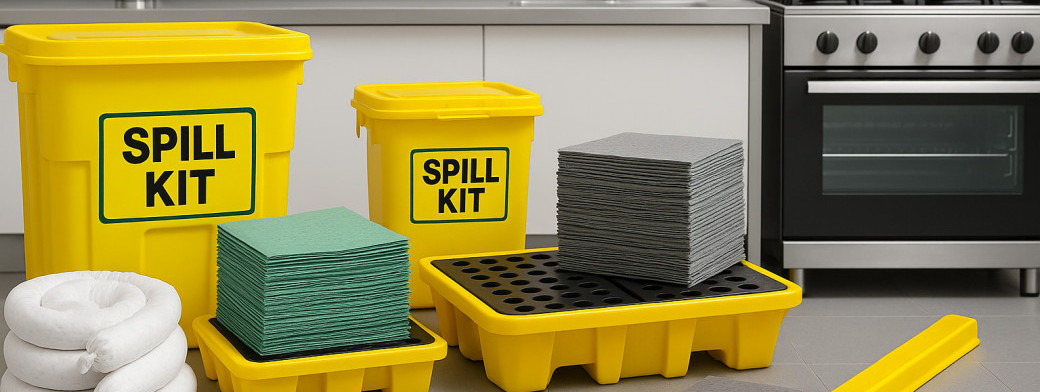
An effective spill kit for pop-up catering should include three essentials: absorbent materials to soak up liquids quickly, personal protective equipment (PPE) to protect staff, and containment and disposal tools to stop the spill spreading and allow safe clean-up. In temporary food service settings, the most common spills include water, drinks, cooking oil, sauces and cleaning chemicals, so a compact kit needs to handle both slip risks and basic hygiene control without taking up much space.
For catering teams working in busy, short-term venues, the best kit is one that is portable, clearly labelled and easy to use under pressure. It should support safer event operations in line with HSE guidance on event safety, while also helping reduce slip hazards identified in HSE advice for catering and hospitality.
Absorbent materials
The core of any compact kit is a supply of absorbents suited to likely catering spills. This usually means absorbent pads, rolls or loose granules for fast response to water-based liquids, oils and food residues. Pads are useful for small, targeted spills around prep tables or serving stations, while socks or mini booms help ring-fence leaks before they spread into walkways. Choosing compact spill kits with high-absorbency fibres can save space while still giving staff enough capacity for first response.
Personal protective equipment (PPE)
Even a minor spill can involve broken packaging, hot residue or cleaning substances, so PPE should always be included. At minimum, a kit should contain disposable gloves and, where appropriate, eye protection or aprons. Suitable PPE helps staff clean up safely and supports good practice where sanitising agents or other substances fall under COSHH controls.
Containment and disposal tools
A compact spill kit also needs practical tools for control and disposal. Essential items include disposal bags, ties, a scoop or scraper for used absorbents, and clear instructions for segregating contaminated waste. Temporary warning signage is also valuable, as it alerts staff and guests to wet floors while clean-up is in progress. Together, these components make it easier to contain the area, remove waste promptly and keep service moving with minimal disruption.
What Training Do Staff Need for Effective Spill Management?
Staff need practical, role-specific spill management training so they can recognise hazards quickly, use the right spill kit correctly, and respond without disrupting service or putting guests at risk. For pop-up catering teams, training should cover spill kit usage, safe clean-up methods, emergency procedures, reporting lines, and when to escalate an incident. In temporary food event settings, where layouts, surfaces, and footfall can change from one venue to the next, confident staff are essential for preventing slips, contamination, and avoidable downtime.
Training should be simple, repeatable, and relevant to the spills most likely to occur during service, such as drinks, cooking oils, sauces, food waste, and cleaning chemicals. Employers and organisers should also align training with wider event safety duties and catering slip prevention guidance from the HSE on event safety and the HSE guidance on slips and trips in catering and hospitality.
Core topics every team should cover
A good training programme should show staff where spill kits are stored, what each component is for, and how to choose suitable absorbents, pads, socks, or disposal bags for different incidents. Teams should understand the difference between routine food and drink spills and more serious releases involving chemicals, including the controls required under COSHH for cleaning products and sanitisers used on site.
Staff should also be trained in emergency procedures. That includes isolating the area, protecting customers and colleagues, using signage, wearing appropriate PPE, preventing spread into walkways or drains where relevant, and knowing who to contact if a spill is beyond their competence or available equipment. Clear reporting procedures help businesses record incidents, restock kits promptly, and identify recurring risks.
Why refresher training matters
Because pop-up catering often relies on temporary, seasonal, or mixed-experience teams, regular refresher courses are just as important as initial instruction. Short refreshers before events, toolbox talks during set-up, and periodic formal learning through spill management training can keep standards consistent. Refresher training helps staff retain confidence, adapt to new venues, and respond faster when a spill happens during busy service.
How to Evaluate and Improve Your Spill Management Practices?
You can evaluate and improve spill management by testing how quickly and safely your team responds, checking what past incidents reveal, and asking staff where delays or confusion occur. For pop-up catering, the most effective review process combines regular spill drills, incident report analysis, and practical feedback from the people setting up, serving, cleaning, and closing down the event.
A good assessment should measure more than whether a spill was cleaned up. It should look at response times, correct kit selection, safe segregation of food areas, use of PPE, disposal methods, and whether controls align with HSE guidance on event safety, slip prevention in catering, and COSHH requirements where cleaning chemicals are involved. Reviewing your wider spill management process helps identify gaps before they disrupt service or create avoidable risk.
Conduct Spill Drills Under Real Event Conditions
Run short, realistic drills during set-up or quieter periods. Test common scenarios such as drink spills at the service counter, oil near cooking equipment, or cleaning product leaks in back-of-house areas. Time how long it takes staff to identify the hazard, isolate the area, fetch the correct kit, and complete clean-up safely. Drills should also confirm that temporary teams know where kits are stored and which absorbents, socks, pads, or fibres are suitable for each spill type.
Review Incident Reports for Patterns
Incident reports are one of the clearest ways to assess whether your current controls are working. Look for repeated issues such as the same location producing slips, delays caused by poorly placed kits, or uncertainty over who is responsible for response. Even near misses matter. A structured review can show whether changes to layout, signage, stock levels, or training are needed. This kind of ongoing evaluation is especially useful for temporary venues where conditions change from one event to the next.
Gather Staff Feedback and Act on It
Ask staff what actually happens during service, not just what the procedure says. Front-of-house teams may spot customer pinch points, while kitchen and cleaning staff can highlight access problems, unsuitable products, or disposal issues. Keep feedback simple and specific: what slowed response, what equipment was missing, and what would make clean-up safer? Turning that feedback into updated briefings, clearer responsibilities, and better kit placement is often the fastest way to improve spill performance.