
Introduction
Transformer oil leaks refer to the unintentional release of insulating oil used in electrical transformers. These leaks can occur due to various reasons, including equipment failure, aging infrastructure, or environmental factors. Managing transformer oil leaks is crucial for several reasons, primarily to prevent environmental contamination and ensure compliance with regulations. The insulating oil not only serves as a coolant but also acts as an electrical insulator; thus, any leaks can lead to significant operational and environmental challenges.
Effective management of transformer oil leaks involves implementing robust containment strategies, utilizing absorbents, and ensuring proper drain protection. Additionally, regular inspection routines and thorough documentation are vital for maintaining environmental compliance. This blog will delve into best practices for managing transformer oil leaks, focusing on these key areas:
- Containment Strategies - Understanding how to effectively contain oil leaks to prevent environmental damage.
- Use of Absorbents - Identifying the best absorbent materials for oil spills and leaks.
- Drain Protection - Ensuring that drainage systems are safeguarded against contamination.
- Inspection Routines - Establishing regular checks to identify potential leaks early.
- Documentation for Compliance - Keeping accurate records to meet environmental regulations set forth by authorities such as GOV.UK.
By following these best practices, electrical substations can mitigate the risks associated with transformer oil leaks, protecting both the environment and their operational integrity.
Understanding Transformer Oil Leaks
Transformer oil leaks can pose significant risks to both the environment and public health. Transformer oil, primarily composed of mineral oil, is used in electrical substations for insulation and cooling. There are various types of transformer oil, including mineral oils, synthetic esters, and natural esters, each with unique properties and applications. Understanding these types is crucial for effective management and prevention of leaks.
Common Causes of Leaks
Leaks can occur due to several factors, such as:
- Equipment failure: Deterioration of seals, gaskets, and other components can lead to leaks.
- Environmental stress: Temperature fluctuations and external impacts can compromise the integrity of the transformer.
- Improper installation: Poor installation practices can result in weak points that are susceptible to leaks.
Environmental and Health Risks
The environmental impacts of transformer oil leaks can be severe. Oil spills can contaminate soil and waterways, leading to detrimental effects on local ecosystems. Moreover, transformer oils often contain hazardous materials that can pose health risks to humans, such as skin irritation and potential long-term health effects. For comprehensive guidelines on oil storage and spill prevention, refer to GOV.UK - Storing oil at home or business.
It is crucial for businesses to adhere to pollution prevention measures. For detailed information, please visit GOV.UK - Pollution prevention for businesses.
In the event of a leak, proper disposal of contaminated materials is essential. For guidance on hazardous waste disposal, refer to GOV.UK - Dispose of hazardous waste.
Containment Methods
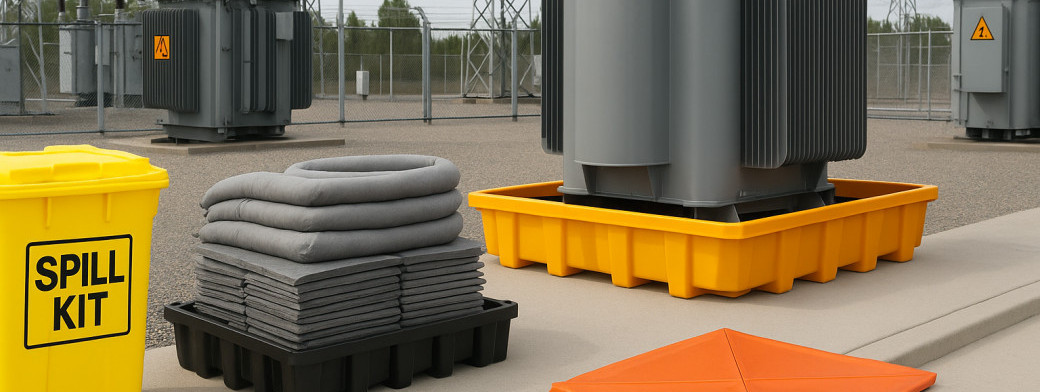
Effective management of transformer oil leaks begins with implementing robust containment methods. These systems are designed to prevent the spread of oil spills, protecting both the environment and infrastructure.
Types of Containment Systems
There are several types of containment systems suitable for electrical substations:
- Bunded Areas: These are enclosed spaces designed to capture any leaks. Bunding can be achieved using walls or barriers around storage areas.
- Containment Trays: These are shallow trays placed under transformers to catch any drips or spills.
- Absorbent Booms and Pads: These materials can be strategically placed around potential leak points to absorb oil and prevent it from spreading.
Installation Best Practices
When installing containment systems, it's crucial to follow best practices to ensure their effectiveness:
- Ensure that bunded areas are constructed from impermeable materials to prevent leakage.
- Position containment trays directly beneath transformers and regularly assess their capacity to hold potential spills.
- Integrate absorbent materials into the containment strategy, placing them at critical points.
Regular Maintenance of Containment Systems
To maintain the effectiveness of containment systems, regular inspections and maintenance are essential:
- Conduct inspections at least quarterly to ensure integrity and functionality.
- Clean and replace absorbent materials as necessary, following guidelines from GOV.UK.
- Document any repairs or replacements made to the containment systems to ensure compliance with environmental regulations.
For more information on containment solutions, visit Serpro's containment solutions.
Absorbent Materials
Managing transformer oil leaks effectively requires the use of appropriate absorbent materials to mitigate environmental impact. Different types of absorbents can be employed, each suited to specific circumstances.
Types of Absorbents
There are primarily three categories of absorbents suitable for handling transformer oil spills:
- Natural Absorbents: Materials like sawdust, peat moss, and straw are biodegradable and can absorb oil effectively. They are often used for smaller spills.
- Synthetic Absorbents: These include products made from polymers that are designed specifically to absorb oils and hydrocarbons. They are highly effective and can handle larger volumes of spills.
- Reusable Absorbents: Some absorbents can be cleaned and reused multiple times, which is both economical and environmentally friendly. Examples include certain types of mats and pads.
Application Techniques
When applying absorbent materials, follow these techniques for optimal results:
- Spread absorbents evenly over the spill area to ensure maximum contact with the oil.
- Allow the absorbents to sit for a sufficient amount of time, typically 15-30 minutes, to fully absorb the oil.
- After absorption, use a broom or shovel to collect the saturated materials for disposal.
Disposal of Used Absorbents
Once absorbents have been used, proper disposal is critical to prevent further environmental contamination. Follow the guidelines outlined by GOV.UK, which details the duty of care and disposal requirements for contaminated materials. It is essential to treat used absorbents as hazardous waste and dispose of them according to local regulations to ensure compliance.
For a comprehensive selection of absorbent materials, consider visiting Serpro's absorbent materials page.
Drain Protection Strategies
Effective management of transformer oil leaks is essential for protecting the environment and ensuring compliance with regulations. One crucial aspect of this management is implementing drain protection strategies to prevent oil from contaminating water systems.
Installation of Drain Covers
One of the primary methods for safeguarding drains from transformer oil leaks is the installation of drain covers. These covers act as a physical barrier, preventing any leaked oil from entering the drainage system. It is important to choose covers that are robust and designed specifically for oil containment, ensuring that they can withstand the weight and potential exposure to harsh environmental conditions.
Regular Inspections
Regular inspections of both the transformer units and the drainage systems are vital for early detection of any leaks. Inspections should be scheduled at least quarterly, ensuring that any signs of wear or damage to the oil containment systems are addressed promptly. According to GOV.UK guidelines on pollution prevention, maintaining a diligent inspection routine can significantly mitigate the risk of environmental contamination.
Emergency Response Plans
In the event of a leak, having a well-defined emergency response plan is crucial. This plan should outline immediate actions to contain the leak, including the use of absorbent materials and the activation of spill response teams. Additionally, training staff on these procedures will ensure that everyone is prepared to act quickly and effectively. For more information on spill prevention and response, refer to GOV.UK’s oil storage guidance.
By implementing these strategies, substations can protect drains from transformer oil leaks and maintain compliance with environmental regulations, safeguarding both the ecosystem and the facility's operational integrity.
Inspection Routines
Regular inspection routines are crucial for maintaining the integrity of transformers and preventing transformer oil leaks. Establishing a systematic approach to inspections can ensure that potential issues are identified and addressed before they escalate into significant environmental hazards.
Frequency of Inspections
It is recommended that inspections be conducted at least quarterly to ensure that all aspects of the transformer and its surrounding area are monitored effectively. However, high-risk locations or those with a history of leaks may require monthly inspections to mitigate potential risks. Additionally, inspections should be carried out after severe weather events, such as heavy rain or storms, which may impact the integrity of the oil containment systems.
Key Inspection Points
During inspections, several key points should be assessed, including:
- Visual checks for any signs of oil leakage around the transformer and associated equipment.
- Condition of the oil containment systems, including bunds and drains, ensuring they are intact and free from debris.
- Functionality of absorbent materials placed near transformers, ensuring they are adequately stocked and effective.
- Monitoring oil levels and checking for any unusual fluctuations that may indicate leaks.
- Evaluating the integrity of seals and gaskets to prevent oil escape.
Documentation of Findings
It is essential to document all findings during inspections rigorously. This documentation should include:
- Date and time of the inspection.
- Details of any issues found, including photographs if possible.
- Actions taken to rectify issues or maintenance performed.
- Recommendations for future inspections or repairs.
Maintaining thorough records not only helps in tracking the condition of the transformer but also ensures compliance with environmental regulations. For more information on inspection services, visit Serpro's inspection services.
For guidance on oil storage and spill prevention, refer to GOV.UK's guidance on storing oil.
In case of hazardous waste, consult the GOV.UK page on the disposal of hazardous waste to ensure compliance with duty of care requirements.
Incident Documentation
Documenting incidents related to transformer oil leaks is crucial for ensuring compliance with environmental regulations and for maintaining safety protocols within electrical substations. Proper incident reporting procedures not only aid in immediate response efforts but also play a vital role in long-term risk management.
Incident Reporting Procedures
When a transformer oil leak occurs, it is essential to follow established incident reporting procedures. These typically involve:
- Immediate notification of the relevant authorities and environmental agencies.
- Detailed logging of the incident, including time, location, and nature of the leak.
- Assessment of the environmental impact and any potential hazards to personnel.
Legal Requirements
In the UK, businesses must adhere to specific legal requirements regarding pollution and waste management. For instance, the Duty of Care mandates that any hazardous waste, including contaminated transformer oil, must be disposed of properly. Failure to document and manage these incidents can result in significant legal repercussions and fines.
Best Practices for Documentation
To ensure comprehensive documentation, consider the following best practices:
- Maintain a dedicated incident log that records all relevant information, including actions taken and remedial measures implemented.
- Utilise digital tools for incident reporting to improve accessibility and accuracy of records.
- Regularly review and update documentation procedures to align with current regulations, as outlined in the pollution prevention guidance.
- Train staff on the importance of accurate documentation and incident reporting, reinforcing a culture of safety and compliance.
By prioritising thorough incident documentation, electrical substations can enhance their environmental compliance and mitigate the risks associated with transformer oil leaks.
Compliance
Managing transformer oil leaks is not only a matter of operational efficiency but also a critical component of environmental responsibility. In the UK and EU, there are several regulatory requirements that govern the management of oil spills and leaks, particularly in electrical substations.
Relevant UK/EU Regulations
Key regulations include the Pollution Prevention Guidelines, which provide essential guidance on preventing pollution from oil storage. Additionally, the Oil Storage Regulations outline the necessary measures to prevent spills and leaks, including secondary containment and regular inspections. Compliance with these regulations is crucial for any facility handling insulating oils.
Compliance Checklists
To ensure adherence to these regulations, it is advisable to implement a compliance checklist that includes:
- Regular inspections of transformer oil storage areas.
- Maintenance of secondary containment systems.
- Documentation of spill response procedures.
- Training records for staff on spill prevention and response.
- Regular review and update of oil storage practices.
Consequences of Non-Compliance
Failure to comply with these regulations can result in severe consequences, including hefty fines, legal action, and reputational damage. Furthermore, non-compliance can lead to environmental harm, necessitating costly remediation efforts. It is essential for businesses to maintain rigorous compliance to avoid these risks.
For more information on compliance services, visit Serpro Compliance Services.