
Last reviewed: 13 November 2026
In a dental surgery, a small bottle knocked over beside a treatment chair may involve a routine cleaning solution, a concentrated disinfectant or a substance used in equipment maintenance. Those liquids do not carry the same risks. Dental practices need a simple means of controlling manageable non-clinical spills without confusing them with infectious waste, sharps or other clinical incidents.
Know what is actually stored
Review the products used in surgeries, sterilisation rooms, cleaning stores and any plant area. Check safety data sheets for concentrated disinfectants, descalers and maintenance products; keep incompatible liquids apart. Where substances are hazardous, the HSE COSHH guidance explains the duty to assess exposure and prepare appropriate control measures.
A leak from an autoclave or dental compressor may simply be water, but it can still create a slip or electrical hazard. Check the equipment and isolate it safely rather than repeatedly mopping up the same fault.
Choose the right response for a small spill
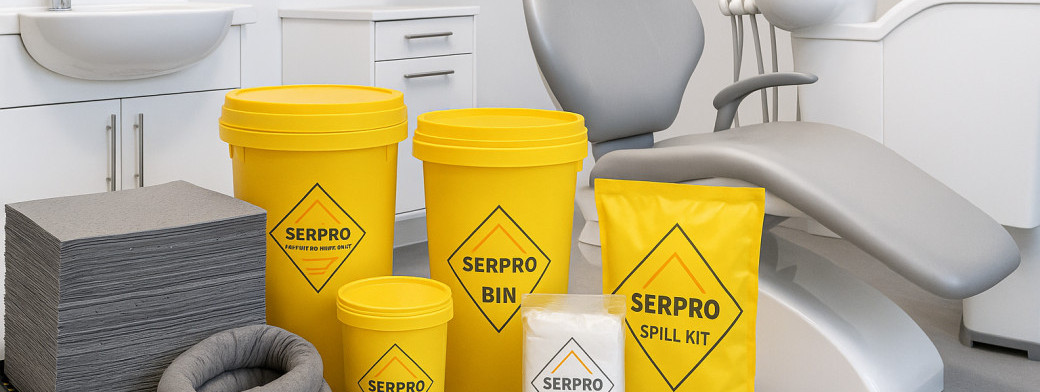
Keep a compact spill kits containing suitable materials near identified risks, not in a locked store on another floor. For a known, manageable liquid, trained staff should restrict access, check the product instructions and use appropriate absorbents. Concentrated or reactive chemicals may require specialist chemical absorbents and specific protective equipment; compatibility must be confirmed first.
Do not use a general-purpose industrial spill kit to handle blood or other potentially infectious materials. Follow the practice’s infection prevention and clinical waste procedures instead. If vapours, serious exposure or an unidentified substance are involved, evacuate the immediate area and escalate.
Keep the treatment area ready
- Label secondary containers and keep caps secure.
- Inspect cleaning cupboards and dosing containers regularly.
- Protect patient and staff routes from slips; see HSE slips and trips guidance.
- Train staff in both the ordinary-spill and clinical-spill procedures.
- Classify contaminated clean-up materials before disposal.
A short incident record should identify the source and corrective action. Spill materials help with the consequences of a leak; they do not replace sound storage, maintenance or infection control.
