
Published: 31 August 2026
Last updated: 21 June 2026
Why is Spill Preparedness Essential in Dental Practices?
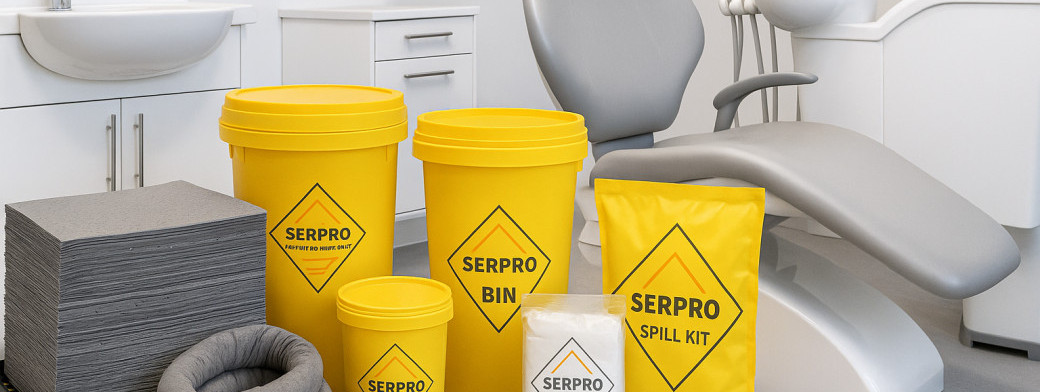
Spill preparedness in dental practices means having clear procedures, trained staff and suitable containment materials ready to deal safely with small-scale non-clinical liquid spills before they spread, cause slips or create harmful exposure. In a dental setting, this commonly includes cleaning products, surface disinfectants, maintenance chemicals and plant-room liquids such as oils, condensate or treatment-system fluids. Practical controls may include absorbent pads, rolls and socks, drip trays, disposal bags, gloves and clearly labelled spill kits, supported by storage and response arrangements that align with UK COSHH requirements and slip prevention guidance.
This matters because dental practices are busy workplaces used by staff, patients, contractors and visitors, often with smooth flooring, compact rooms and sensitive equipment. Even a minor leak from a cleaning cupboard, decontamination area or plant room can quickly create a slip hazard, damage surfaces, contaminate drains or expose staff to irritating or hazardous substances. Spill preparedness helps practices respond quickly, reduce disruption and show that foreseeable risks have been assessed and controlled.
Typical spills in a dental practice
Not every spill in a surgery is clinical waste. Many of the more routine incidents involve everyday operational liquids, including diluted cleaning chemicals, concentrated detergents, disinfectants, descalers, hand hygiene products, maintenance fluids, and plant-room leaks from compressors, vacuum systems or associated equipment. These liquids may appear low risk at first glance, but they can still present hazards depending on their concentration, location and how long they remain on the floor.
Why compliance and risk control matter
Under COSHH, practices should identify hazardous substances, understand their risks, and put suitable control measures in place rather than relying on improvised clean-up. That includes safe storage, access to the right absorbents, staff instructions and suitable disposal arrangements. The main risks are usually straightforward but important: slips and trips, skin or eye contact, inhalation of vapours in poorly ventilated areas, accidental mixing of incompatible products, and environmental release if liquids enter drains. A prepared practice is therefore better placed to protect people, maintain housekeeping standards and respond consistently when spills occur.
What Types of Liquids Are Commonly Found in Dental Practices?
Dental practices commonly hold a mix of everyday liquids that can create slip hazards, surface damage, fumes, or environmental risks if spilled. In most surgeries, the main categories are cleaning products, disinfectants, maintenance chemicals, and plant-room liquids such as oils or treatment fluids. Even when volumes are small, these substances should be identified through COSHH assessment, stored correctly, and considered in local spill response plans.
The risk is not limited to obvious chemical exposure. Many liquids in dental settings can leave floors dangerously slippery, affect air quality, or spread into cupboards, service areas, and drains. The HSE’s guidance on slips and spill management in health settings is particularly relevant, as staff, patients, and contractors may all pass through the same circulation routes.
Typical liquids found on site
Cleaning products include floor cleaners, washroom chemicals, detergents, descalers, and glass cleaners. These are often used daily and may be decanted, carried between rooms, or stored in cleaners’ cupboards, which increases the chance of drips and small spills.
Disinfectants are another routine source of spill risk. Surface disinfectants, wipes with liquid content, and concentrated sanitation products may cause irritation or leave smooth flooring slick underfoot if not dealt with promptly.
Maintenance chemicals can include lubricants, adhesives, descaling agents, line-cleaning products, and other engineering or servicing fluids used around equipment. These may be handled less often, but they can present higher risks because staff are less familiar with them.
Plant-room liquids are easy to overlook. Boiler chemicals, heating system water treatments, oils, condensate, and similar service-area liquids may leak slowly from pipework, pumps, or stored containers. Although these are often away from treatment rooms, they still need containment and inspection because unnoticed leaks can spread and create both slip and housekeeping problems.
Where Do Spills Typically Occur in Dental Surgeries?
Spills in dental surgeries most often occur in treatment rooms, storage areas, reception spaces and plant rooms, because these are the places where liquids are handled, moved, stored or maintained during the working day. In most practices, the main risks come from cleaning products, disinfectants, hand hygiene liquids, maintenance chemicals and plant-related fluids rather than from large-volume incidents. Identifying these locations helps practices plan quicker spill response, reduce slip hazards and support day-to-day COSHH control measures.
These areas matter for different reasons: treatment rooms see frequent use of surface cleaners and disinfectants; storage areas can suffer from leaking containers or poor stacking; reception areas are vulnerable to tracked-in liquids and public footfall; and plant rooms may contain oils, condensate, dosing chemicals or other maintenance liquids. A simple location-based review also makes it easier to position absorbents, trays and labelled storage sensibly, in line with COSHH guidance and HSE advice on slips and trips.
Treatment rooms
Treatment rooms are a common source of small spills because staff regularly use sprays, wipes, disinfectants and cleaning solutions between patients. Bottles can drip during use, liquids may be decanted into smaller containers, and residues can reach the floor around chairs, sinks or worktops. Even minor splashes matter here because smooth flooring can quickly become slippery.
Storage areas
Storage cupboards and back-of-house rooms are another frequent spill point, especially where chemicals are kept on high shelves, in mixed storage, or without suitable secondary containment. Damaged caps, overfilled bottles and awkward handling during stock rotation can all lead to leaks. Using sensible segregation and storage solutions such as drip trays or bunded shelving can help contain small releases before they spread.
Reception areas
Reception areas may seem lower risk, but they often experience slips caused by hand sanitiser, drinks, wet umbrellas or cleaning liquids used on desks and floors. Because patients, visitors and staff all pass through these spaces, even a small spill can create an immediate safety issue and should be dealt with promptly.
Plant rooms
Plant rooms deserve special attention because leaks may involve maintenance chemicals, pipework fluids, oils or condensate from equipment. These incidents can go unnoticed for longer, spread under equipment, or reach drains if containment is poor. Regular inspection, clear housekeeping and suitable absorbents nearby are important, particularly where pollution prevention is also a concern.
What Should Be Kept Nearby for Spill Response?
Dental practices should keep a small, clearly labelled spill response setup close to the places where liquids are used or stored. For most non-clinical spills, that means having small spill kits, absorbent materials, containment items and suitable personal protective equipment (PPE) ready for immediate use. The aim is to help staff stop a minor spill spreading, reduce slip risk and respond in line with the practice’s COSHH arrangements rather than searching cupboards after the event.
What is kept nearby should match the liquids on site. In a dental surgery, this may include cleaning chemicals, disinfectants, descalers, maintenance products and plant-room liquids. As part of COSHH planning and good slip prevention, supplies should be positioned where spills are most likely: cleaning stores, decontamination areas, utility rooms, plant spaces and delivery or decanting points.
Essential items to keep close at hand
- Small spill kits for a fast first response to minor leaks and splashes.
- Absorbent pads and rolls to cover and soak up spilled liquid on floors, worktops or around equipment.
- Drip trays beneath containers, dosing points or stored products that may weep or drip between inspections.
- PPE such as gloves and eye protection, selected to suit the substances identified in COSHH assessments.
- Disposal bags so used absorbents can be segregated and handled safely after clean-up.
Where liquids could travel into thresholds, cupboards or drains, practices may also keep absorbent socks or simple drain protection nearby. Storage matters too: equipment should be visible, easy to reach and not locked away behind unrelated stock. A compact spill station with clear signage helps staff act quickly, while routine checks confirm items are complete, dry and suitable for the products currently in use.
Who Should Respond to Chemical Spills in Dental Practices?
In a dental practice, chemical spills should be handled by a designated spill response team or by specifically appointed staff members who have been trained to assess the risk, contain the liquid safely and follow the practice’s documented procedures. Not every employee should attempt to clean every spill. The right response depends on the substance involved, the size of the spill, the location, and whether there is any immediate risk to staff, patients, contractors or drains.
For most non-clinical spills, such as cleaning products, disinfectants, maintenance chemicals or plant-room liquids, the priority is to protect people first, prevent slips, and stop the substance spreading. Under COSHH, employers should identify which substances are used on site, assess the hazards, and make sure only competent staff respond. A clear written plan, supported by suitable equipment and practical training, helps avoid confusion during an incident.
Designated spill response team
Every practice should decide in advance who is expected to respond. In a smaller surgery, this may be a limited number of senior staff, facilities personnel or managers rather than a large formal team. In larger premises, it may be appropriate to nominate several trained responders across shifts and departments. Whoever is chosen should know where spill kits, absorbent materials, PPE, disposal bags and drain protection are kept, and when to escalate rather than intervene.
Staff who are not part of the response group still need to know their role: secure the area, warn others, keep patients away, and report the incident immediately. This division of responsibility reduces the risk of untrained staff improvising with unsuitable materials or creating a larger contamination or slip hazard.
Training requirements and communication protocols
Training should cover substance identification, reading labels and safety data sheets, selecting the correct absorbents, safe isolation of the area, and reporting arrangements. Refresher sessions and scenario-based drills can support competence, particularly where chemicals are stored in multiple locations. Practices reviewing staff competence may find it useful to include formal spill response training within wider health and safety arrangements.
Communication protocols should also be written down and easy to follow. Staff should know who to contact first, when to call maintenance or external support, and where the practice’s spill instructions sit within wider response plans. Quick internal communication helps contain the incident promptly and supports safer decision-making.
How Should Waste Be Separated During a Spill Response?
Waste should be separated by the type of liquid spilled, the materials used to clean it up, and whether those materials have become hazardous under COSHH. In a dental practice, that usually means keeping absorbents, wipes, PPE and any contaminated packaging apart according to the cleaning product, disinfectant, maintenance chemical or plant-room liquid involved. Mixing waste streams can increase handling risks, make disposal more difficult and create avoidable compliance problems.
As a practical rule, staff should bag or containerise spill waste at the point of clean-up, label it clearly and follow the substance’s safety data sheet and the practice’s COSHH assessment. This helps the practice decide whether the waste can go into a general controlled waste route or whether it needs a more specific hazardous waste arrangement. It also supports safer onward handling and reduces the chance of leaks, slips or environmental release.
Types of waste generated during spill clean-up
A non-clinical spill response can generate several different waste types, including:
- used absorbent pads, rolls or socks contaminated with the spilled liquid
- disposable gloves, oversleeves or aprons used during the response
- wipes, paper towels or granules used for final surface cleaning
- damaged or leaking original containers and contaminated outer packaging
- any recovered free liquid collected in a suitable temporary container
These materials should not automatically be treated the same way. For example, absorbents used on a mild detergent spill may need different handling from those used on concentrated disinfectants, descalers, oils or plant-room chemicals.
COSHH compliance for waste handling
Under COSHH, the practice should assess exposure risks not only during the spill itself but also while waste is being gathered, sealed, moved and stored for collection. Staff should check the relevant safety data sheet, use the specified PPE, and avoid compacting bags or mixing incompatible residues. If there is any risk of environmental contamination, drains should be protected and the practice should follow the GOV.UK guidance on pollution prevention for businesses.
Disposal bags and containers
Use disposal bags and containers that are appropriate for the waste produced: sturdy sealed bags for contaminated absorbents and PPE, and rigid, lidded containers where there is a risk of dripping, puncture or retained liquid. Keep containers compatible with the substance involved and store them in a designated area until collection. For practical support on waste handling and suitable disposal solutions, it helps to standardise labels, storage points and staff instructions across the practice.
How Can Spill Arrangements Be Checked During Routine Inspections?
Spill arrangements in dental practices can be checked effectively during routine inspections by using a simple checklist, setting a clear inspection frequency, and recording what was found and what action is needed. The aim is to confirm that spill controls for cleaning chemicals, disinfectants, maintenance products and plant-room liquids are still practical, visible and ready to use, not just present on paper.
Regular inspections help show that COSHH controls remain in place, that floors can be kept safe from slips, and that staff know how to respond quickly to small non-clinical spills. They also help identify gaps such as missing absorbents, damaged drip trays, poor labelling or blocked access to spill stations before a minor leak becomes a wider housekeeping or safety problem.
Use inspection checklists to standardise what is reviewed
A written checklist makes inspections more consistent across surgeries, decontamination rooms, cleaners’ cupboards, storage areas and plant spaces. It should cover whether spill kits are complete, whether absorbent pads, rolls or socks are suitable for the liquids stored nearby, whether drain protection is available where needed, and whether gloves and disposal bags are stocked. It should also check storage condition, container integrity, secondary containment, signage and whether staff can access the area without delay. Practices can support this with structured inspection checklists tailored to their layout and chemical inventory.
Set a sensible frequency of inspections
Inspection frequency should reflect risk. High-use areas with frequent handling of cleaning products or disinfectants may need weekly checks, while lower-risk stores or plant rooms may be reviewed monthly, with a fuller site-wide inspection at set intervals. Extra checks are sensible after deliveries, maintenance work, layout changes or any previous spill incident. A planned programme of routine inspections helps prevent arrangements from drifting over time.
Document findings and report follow-up actions
Inspection results should be documented clearly, including date, location, issues found, corrective action, responsible person and completion date. Reporting matters because it turns an observation into a tracked improvement, such as replacing expired stock, relabelling a spill station or moving chemicals into more suitable storage. Keeping these records supports internal review, staff accountability and evidence that spill preparedness is being maintained as part of everyday safety management.