
Last reviewed: 13 November 2026
An electric-vehicle conversion workshop may have a petrol tank being removed on one bench and high-voltage battery components being installed on another. Those operations create different risks. Engine oil, fuel residue and conventional coolant can require liquid containment; an energised or damaged traction battery demands electrical and fire-specific controls.
Keep the conventional fluid work contained
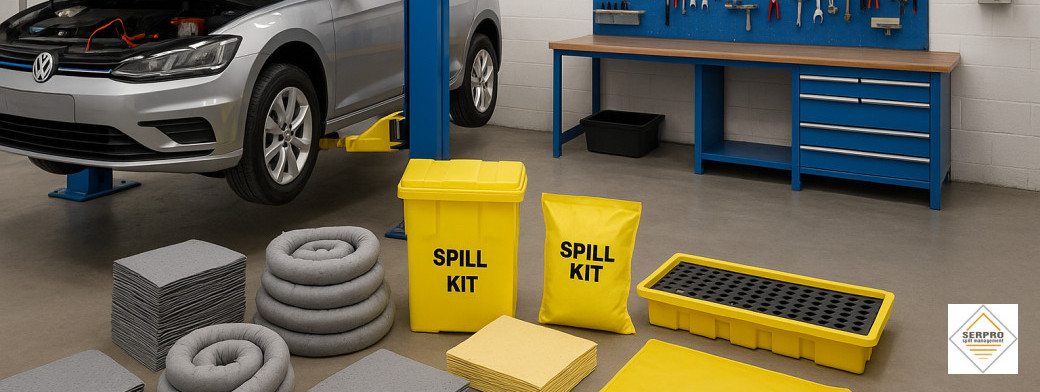
Before draining old systems, identify the fluid, assess ignition and exposure risks and put compatible drip trays beneath accessible connections. For small known hydrocarbon drips, oil-only absorbents may help. Glycol-based coolants, brake fluids and cleaning chemicals need separate material and waste decisions. Do not route liquid towards a floor drain.
Treat high-voltage systems as a different workstream
Only competent persons should undertake traction-battery or high-voltage work using vehicle-specific procedures. HSE electric and hybrid vehicle guidance explains the risks from stored electrical energy, isolation failures and damaged batteries. A battery that is smoking, heating, venting or mechanically damaged must not be approached as a normal spill-clean-up task. Withdraw and use the site emergency arrangements.
Keep the conversion area organised so liquid handling and battery work do not interfere with each other. Secure exposed fuel lines, protect battery enclosures and maintain an agreed system for tool control, vehicle immobilisation and communication between trades.
Review every fluid and electrical incident
Record what escaped, whether contamination reached wiring or a battery enclosure, and who authorised the repair or return to work. Keep used spill-kit materials in suitable labelled waste containers. The workshop’s documented isolation and quality checks must determine whether the vehicle is safe, not the appearance of a clean floor.
