
Published: 6 November 2026
Last updated: 26 August 2026
Why is Spill Control Essential in EV Conversion Workshops?
Spill control is essential in EV conversion workshops because these sites handle a mixed-risk combination of legacy vehicle fluids, new electric drivetrain components and battery-related materials in one workspace. An EV conversion workshop is a facility that removes or modifies petrol or diesel powertrain systems and installs electric motors, battery packs and associated electronics. That means common spill risks can include engine oils, transmission fluids, fuel residues, antifreeze and other coolants, brake fluid, cleaning chemicals and, in some projects, battery fluids or contaminated run-off from damaged battery components. Effective spill control relies on practical measures such as absorbents, drip trays, spill kits, segregation of waste streams and drain protection, supported by UK health, safety and pollution-prevention duties under COSHH guidance from HSE and GOV.UK pollution prevention guidance.
In simple terms, spill control matters because EV conversions combine dismantling work and installation work, so the workshop may contain both conventional automotive liquids and substances linked to battery handling at the same time. Without clear controls, even a small leak can create slip hazards, contaminate tools and parts, spread into drains, complicate waste disposal and expose staff to substances that need managed handling. Good spill planning reduces immediate risk to people, helps protect the environment and supports a more organised, professional conversion process.
What kinds of spills need to be controlled?
The most common spills in EV conversion settings usually start during vehicle draining, component removal, temporary storage and cleaning. Legacy vehicles may release engine oil, gearbox oil, coolant and fuel residues when internal combustion components are removed. Workshops may also handle brake fluid, degreasers and wash-down chemicals. Where battery packs or modules are stored, inspected or removed, there is also a need to plan for damaged units, contaminated packaging and any suspect fluid release, even if such incidents are less common than oil or coolant drips.
Why does this matter for safety and compliance?
Spill control is not only about tidiness. Oils and coolants can make floors slippery, while chemical exposure and poor housekeeping can increase risks during lifting, stripping and electrical installation work. In addition, uncontrolled liquids can enter surface water drains or soil, which is why drain covers, absorbent socks and prompt clean-up procedures are important practical controls. UK businesses are expected to assess hazardous substances, provide suitable containment and prevent pollution where reasonably possible. For EV conversion workshops, that makes spill control a core part of safe operations, environmental protection and day-to-day legal due diligence rather than an optional extra.
What Types of Fluids Are Commonly Found in EV Conversion Workshops?
EV conversion workshops commonly deal with a mixed fluid risk profile: legacy engine oils and fuels from donor vehicles, cooling liquids for both old and new systems, battery-related fluids or electrolyte residues, and a range of cleaning chemicals used during strip-out, preparation and reassembly. Because these liquids vary in flammability, toxicity, corrosivity and clean-up method, they should not be treated as one generic spill hazard. In practice, workshops usually need a combination of clearly labelled spill kits and task-specific chemical absorbents, supported by sensible storage, segregation and housekeeping.
In UK workshops, identifying each fluid type matters because control measures depend on the substance involved. The HSE’s guidance on the safe use of petrol in garages highlights the need to manage fuels and related workshop hazards carefully, and the same principle applies during EV conversions where old and new vehicle systems can overlap in one work area.
Old engine fluids
Many EV conversions begin with an internal combustion vehicle, so spills often arise during removal of legacy fluids. These can include engine oil, gearbox oil, transmission fluid, brake fluid, power steering fluid and residual petrol or diesel. Even when a vehicle is being fully electrified, these liquids may remain in lines, housings, reservoirs or components awaiting disposal. Oil-based fluids can create slip risks and spread quickly across smooth workshop floors, while fuels add fire and vapour concerns.
Coolants
Coolants are another routine spill source. A donor vehicle may still contain engine coolant, and the finished EV conversion may introduce new thermal management circuits for batteries, inverters or motors. These liquids are often water-glycol based, but they still require prompt containment because they can contaminate surfaces, create slip hazards and enter drains if not controlled. Workshops should assume that “non-oily” does not mean harmless.
Battery fluids
Battery handling areas may involve electrolyte risks, damaged module residues or leaked fluids associated with certain battery chemistries and auxiliary battery systems. Even where traction packs are designed as sealed units, workshops should plan for the possibility of leaks during storage, lifting, inspection or incident response. These spills may require more specialist treatment than general workshop liquids, which is why suitable absorbents and separation from ordinary waste streams are important.
Cleaning chemicals
EV conversion work also uses degreasers, solvents, detergents, brake cleaners and surface-preparation chemicals. These products are easy to overlook because they are part of everyday housekeeping, yet they can be corrosive, flammable or environmentally harmful. Keeping them near compatible absorbents, and not relying on one universal clean-up method for every substance, helps reduce both safety and disposal problems.
Where Do Spills Typically Occur in EV Conversion Workshops?
Spills in EV conversion workshops most often occur at the points where legacy vehicle fluids are removed, transferred, stored or worked around. In practice, that usually means underneath vehicles, on workbenches, in battery handling areas and around storage areas for fluids. Because these sites may deal with engine oil, coolant, brake fluid, cleaning chemicals and contaminated residues during conversion work, the highest-risk locations are the ones where dismantling, draining, charging, inspection and temporary storage overlap.
Identifying these hotspots makes spill control more practical. It helps workshops position containment such as drip trays where leaks are most likely, and use clear spill station labelling so staff can respond quickly without crossing into the wrong work zone. This supports good housekeeping and aligns with UK guidance on controlling hazardous substances, preventing pollution and reducing slip risks from contaminated floors.
Common spill hotspots
- Underneath vehicles: drips often appear during draining, disconnection of hoses, removal of engines or gearboxes, and when residual fluids escape from older components.
- Workbenches: small but frequent spills can happen when parts are stripped, cleaned or set down after removal, especially if they still contain oil or coolant.
- Battery handling areas: although EV battery work should be carefully controlled, these zones can still see leaks from associated cooling systems, damaged packs or contaminated tools and packaging.
- Storage areas for fluids: spills commonly arise from decanting, damaged containers, poor stacking or unclear segregation between waste and usable liquids.
These areas deserve extra attention because even minor releases can spread quickly across smooth workshop floors, increasing slip hazards and raising the risk of drains being contaminated. The HSE’s guidance on slips and trips, COSHH and GOV.UK advice on pollution prevention for businesses all support a simple principle: keep likely spill points easy to identify, easy to reach and clearly separated from other workshop activities.
What Spill Control Measures Should Be in Place?
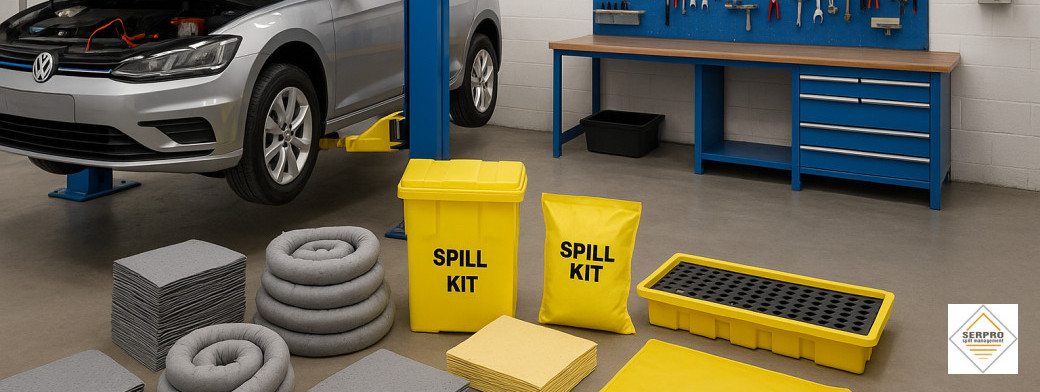
EV conversion workshops should have spill control measures that match the liquids and tasks on site, with equipment positioned where leaks are most likely to happen. In practice, that means keeping absorbent pads and rolls, drip trays, and small spill kits close to vehicle bays, fluid-drain points, parts-cleaning areas and battery handling zones, rather than storing everything in one distant cupboard. Clear spill station labelling also matters, so staff can find the right materials quickly and respond before a minor leak becomes a slip hazard or reaches a drain.
The exact mix will vary, but the principle is consistent: contain at source, protect walkways, and separate waste correctly. That approach supports good housekeeping under HSE guidance on slips and trips, aligns with COSHH expectations for controlling hazardous substances, and helps reduce pollution risks highlighted in UK pollution prevention guidance.
Essential spill control equipment
- Absorbent pads and rolls: useful for catching drips during disconnection, draining and bench work, and for protecting floors in narrow work areas.
- Drip trays: place under legacy engines, gearboxes, coolant lines, removed components and temporary storage points to stop slow leaks spreading.
- Small spill kits: keep compact kits near each active bay so first responders do not need to leave the area unattended while searching for supplies.
- Gloves and disposal bags: include them at each spill station so contaminated absorbents can be handled and segregated promptly.
- Drain protection where needed: if a spill could migrate toward surface water drains, covers or blockers should be available nearby.
Placement and identification
Spill stations should be easy to see, consistently stocked and properly labelled by spill type where relevant, for example oil, general workshop fluids or chemicals. Labelling helps avoid delays and reduces the chance of using unsuitable materials on coolants, cleaners or mixed residues. Drip trays should be part of normal setup, not an afterthought, and stock levels should be checked during routine inspections. In short, the best spill control arrangement is visible, local to the task and simple enough that every technician can use it immediately.
Who Should Be Responsible for Spill Response?
Spill response in an EV conversion workshop should never rest with one person alone. The best approach is a designated spill response team for immediate control and decision-making, backed by training for all staff so that anyone on site can spot a problem, make the area safe and start the correct escalation process. In workshops handling legacy engine oils, coolants, cleaning chemicals and battery-related work, clear responsibility reduces delays, limits slip risks and helps prevent pollutants reaching drains or mixed waste streams.
In practice, responsibility should be layered. A named team or supervisor should lead the response, assess the spill type and decide whether standard absorbents, isolation measures or specialist support are needed. At the same time, every technician, apprentice and cleaner should know basic first actions: stop work, protect people, contain spread where safe, and report the incident using agreed communication protocols. This supports the wider duty to control hazardous substances under HSE COSHH guidance and helps maintain safe floors in line with HSE advice on slips and trips.
Assign a designated spill response team
The designated spill response team should be clearly identified on shift plans and workshop notices. They should know where spill kits, drain protection, disposal bags and PPE are stored, and which areas present higher risks, such as fluid-drain stations, parts-cleaning zones and battery work bays. Their role is to coordinate, not replace, basic action by others.
Train all staff, not just supervisors
All staff need practical training on recognising different spill types, using the right absorbents, keeping incompatible wastes separate and avoiding unsafe clean-up methods. Refresher sessions are especially useful where workshop layouts or processes change.
Use clear communication protocols
Communication protocols should be simple and visible: who to alert, how to isolate the area, when to stop nearby work and when to escalate externally. A short reporting chain, backed by labelled spill stations and incident logs, helps the workshop respond consistently and review lessons after each event.
How Should Waste Fluids Be Handled and Disposed Of?
Waste fluids in an EV conversion workshop should be handled by keeping each fluid stream separate, containing it in suitable labelled containers, using sealed disposal bags for contaminated absorbents and clean-up materials, and arranging disposal in line with local legal requirements. This matters because conversions often involve legacy engine oil, coolant, brake fluid, transmission fluid and cleaning chemicals alongside newer electrical work, and mixing wastes can increase hazards, complicate disposal and raise costs.
In practice, the safest approach is to treat waste handling as part of the spill-control plan rather than an afterthought. The UK HSE COSHH guidance expects employers to assess hazardous substances, prevent exposure where reasonably practicable and put suitable controls in place. For workshops, that means clear labelling, secure temporary storage, staff training and disposal routes that match the type of waste being produced.
Separate waste fluids at source
Separation of waste fluids is the starting point. Used engine oil, antifreeze or coolant, brake fluid, fuel residues and solvent-based cleaners should not be poured into the same drum unless a licensed waste contractor has confirmed that arrangement is acceptable. Keeping fluids separate reduces the risk of dangerous reactions, prevents recyclable waste streams from being contaminated and makes it easier to demonstrate good housekeeping during inspections. Dedicated drip trays, funnels and marked containers help prevent accidental mixing when components are drained from donor vehicles.
Bag contaminated clean-up materials correctly
Absorbent pads, socks, granules, wipes, PPE and other materials used during a spill response should be collected promptly and placed into appropriate disposal bags or other suitable waste containers. Bags should be strong enough for the waste type, sealed after use and labelled so they are not mistaken for general rubbish. This is especially important where absorbents contain oil, coolant or chemical residues, as the contamination may change how the waste must be stored and removed.
Follow local regulations and licensed disposal routes
Compliance with local regulations is essential. Waste fluids and contaminated materials should be stored securely, protected from leaks and collected by authorised waste carriers where required. Workshops should also check any site-specific duties relating to hazardous waste, drainage protection and consignment paperwork. Local authority requirements, environmental rules and waste contractor instructions may differ by area, so disposal arrangements should be confirmed in writing rather than assumed. A simple rule is that nothing should enter surface drains, foul drains or general waste skips unless the disposal route has been explicitly approved.
How Can Routine Inspections Help Maintain Spill Control?
Routine inspections help maintain spill control by finding small problems before they become leaks, slips, contamination incidents or waste-handling mistakes. In an EV conversion workshop, that means checking fluid storage, battery work areas, drip trays, absorbents, drain protection and housekeeping on a planned basis, then correcting issues quickly. Regular inspections also show whether spill-control measures are still practical for the way the workshop is actually being used, rather than how it was originally set out.
A simple inspection routine supports safer handling of legacy engine oils, fuels, coolants, cleaning chemicals and battery-related materials, while reinforcing clear separation between dismantling, battery handling and general workshop tasks. It also helps employers review controls expected under HSE COSHH guidance and good housekeeping measures linked to slip prevention. For a practical framework, workshops can build checks into formal inspection routines.
What should an inspection checklist include?
- Condition and placement of absorbent pads, rolls, socks and spill kits
- Drip trays under stored parts, drained components and fluid transfer points
- Battery handling zones kept separate from oil, coolant and cleaning chemical areas
- Floor condition, including staining, residues and trip hazards
- Drain covers or drain protection kept accessible and clearly identified
- Waste containers labelled correctly for used absorbents, oils, coolants and mixed waste
- Gloves, disposal bags and spill station signage present and usable
- Signs of container damage, overfilling or poor storage layout
How often should inspections take place?
Frequency should match workshop activity. A sensible approach is a quick daily visual check of active work zones, a weekly check of spill stations, storage points and waste segregation, and a more detailed monthly review of the whole spill-control setup. Additional inspections are useful after layout changes, larger fluid removals, battery deliveries, near misses or any spill response.
Why does documentation matter?
Documenting findings turns inspections into a working control measure rather than a tick-box exercise. Record what was checked, what was found, what action was taken, who was responsible and when follow-up was completed. This creates a clear trail for training, maintenance and continuous improvement, and helps show that spill risks are being reviewed in a structured way. Short records, photos and action logs are usually enough, provided they are consistent and easy to retrieve.
What Are the Benefits of Clear Work Zone Separation?
Clear work zone separation helps EV conversion workshops prevent cross-contamination, reduce spill risks and improve day-to-day safety. When battery handling, fluid storage and general mechanical work are kept in distinct areas, staff are less likely to mix incompatible materials, carry contamination across the workshop or respond too slowly to a leak. In practical terms, separation makes spills easier to contain, keeps walkways clearer and supports safer housekeeping.
For EV conversion work, this matters because the workshop often deals with both legacy vehicle fluids and newer electrical systems at the same time. A well-planned layout should include designated areas for battery handling, separate fluid storage zones, and clear signage and barriers so each task happens in the right place. This approach also supports wider duties under UK health, safety and pollution-prevention guidance, including good control of hazardous substances and prompt management of contamination.
Why separation reduces spill risk
Spills often start when tasks overlap. For example, removing coolant or oil near a battery preparation bench increases the chance of drips, misplaced tools or contaminated packaging. By using a defined workshop layout, with battery work kept apart from draining, decanting and waste storage, businesses can reduce avoidable incidents and make inspections more straightforward. SERPRO’s guidance on work zone separation is useful here, especially where different hazards need different controls close at hand.
Dedicated fluid storage zones also make it easier to position drip trays, absorbents and waste containers where they are actually needed, rather than scattering them across the site. Meanwhile, battery handling areas benefit from uncluttered floors, restricted access and visible boundaries that discourage unrelated work from taking place nearby. HSE COSHH guidance supports this kind of organised control approach, while GOV.UK pollution prevention guidance reinforces the need to prevent leaks and contaminated runoff from spreading beyond the work area.
Signage and barriers improve response
Clear signage and barriers do more than mark out space: they help staff recognise the hazard profile of each zone at a glance. Signs can identify battery-only areas, fluid transfer points, waste segregation stations and no-storage walkways, while simple physical barriers help stop trolleys, parts and containers drifting into the wrong place. This also supports cleaner floors and fewer slip hazards, in line with HSE guidance on slips and trips. In short, separating work zones makes spill prevention more visible, more consistent and easier for everyone in the workshop to follow.