
Last reviewed: 13 November 2026
A forklift battery charging bay may contain traditional vented lead-acid batteries, sealed batteries or lithium-ion equipment. Treating all battery incidents alike is unsafe. Water from topping up a battery, corrosive acid electrolyte and a hot or damaged lithium-ion pack each present different hazards and require different response arrangements.
Understand the charging technology
Lead-acid batteries can release hydrogen during charging, so ventilation and ignition control matter. A damaged casing or filling incident may release sulphuric acid. The charging area should have clear access, suitable eye protection and emergency arrangements based on the manufacturer’s instructions and HSE COSHH guidance. Lithium-ion packs may fail by heating or releasing hazardous gases; a smoking, swollen or overheating battery calls for evacuation and specialist response, not an ordinary acid-spill routine.
Prepare for a minor, identified electrolyte leak
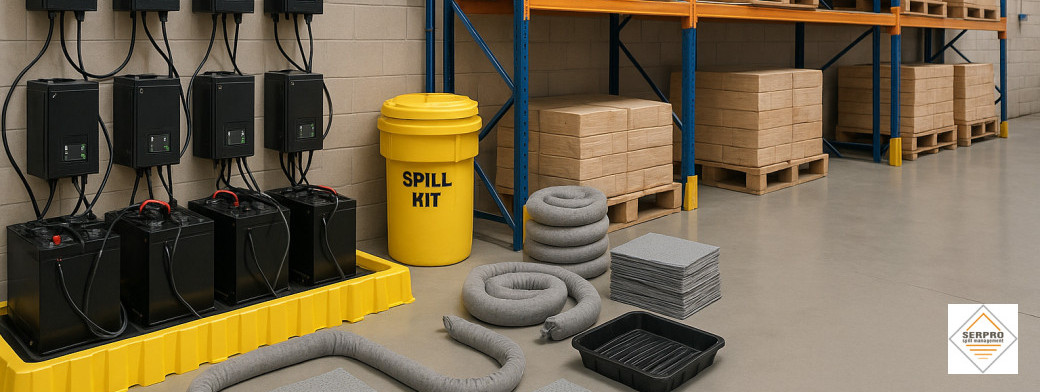
Keep the right spill kits and compatible chemical absorbents close to the charging bay, with clearly identified protective equipment. Do not automatically use oil-only pads for aqueous electrolyte. Any neutralisation procedure must be specifically risk-assessed, compatible with the battery chemistry and limited to trained staff. drip trays can provide additional protection for suitable equipment, but must not obstruct ventilation or access.
A small water spill may still require floor protection and inspection of electrical equipment. A release reaching chargers, exposed conductors or a traffic route should trigger isolation by competent personnel before anyone approaches it.
Maintain the charging area
- Check battery casings, connectors and watering systems for damage.
- Keep the battery type and chemical instructions available.
- Separate routine housekeeping from emergency battery procedures.
- Ensure ventilation, emergency communication and escape routes remain unobstructed.
- Treat used absorbents according to the actual contamination and waste classification.
The objective is to prevent acid exposure, fire and electrical injury, not merely to leave a clean-looking floor.
