
Published: 1 November 2026
Last updated: 24 August 2026
Why is Spill Preparedness Essential in Forklift Battery Charging Bays?
Forklift battery charging bays are designated warehouse areas where electric truck batteries are charged, checked and watered, and they need spill preparedness because the most common liquids present are battery electrolyte and water. Even small releases can create corrosive contact risks, slippery floors and potential pollution if they reach drains. In practice, this means keeping suitable controls close by, such as spill kits, absorbent pads and drip trays, alongside clear procedures, PPE and waste segregation. In the UK, these arrangements sit within wider duties under COSHH, HSE guidance on slips and trips, and pollution prevention expectations set out by GOV.UK.
Spill preparedness is essential because charging bays combine routine liquid handling with frequent vehicle movements and hard floor surfaces. A minor splash during battery watering or a leak from a damaged unit can quickly spread underfoot, turning a manageable housekeeping issue into an injury, contamination or environmental incident. A prepared bay helps staff respond quickly, isolate the source and contain liquids before they travel.
Common spill risks in charging bays
The main spill types are electrolyte from lead-acid batteries and water used during maintenance or topping up. Electrolyte is hazardous and needs careful handling, while water can still create slip hazards, especially where dust, dirt or battery residues are present on the floor. Drips may also collect beneath batteries, connectors or handling equipment, which is why secondary containment and prompt clean-up matter.
What effective spill control looks like
Good controls are practical rather than complex: use trays beneath likely drip points, keep labelled spill response materials nearby, protect drains where necessary, and make sure damaged batteries are isolated for safe assessment. Staff should know who responds, what materials to use for different liquids, and how used absorbents and contaminated waste are bagged and disposed of correctly. These measures do not replace a site risk assessment, but they do support safer day-to-day charging bay management.
What Types of Liquids Are Commonly Found in Battery Charging Bays?
In most warehouse battery charging bays, the main liquids you are likely to encounter are sulphuric acid from lead-acid forklift batteries and water used for battery topping up, cleaning or general housekeeping. Both can create safety issues, but they present different risks: sulphuric acid is corrosive and potentially harmful to people, floors and drains, while water is a common cause of slips and can spread contamination across the bay.
Sulphuric acid is the most serious spill hazard in a charging area because it forms part of the battery electrolyte. Leaks can occur from damaged casings, overfilled cells or mishandling during charging and maintenance. Even small amounts can burn skin, damage eyes, corrode surfaces and attack some floor finishes. If acid reaches drainage systems, it may also create an environmental incident. For this reason, charging bays should be equipped with suitable chemical absorbents and staff should understand how to isolate and contain a leak safely.
Water may seem less hazardous, but it should not be overlooked. Topping up batteries, rinsing equipment or bringing in rainwater on vehicle tyres can leave wet patches that increase the risk of slips, in line with HSE guidance on slips and trips. Water can also mix with acid residues, spreading contamination further across the floor and into walkways or nearby drains.
From a safety and environmental perspective, both liquids need prompt attention. Acid demands controlled containment and careful waste handling, while water requires fast clean-up and good housekeeping to keep the bay safe, reduce floor damage and help prevent polluted run-off.
Where Do Spills Typically Occur in Charging Bays?
Spills in forklift battery charging bays most often occur at charging stations and battery watering areas, where electrolyte drips, topping-up water, condensation and general floor contamination can build up quickly. These are the points where batteries are connected, disconnected, checked and maintained, so even small leaks can create slip risks, surface damage and housekeeping problems if they are not contained early.
In practice, the highest-risk spots are the floor immediately beneath battery stands, around connectors and cable routes, beside watering equipment, and near any area where damaged or overfilled batteries may be set down temporarily. Keeping these locations protected with clearly positioned spill materials, good drainage awareness and routine checks helps reduce the chance of a minor leak becoming a wider clean-up issue.
Common high-risk areas
Charging stations are a frequent source of drips because batteries are handled repeatedly during charging cycles. Small releases can happen when batteries are moved, when residue is left on casings, or when leaks go unnoticed beneath parked equipment. Watering areas also need close attention, as overfilling, splashback and wet floors can leave contamination spreading beyond the immediate task area.
Other vulnerable points include walkways beside the bay, floor joints where liquid can collect, and nearby drains that could allow contaminated run-off to escape. Where appropriate, absorbent pads, socks, drip trays and drain protection should be kept close at hand, ideally as part of a clearly labelled spill station.
How to mitigate the risk
Preventative measures should focus on containing spills at source and keeping the area orderly. Use suitable chemical absorbents for electrolyte-related spills, place drip trays under known problem points, and keep transfer and watering tasks within designated zones. Good floor cleaning routines also matter, especially in line with HSE guidance on slips and trips.
Why regular inspections matter
Regular inspections are essential because many charging-bay spills start as minor drips rather than obvious incidents. Checks should cover battery casings, hoses, watering equipment, floor condition, drain protection and the availability of spill response items. A simple inspection routine helps teams spot wear, isolate damaged batteries and maintain controls expected under COSHH risk management.
What Should Be Kept Nearby for Spill Response?
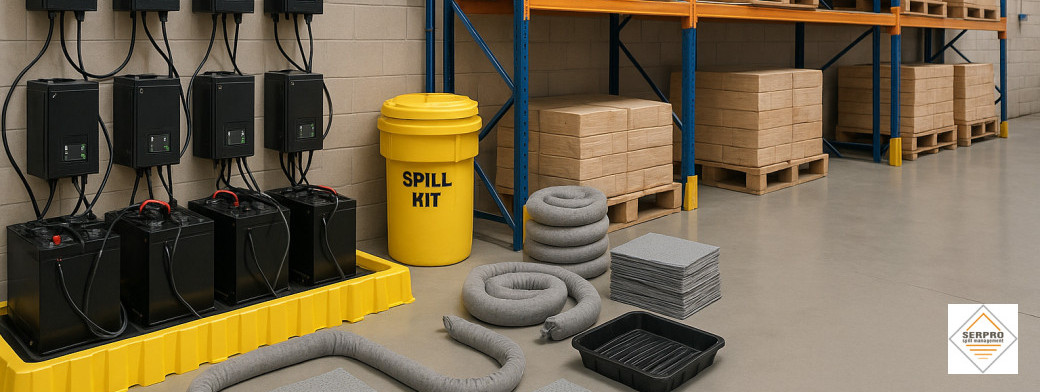
Battery charging bays should have a clearly identified spill response point stocked with the right materials for small, fast-moving liquid releases. In practice, that means keeping suitable absorbents, a compact spill kit, PPE and waste bags close enough to reach immediately, without staff having to leave the area to search for equipment. Quick access matters because electrolyte drips, battery watering overflows and general wet contamination can quickly spread across smooth warehouse floors and increase slip risk.
For most warehouse charging areas, the essentials are straightforward: spill kits for first response, absorbent pads for targeted clean-up, and absorbent rolls for covering wider floor areas or walkways. These items should be selected to match the liquids likely to be encountered and stored in a visible, labelled spill station near the bay, not in a distant stores room. As HSE guidance on slips and trips makes clear, dealing with contamination promptly is a key part of keeping floors safe.
Essential spill response items to keep nearby
- Absorbent pads for drips, splashes and small pooling around battery stands.
- Absorbent rolls for larger wet patches and to protect pedestrian routes.
- Small spill kits with mixed absorbents and disposal bags for quick first response.
- Absorbent socks or barriers to stop liquid spreading into traffic routes or toward drains.
- Gloves and other task-appropriate PPE for safe handling during clean-up.
- Clearly marked waste bags or containers for used absorbents and contaminated debris.
Accessibility is just as important as the contents themselves. If spill materials are hidden, locked away or shared across too large an area, response times slow down. A simple, well-labelled station beside the charging bay helps staff act quickly and consistently.
Staff should also be trained on what each item is for, when to use it and when to escalate. Training should cover safe isolation of the area, correct absorbent selection, basic waste segregation and the site’s reporting procedure, in line with wider COSHH arrangements. Even a well-stocked spill station is only effective if people know how to use it confidently.
Who Should Respond to Spills in Battery Charging Bays?
Spills in battery charging bays should be handled by a designated spill response team or other specifically trained personnel, not by whoever happens to be nearby. In most warehouse settings, the first person on scene should make the area safe, report the incident and prevent others from walking or driving through the spill, while trained responders assess the liquid, use the correct containment materials and arrange safe clean-up. This is especially important where battery electrolyte, wash water or mixed contamination may be present.
Clear role allocation helps reduce confusion and supports safer decisions under pressure. A charging bay may involve slip risks, corrosive liquids and the possibility of contamination reaching drains, so employers should align response arrangements with their wider duties under HSE COSHH guidance and good housekeeping practice from HSE slips and trips guidance.
Designated spill response team
A designated spill response team should be identified for each shift or work area. These employees should know where spill kits, absorbent pads, absorbent socks, drain covers, disposal bags and PPE are stored, and when an incident needs escalation. They should also understand when a leaking or damaged battery must be isolated and left for specialist handling rather than moved unnecessarily.
Training and responsibilities
Training should cover likely spill types in the bay, safe use of chemical absorbents, area isolation, waste segregation and incident reporting. General warehouse staff may be trained to raise the alarm, cordon off the area and fetch the correct kit, but only competent responders should manage the clean-up itself. Supervisors should check that spill stations remain stocked, labelled and easy to access.
Communication protocols
Communication protocols should be simple and rehearsed: who to call, how to stop traffic entering the bay, when to notify management and when environmental controls are needed to protect nearby drainage. Where there is any risk of pollution, sites should also follow GOV.UK pollution prevention guidance.
How Should Waste from Spills Be Separated and Handled?
Waste from forklift battery charging bay spills should be separated by what was spilled, what was used to clean it up, and whether the material has become hazardous. In practice, this usually means keeping battery electrolyte residues, contaminated absorbents, damaged PPE, wash-down debris and general packaging apart so they can be assessed and disposed of safely. Separation matters because mixing waste streams can increase risk, complicate disposal and make it harder to follow site procedures under COSHH guidance from HSE.
In battery charging areas, the main waste types generated after a spill are likely to include acidic liquid from electrolyte leaks, used absorbent pads or socks, disposable gloves, contaminated floor-cleaning materials, and any damaged battery fragments or corrosion debris. If other liquids are present nearby, such as oils or general wash water, these should also be kept separate rather than swept into the same waste container.
Separate waste at the point of clean-up
Use clearly labelled containers or bags so responders can divide waste as they work. Liquid residues should, where possible, be contained first and prevented from reaching drains, in line with UK pollution prevention guidance. Used absorbents that have taken up battery acid should be bagged separately from non-contaminated packaging or ordinary housekeeping waste. Purpose-made disposal bags can help keep contaminated materials contained and identifiable until collection.
Handle contaminated materials safely
Anyone dealing with spill waste should wear suitable PPE and avoid compressing, tearing or overfilling bags. Containers should be sealed, stored upright in a designated area and labelled to show the nature of the contamination. Damaged batteries or battery parts should be isolated from absorbent waste and handled through the site’s battery supplier or approved waste route, not placed in general bins.
Dispose of waste through the correct route
Safe disposal depends on the waste classification and your waste contractor’s requirements. Contaminated absorbents, PPE and debris may need hazardous waste handling, while clean outer packaging may be recyclable. Keep records, follow your site spill procedure and check that waste is removed by an authorised contractor rather than treated as ordinary warehouse rubbish.
How Can You Ensure Routine Inspections Are Effective?
Routine inspections are effective when they are structured, frequent and followed up properly. In a forklift battery charging bay, inspections should confirm that spill-control equipment is present, accessible and suitable for the liquids likely to be encountered, including battery electrolyte, wash water and other housekeeping residues. They should also check that floors remain clean and slip risks are controlled in line with HSE guidance on slips and trips, and that hazardous substances are managed under COSHH.
In practice, that means using a simple checklist, setting clear inspection frequencies and recording what was found, what action is needed and who is responsible. A good inspection routine does not just identify missing absorbents or damaged trays; it helps ensure the bay is always ready for a small leak, topping-up splash or damaged battery incident without delay.
Use Inspection Checklists That Match the Area
Your checklist should reflect the actual charging bay layout and tasks carried out there. Include checks for absorbent pads, absorbent socks, drip trays, drain covers, disposal bags, gloves and clearly labelled spill stations. Also confirm that access routes are clear, containers are in good condition, and any damaged batteries are isolated from normal operations pending safe handling.
It is also sensible to check floor condition, housekeeping standards, eyewash availability where relevant, and whether waste is being separated and stored correctly after clean-up.
Set a Sensible Frequency of Inspections
Inspection frequency should reflect risk. A busy charging bay may need a brief daily visual check, with a more detailed weekly inspection and a formal monthly review. Additional checks are useful after any spill, battery change, delivery of new materials or layout change. This supports a more consistent approach to spill preparedness and pollution prevention, as outlined in GOV.UK guidance for businesses.
Document Findings and Follow Up
Inspection records should be easy to complete and easy to review. Note the date, inspector, defects found, immediate actions taken and any outstanding issues. Follow-up matters: if a spill kit is partly used, it should be restocked; if a tray is cracked, it should be replaced; if recurring contamination is found, the cause should be investigated rather than cleaned up repeatedly. This documented loop helps turn inspections into a practical control measure rather than a tick-box exercise.
What Personal Protective Equipment (PPE) Is Recommended?
Personnel working in battery charging bays should wear PPE that protects against electrolyte splashes, contaminated surfaces and routine handling risks. As a minimum, this usually means chemical-resistant gloves, splash-proof goggles and protective aprons. In spill scenarios, PPE helps reduce the chance of skin contact, eye injuries and contamination of clothing while staff contain leaks, use absorbents and isolate the affected area.
Forklift battery charging areas can involve battery acid residues, wash-down water and other liquids that increase both exposure and slip risks. Suitable PPE is therefore a practical first line of defence, but it should be used alongside safe systems of work, good housekeeping and spill response equipment. Employers should select PPE that matches the task and the substance involved, in line with HSE COSHH guidance.
Key PPE for battery charging bay work
Chemical-resistant gloves help protect hands during battery handling, watering and spill clean-up. Goggles or other close-fitting eye protection are important where splashes could occur. Aprons provide an added barrier for clothing and skin, especially during maintenance or when using spill materials near leaking batteries. Depending on site conditions, employers may also specify safety footwear with slip-resistant soles to support safer movement on potentially wet floors, reflecting HSE advice on slips and trips.
Why training matters
PPE is only effective if staff know when to wear it, how to inspect it and when to replace it. Training should cover correct fitting, limitations of each item and the steps to take after a spill, including safe removal of contaminated PPE and waste segregation. Keeping suitable PPE for spill response close to the charging bay can also improve response times and reinforce good practice.
What Are the Best Practices for Floor Cleaning in Charging Bays?
The best practices for floor cleaning in battery charging bays are to clean contamination promptly, use the right method for the liquid involved, and follow a set inspection and cleaning routine. In warehouse charging areas, even small amounts of battery electrolyte, watering overflow, dirt or general moisture can create slip hazards, so floors should be kept as dry and clear as possible. Cleaning should support safe spill control, not simply spread contamination across the bay.
Good practice starts with identifying the spill type and choosing suitable materials. Small liquid releases can often be contained with absorbent pads, rolls or socks, while residues should then be cleaned using appropriate agents and disposed of safely. The HSE’s guidance on slips and trips supports prompt removal of contamination and effective floor maintenance as key controls in preventing falls.
Cleaning methods that help reduce slip risks
Dry cleaning methods are often preferable as an initial response. Use absorbents to stop liquid spreading, then remove saturated materials and clean the remaining residue. Avoid excessive hosing or mopping that leaves a wet surface behind. For routine housekeeping, use suitable floor-cleaning equipment and methods that lift contamination fully rather than smearing it; see floor cleaning guidance for practical options.
How often should charging bay floors be cleaned?
Cleaning should be both immediate and scheduled. Any spill or drip should be dealt with as soon as it is found. In addition, charging bays should be inspected and cleaned at defined intervals during each shift, with extra checks in busy periods or near battery watering points. A simple documented routine helps ensure hazards are not missed.
Using absorbents and cleaning agents correctly
Keep suitable absorbents close to the bay so staff can respond quickly. Use cleaning agents that are appropriate for the contamination and the floor finish, and avoid products that leave slippery residues. Used absorbents, cloths and waste should be bagged and handled in line with site procedures.
How to Select the Right Absorbents for Battery Spills?
The right absorbent for a battery charging bay depends on what may be spilled, how much liquid is likely to escape and where the spill could travel. In most warehouse charging areas, the main concern is battery electrolyte, along with water from topping up, routine washdown moisture and general floor contamination. For that reason, sites should not rely on one absorbent type for every incident: general purpose and chemical absorbents each have different roles in safe spill response.
As a rule, chemical absorbents are the better choice where corrosive battery acid may be present, because they are intended for more aggressive liquids than everyday maintenance spills. General purpose absorbents can still be useful for non-hazardous water drips, light grime and housekeeping tasks around the bay, helping to keep floors dry and reduce slip risks in line with HSE guidance on slips and trips. Selecting the correct product in advance makes response quicker and helps prevent cross-use of unsuitable materials.
Choose absorbents by spill type and area risk
When comparing absorbents, consider the likely liquid, the surface being protected and whether the spill may spread towards walkways or drains. Pads and rolls are useful for covering flat floor areas, while absorbent socks can help contain liquid around battery stands, charging points or thresholds. If there is any chance of electrolyte reaching drainage routes, the wider controls should also reflect good pollution prevention practice.
- General purpose absorbents: suited to water, coolants and mixed everyday maintenance spills.
- Chemical absorbents: better suited to corrosive liquids such as battery acid and other hazardous chemicals.
- Format: pads for quick pick-up, rolls for larger floor coverage, socks for stopping spread.
Storage and accessibility matter too
Even the best absorbent is of limited value if it is stored too far from the charging bay or mixed in with unrelated cleaning stock. Keep absorbents close to the risk area, clearly labelled and easy to reach, ideally as part of a small spill response point with disposal bags and gloves. Stock should be checked during routine inspections so used or damaged items are replaced promptly and staff can respond without delay.
What to Do with Damaged Batteries?
Damaged forklift batteries should be treated as an immediate spill and safety risk. If you spot a cracked case, bulging side, leaking electrolyte, loose cap, corrosion around terminals or signs of impact damage, stop using the battery at once and keep untrained staff away. In a charging bay, damage can quickly lead to acid leaks, slippery floors and harmful exposure, so the priority is to isolate the battery, contain any liquid and follow your site procedure under COSHH guidance.
Identification matters because not all battery problems are obvious. Look for wet patches under the unit, white or bluish residue, unusual odours, overheating, distorted casing or repeated charging faults. Any battery involved in a collision or dropped during handling should be checked before it returns to service. Staff should know that “minor” seepage still counts as a spill hazard and can worsen if the battery remains in use or on charge.
How should a damaged battery be isolated?
Make the area safe first. Switch off charging equipment if this can be done safely, cordon off the bay and prevent vehicle or foot traffic through the affected zone. Use suitable PPE, then place the battery in a designated quarantine area or on acid-resistant containment such as a drip tray, with absorbent socks or pads positioned to stop liquid spreading across the floor. Keep drains protected where relevant, in line with pollution prevention guidance. Good isolation also helps reduce slip risks highlighted by HSE slips and trips guidance.
What about reporting and disposal?
Report the damage immediately to a supervisor and record what was found, where, and what action was taken. Do not attempt repair unless carried out by a competent specialist. Any leaked electrolyte, used absorbents and contaminated PPE should be collected, bagged and disposed of as hazardous waste through the correct waste stream. The battery itself should be removed by an authorised contractor or returned through the supplier’s approved disposal route.