
Last reviewed: 13 November 2026
University engineering workshops combine experienced technicians with students who may be using industrial machinery for the first time. Lathes, mills, hydraulic test rigs and fabrication benches can all release liquids. Preventing a small coolant leak from becoming a slip or contamination problem depends on supervision and equipment condition as much as on the contents of a spill kit.
Build good habits into each session
At induction, show students where oils and metalworking fluids are stored, how spills are reported and which equipment they must not touch without authorisation. Supervisors should establish who can stop machinery and who is trained to deal with releases. Check that walkways are separated from machining areas and remain free of trailing hoses and wet swarf.
Cutting fluids require attention beyond floor cleanliness: repeated skin contact and mist inhalation can harm health. The HSE COSHH guidance provides the starting point for assessing exposure; machine guarding, ventilation and good fluid management remain essential.
Make prevention visible
Use suitable drip trays beneath predictable drips and keep drums and waste containers secure. Check hose fittings before demonstrations and clean up leaks promptly rather than allowing used absorbents to accumulate beneath machines. Separate recovered oil from aqueous coolants and unidentified liquids.
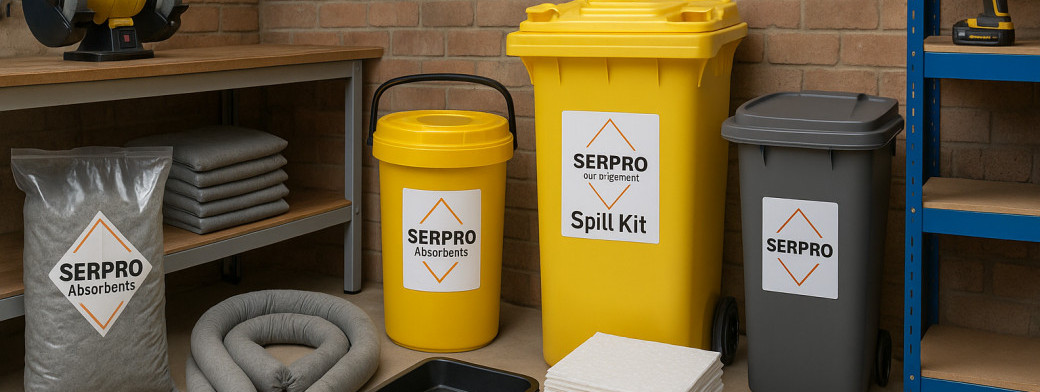
For a small known oil leak, oil-only absorbents may be appropriate. A water-based coolant needs a compatible alternative, and acid or solvent incidents require a separate assessment. Put accessible spill kits supplies near workshop exits without blocking escape routes.
Finish with a check
- Inspect each workstation before and after practical teaching.
- Record faulty fittings and take affected machines out of use.
- Keep floors dry and ensure appropriate footwear is worn.
- Make drain locations and emergency contacts clear to staff.
- Provide a lawful waste route for recovered fluids and contaminated absorbents.
Students should never be expected to investigate an unfamiliar or rapidly spreading chemical release. A brief, practised escalation procedure helps turn everyday housekeeping into a reliable workshop safety habit.