
Last reviewed: 13 November 2026
Pesticide mixing and sprayer filling concentrate the highest-risk steps of many field applications in one location. Containers are opened, chemicals measured and hoses connected, often close to tracks, yard gullies or watercourses. Preventing a release is usually more reliable than trying to recover diluted pesticide after it has entered the ground or drainage system.
Choose and maintain a safe filling location
Assess the risk from surface water, wells, land drains and nearby people before selecting a filling point. Where appropriate, use an impermeable, contained handling area with a planned route for collecting any contaminated liquid. Inspect hoses, valves and tank fittings before each use and prevent overfilling by supervising transfers.
Keep only the products needed for the operation at the filling point. Store concentrates in secure, labelled containers and avoid leaving measuring equipment exposed to rain. Check the product label and the approved conditions of use; a general-purpose procedure cannot override pesticide-specific instructions.
Plan for concentrated and diluted spills
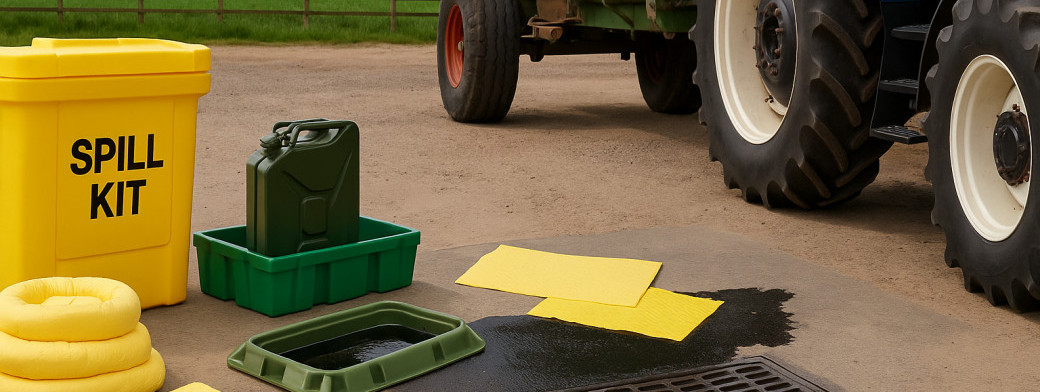
Stop the source if safe, isolate the area and prevent entry to water or drains. Appropriate drain covers may help protect a nearby gully when they can be deployed safely. Trained responders should select chemical absorbents only after checking the pesticide formulation and absorbent compatibility.
Do not wash spilt concentrate into the soil or simply dilute it with water. Some products may be toxic to aquatic life even in very small quantities. A larger release, unknown mixture or possible water pollution warrants immediate escalation and the reporting action required by the site plan.
Review equipment and disposal
- Keep current labels and safety data information available.
- Provide protective equipment specified by the pesticide assessment.
- Identify suitable temporary storage for contaminated absorbents.
- Maintain records of filling-point inspections and incidents.
- Arrange disposal through an appropriate waste route, without mixing incompatible residues.
The Environment Agency pollution-prevention guidance for businesses in England offers England-specific pollution-prevention information. Pesticide authorisations, professional-use requirements and guidance differ by product and jurisdiction, so consult the relevant regulator and label rather than relying on a generic spill-kit checklist.