
Last reviewed: 13 November 2026
At a busy rail station, a modest liquid spill can become a serious passenger hazard within minutes. Coffee, rainwater, cleaning solution and a leaking service trolley need prompt attention, but they do not all call for the same response. The priority is to make the area safe while keeping passenger movement, accessibility and operational instructions in view.
Protect passengers before cleaning
Notify station control or the designated supervisor, isolate the affected section and direct people along a safe alternative route. Keep access routes available for passengers with mobility needs. A warning sign is helpful but may not provide enough protection where a crowd or rolling luggage can enter the area.
If a release is close to the platform edge, live electrical equipment, escalators or train movements, follow the station’s safety rules; do not improvise access into restricted areas. Unknown chemical releases need a specialist assessment.
Use the right method for the surface
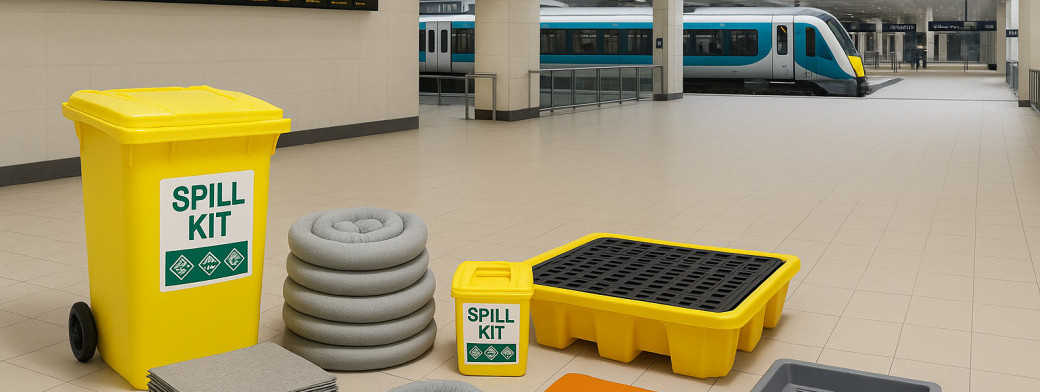
For an identified, low-risk water or drink spill, the cleaning team should use its approved removal and drying procedure. For a known oil leak from an item of equipment, compatible absorbents may assist trained staff, but the source still needs repairing. Use cleaning products appropriate to floor finishes so they do not leave a slippery residue.
Inspect textured surfaces, tile joints and entrances where moisture can persist. Wet weather increases the importance of suitable entrance matting and frequent checks.
Make inspection and reporting practical
- Record the location, cause, time and response.
- Escalate repeat leaks from vending, cleaning or plant equipment.
- Ensure staff have access to barriers and approved cleaning supplies.
- Review how long the area remained unsafe.
- Restock any spill kits used in engineering or maintenance areas.
See HSE slips and trips guidance and Office of Rail and Road health and safety guidance. Station operators must follow their specific operational safety arrangements.