
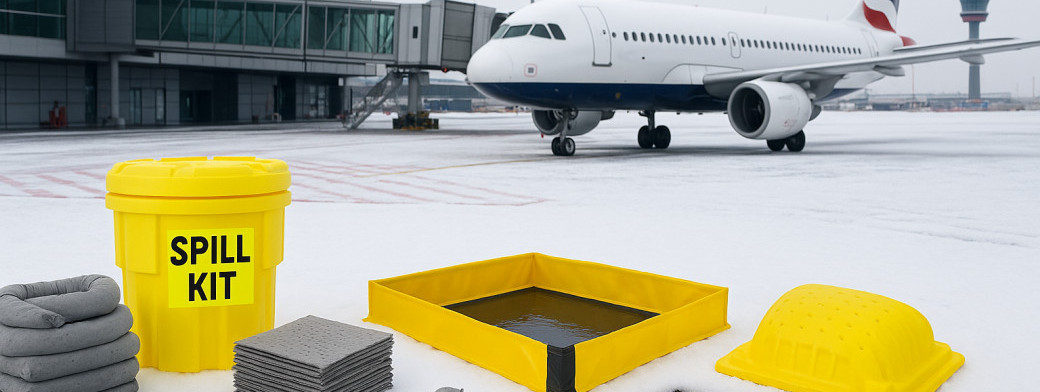
Airport De-icing Operations: Effective Spill Control Strategies
Last reviewed: 12 November 2026
Keeping aircraft free from ice is an essential part of safe winter operations. But once de-icing fluid has been sprayed onto an aircraft, some of it will run onto the apron. Unless that liquid is collected or managed correctly, it can enter drainage systems and eventually reach nearby watercourses.
For airport operators, ground-handling teams and maintenance contractors, spill control involves more than having a few absorbent pads to hand. It means knowing which fluids are in use, understanding where the drainage leads and having the right arrangements for both routine run-off and unexpected leaks.
Why de-icing fluid needs careful management
Aircraft de-icing and anti-icing fluids commonly contain propylene glycol or ethylene glycol, together with other ingredients depending on the product. Type I fluids are generally used to remove existing contamination, while Types II, III and IV are designed to provide anti-icing protection under specified operating conditions. The appropriate fluid and application method must always be determined by the aircraft operator's approved procedures and the fluid manufacturer's instructions.
The principal environmental concern with glycol-containing run-off is not simply whether a fluid is described as biodegradable. As glycol breaks down in water, the process uses oxygen. A substantial release can therefore reduce the oxygen available to fish and other aquatic life. Some fluid additives may present additional concerns.
Airports also have to manage other liquids, including aviation fuel, hydraulic oil and vehicle fluids. These should not be treated as interchangeable with glycol: their behaviour, the appropriate absorbents and the methods of recovery can be very different.
Start with the drainage layout
Before deciding where spill equipment should be placed, establish where liquid can travel from the de-icing area. A surface-water drain, a foul-water connection and a drainage route leading to a dedicated collection or treatment system serve different purposes. Staff need to know which is which.
Where de-icing operations are routinely carried out, the main control should be a planned system for capturing, diverting or collecting contaminated run-off. Depending on the airport, that might involve designated de-icing areas, drainage isolation and diversion arrangements, collection tanks or vacuum recovery equipment. Any discharge must follow the site's permissions and operating procedures.
Important: An oil-water interceptor is not a solution for removing dissolved glycol from water. Interceptors can be useful for certain oil contamination, but glycol run-off requires a different collection or treatment approach.
Drain covers and temporary barriers can be useful for localised, accidental spills when deployed by trained personnel under the airport's procedures. They should not be relied upon to manage the routine volume of liquid produced by aircraft de-icing.
Choose spill-control products for the liquid involved
There is no single absorbent that suits every airport spill. Product choice depends on the substance, its concentration, the surface involved and the clean-up method approved for that location.
- Glycol-based liquids: For a small, contained release, a compatible general purpose or chemical absorbent may be appropriate, subject to the product's safety data sheet and the absorbent manufacturer's compatibility advice. Larger volumes are usually better managed through planned liquid collection and recovery.
- Aviation fuel and oils: Oil-only absorbents can be useful for suitable hydrocarbon spills, particularly where water is present. Fuel incidents may also involve fire, vapour and operational hazards, so airport emergency procedures take priority.
- Leaks beneath vehicles or stationary equipment: Suitable drip trays and temporary containment can help prevent small leaks reaching the apron, provided their use does not interfere with airside safety or equipment movements.
- Drain protection: Compatible temporary covers, socks or barriers may help prevent a small spill entering a nearby drain, where their deployment is safe and authorised.
Absorbents do not neutralise chemicals merely by soaking them up. Nor should personnel assume that an unknown liquid is safe to collect using a general purpose pad. Identify the material and consult the relevant safety information first.
Prepare for spills before winter weather arrives
Winter preparation is a good opportunity to review the practical details that can make a significant difference during a busy de-icing operation.
- Inspect equipment: Check tanks, hoses, couplings, pumps and transfer points for leaks, wear and damage.
- Protect fluid storage: Provide suitable containment for stored chemicals and check that it remains in good condition.
- Position response materials: Keep clearly identified spill kits and approved drain-protection equipment where trained personnel can reach them safely.
- Check drainage controls: Confirm that relevant diversion, isolation and collection systems are working and that staff understand when to use them.
- Brief staff and contractors: Include seasonal workers and third-party handlers in reporting arrangements and location-specific emergency procedures.
Training should cover more than the location of a spill kit. Staff need to understand when they can deal with a minor spill, when to withdraw and who has authority to isolate an area or request specialist assistance. Safety data sheets help inform the site's risk assessments; they do not replace them.
What to do when a spill occurs
Every airport will have its own emergency and environmental reporting arrangements. Those site procedures must take precedence over a general guide. For a spill that personnel are authorised and trained to handle, the following principles are useful:
- Make the area safe. Consider moving aircraft, vehicles, ignition sources and possible exposure to the substance. Do not enter an unsafe area to retrieve equipment.
- Report the incident promptly. Inform airport operations or the designated response team, giving the location, known substance and approximate scale of the release.
- Stop the release if safe. Isolate a leaking valve or equipment item only when this is within your training and authority.
- Protect drainage where authorised. Use approved barriers or drain covers if suitable for the substance and safe in that airside location.
- Collect the spill appropriately. Use compatible absorbents for small releases or the site's designated recovery equipment for larger quantities. Avoid washing material into drains.
- Arrange disposal and documentation. Segregate contaminated absorbents, classify the waste correctly and record the incident in accordance with site procedures.
Where pollution has reached, or may reach, the environment, the designated incident team should assess regulatory notification requirements without delay. Large releases, fuel incidents and unidentified substances may require specialist responders rather than routine clean-up staff.
Managing collected liquid and used absorbents
Once a spill has been contained, the waste still needs attention. Recovered glycol solution, oily liquids and used absorbent materials may require different disposal arrangements. Do not mix waste streams or assume that all contaminated pads can go into ordinary general waste.
The waste producer should establish the correct classification and use an appropriately authorised disposal or recovery route. Records should be kept in line with the applicable waste duties and site requirements. Where an airport has a glycol recovery or treatment arrangement, follow its acceptance criteria rather than sending collected fluids there automatically.
UK guidance and site-specific requirements
Airside spill management sits alongside workplace chemical safety, environmental protection and the airport's own operational controls. Relevant requirements depend on the substance, the work being carried out, the airport's location and any environmental permits or discharge consents.
Useful starting points include the Health and Safety Executive's COSHH guidance, the GOV.UK pollution prevention guidance and the UK Civil Aviation Authority's information on local environmental impacts. Airport operators and contractors must also follow their own current airside and environmental instructions.
Getting the right controls in place
The most effective approach separates everyday de-icing run-off from unexpected spills. Routine glycol run-off needs planned drainage management and collection; minor leaks need the correct containment materials close at hand; serious incidents need a clear escalation route.
SERPRO supplies spill-control materials such as absorbent pads, socks, spill kits, drip trays and drain-protection products. If you're reviewing the equipment available to an airport maintenance or ground-handling team, start with the liquids involved, the scale of likely incidents and the site's approved response procedures. That will help identify which products could be useful alongside the airport's wider containment and recovery systems.