
Last reviewed: 13 November 2026
Busy commercial kitchens deal with hot cooking oil, grease, food liquids, detergent and rinse water throughout a shift. The most common immediate problem is a slippery walking surface, but hot oil also brings serious burn and fire risks. A spill plan should recognise those differences, especially during fryer emptying and end-of-shift cleaning.
Prevent spills where they start
Review fryer servicing, oil transfers, food preparation, waste-oil containers, wash-up areas and deliveries. A knocked stockpot or leaking container can affect walkways within seconds. Keep floors in good condition, schedule cleaning carefully and avoid carrying hot oil through busy routes. Follow the fryer manufacturer’s instructions and allow oil to cool as required before authorised draining or movement.
Use sound, lidded containers for stored waste oil and properly positioned drip trays for compatible small drips. Never leave cooking oil where a spill can run towards electrical equipment or cooking flames.
Choose cleaning methods that suit the spill
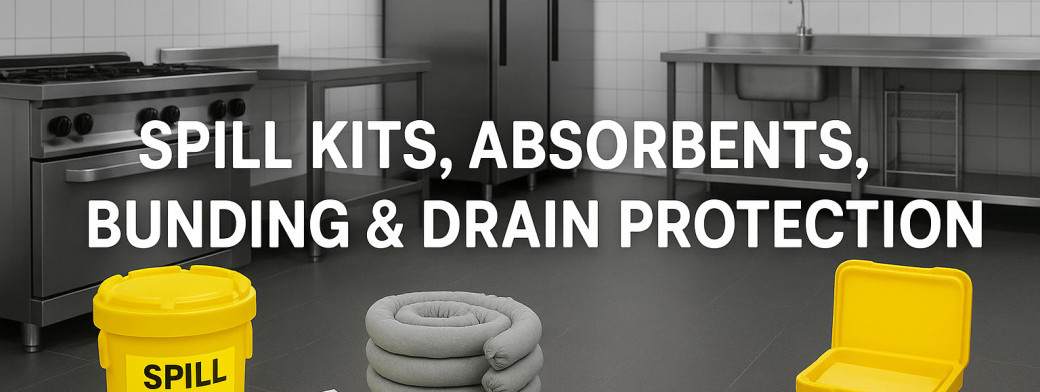
For an identified small spill that is safe to approach, compatible absorbents can help lift liquid. absorbent socks may be useful for temporary containment in a back-of-house store. Ordinary absorbent pads must not be put into hot oil or used as a substitute for fryer safety procedures. When cleaning chemicals are involved, consult the product label and COSHH assessment.
Keep people out of the contaminated area until residues have been removed and the floor is safe. A wet-floor sign on its own may not prevent someone walking through an oil film.
What should the team check?
- Inspect oil-transfer containers, fryer hoses and waste-oil storage.
- Train staff to report and isolate spills promptly.
- Keep food spill waste separate from chemical-contaminated absorbents.
- Do not wash fats, oils or chemical residues into unsuitable drains.
- Restock the spill kits after use and review repeat incidents.
HSE provides catering-specific slips and trips advice and HSE COSHH guidance. These are more helpful than treating every kitchen liquid as the same type of spill.