
Last reviewed: 13 November 2026
Food packaging plants handle more than paperboard and film. Printing inks, adhesives, cleaning liquids and machine lubricants can escape during production, roll changes or maintenance. The immediate issue may be a slippery floor, but product contamination is often the more expensive consequence.
Separate packaging quality from ordinary spill clean-up
A release beside a printing press may affect packaging material that later contacts food. Isolate exposed stock and follow the plant’s quality procedures; simply wiping the floor does not establish whether the packaging is fit for its intended use. The response should distinguish food-contact material, non-food-contact packaging and routine maintenance areas.
Check the actual formulation of inks, coatings, adhesives and cleaners. Water-based ink may need a different response from a solvent-rich product; reactive adhesives and hardeners can introduce further hazards. Never assume that a familiar colour or appearance means two substances are compatible.
Control the recurring leak points
Inspect ink pumps, dosing lines, containers, cleaning stations and the places where rolls or sheets are moved. Use suitable drip trays beneath compatible small drip points. Keep access routes clear and repair faulty seals rather than relying on absorbent pads every shift.
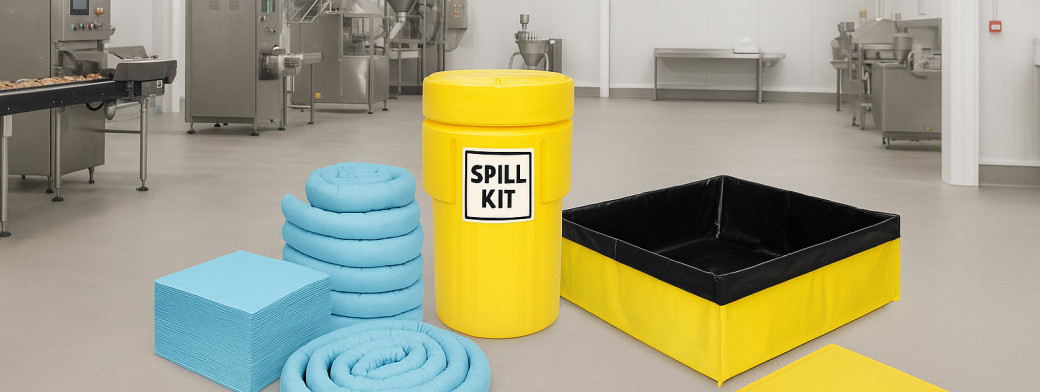
For identified, manageable releases, choose absorbents or chemical absorbents on the basis of the product safety data sheet and local assessment. absorbent socks can help define a boundary around equipment; a spill kits should be located where trained staff can reach it without crossing the affected area.
Protect people and recover properly
Flammable solvents require ignition and vapour controls under the site’s fire-safety arrangements. Keep incompatible wastes separate. Recovered liquid, used pads and damaged packaging may need different waste routes; do not send solvent-contaminated material into normal recycling.
- Identify which stock was exposed and record its quarantine status.
- Check that affected floors and machines are safe before restart.
- Keep spill equipment and waste containers outside food-contact handling zones unless approved.
- Review repeated releases with maintenance and quality personnel.
See HSE COSHH advice for printing and HSE COSHH guidance. SERPRO spill kits can support an appropriate response, but do not replace the plant’s process and quality controls.
