
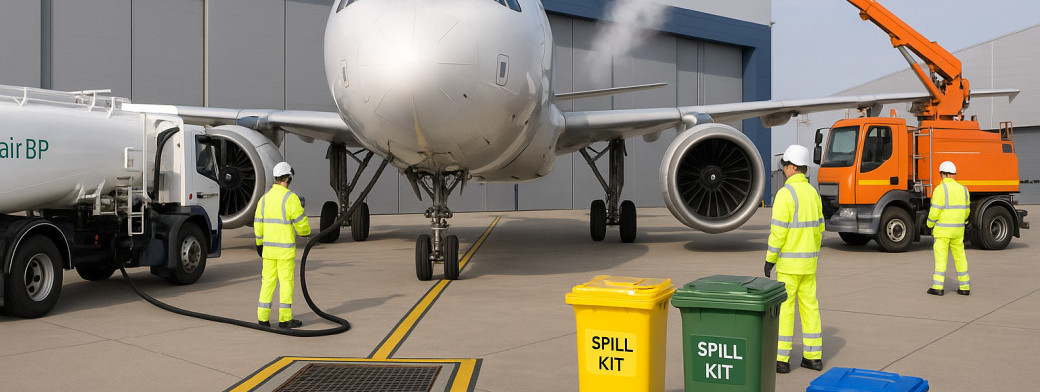
Spill Control in Aviation Facilities: Fuel, De-icer & Hangar Fluids
Effective spill control in airports and MRO hangars is critical. With the heavy use of jet fuel, de-icer fluids, hydraulic oils, and the bustling activity on high-traffic aprons and hangars, the potential for spills is significant. Ensuring public safety, preserving brand reputation, and protecting the environment are paramount. To align with best practices, refer to the CAA’s Safety Management Systems guidance.
Regulatory Backdrop
Compliance with the Dangerous Substances and Explosive Atmospheres Regulations 2002 (DSEAR) is essential for managing flammable fuels. For comprehensive guidelines, visit the HSE DSEAR page. Additionally, the Environment Agency provides regulations on spill prevention and oil storage, which are crucial in ensuring that environmental controls are enforced in hangar and fuel areas. More information can be found at the Environment Agency.
Hazard Mapping
Understanding the typical fluids present in aviation facilities is vital for effective spill management. Common hazardous fluids include:
- Jet A-1/Kerosene
- Aviation Gasoline
- De-icer Glycol (Potassium Acetate/Ethylene-based)
- Hydraulic Fluids
- Cleaning Solvents
- Waste Oils from Maintenance
High-risk zones where spills are most likely to occur include:
- Refuelling pad
- Apron fuel farm
- Tanker off-load area
- Hangar wash bay
- De-icer pad
- Aircraft maintenance bay
- Fuel servicing vehicles
- Drain gullies adjacent to apron areas
Controls
Implementing the right controls is essential for spill management. Use specialised oil-only absorbents for hydrocarbon fuel spills. In scenarios where mixed fluids occur post-maintenance, universal absorbents are appropriate. For de-icer and solvent spills, employ chemical absorbents. Other key control measures include:
- Bunding and spill pallets under fuel tanks
- Drip trays under servicing vehicles
- Interceptor protection for drains
- Utilising anti-static absorbents and grounding in fuel zones
Kit Strategy
Adopting a zone-specific spill kit strategy is crucial for effective spill response. Key kits include:
- Tanker bay kits
- Hangar maintenance kits
- De-icer pad kits
Each kit should include:
- Absorbent socks for runs
- Pads for area coverage
- Disposal bags
- PPE
- Signage
For comprehensive options, explore SERPRO’s Oil & Fuel Spill Kits and Chemical Spill Kits. Ensure regular inspection and restocking routines are aligned with shift hand-overs to maintain readiness.
Procedures & Training
Establishing standard operating procedures (SOPs) for aircraft servicing or refuelling leaks is crucial. The SOP should involve the following steps:
- Stop the source of the leak.
- Isolate the drain.
- Deploy appropriate absorbents.
- Notify the Fuel Safety Officer.
- Record the event for compliance.
Training should be mandatory for all staff, including night-shift workers, contractors, and external vendors. Conduct toolbox talks that emphasise ignition source control, such as prohibiting mobile phones near fuelling operations.
Waste & Evidence
Used absorbents contaminated with jet fuel or de-icer fluid must be managed as hazardous waste. For guidance on disposal, refer to the Environment Agency’s hazardous waste disposal page. Maintain meticulous records of spill logs and photographic evidence. Integrate this information into the airport’s Safety Management System for a robust audit trail.
Practical Tools
To facilitate spill response and management, consider the following tools:
- Hangar/Apron Spill Response Checklist
- Daily Spill-Kit Audit Sheet
Case Study
Consider a realistic scenario: a de-icer fluid tanker coupling fails while on the pad, leading to a glycol spill that enters the apron drain. The immediate response involves:
- Shutting off the fluid source.
- Deploying absorbent socks to contain the spill.
- Installing a drain cover to prevent fluid ingress.
- Alerting the engineering team.
- Logging the incident for compliance.
- Reviewing the placement of spill kits for future incidents.
This proactive approach not only saves time and costs but also ensures compliance with Airport Operator licence requirements and protects the airport's reputation.
FAQs
- Can oil-only absorbents handle jet fuel vapour carry-over?
- What’s the difference between a de-icer spill and a fuel spill in terms of absorbent selection?
- How often should hangar spill kits be inspected before night-shift aircraft arrivals?
- Are interceptor mats sufficient for apron drains or is full bunding required?
- How should absorbents be stored in remote de-icer pad locations in winter?
Conclusion
In conclusion, effective spill management in aviation facilities requires thorough zone mapping, accurate kit matching, comprehensive training, and a clear audit trail. To enhance your spill control strategy, we invite you to explore our full range of spill control solutions at SERPRO. Explore our aviation-ready Oil & Fuel Spill Kits today to ensure your facility is prepared for any spill scenario.